Introduction
Africa’s ecommerce ecosystem is advancing at a remarkable pace, with Takealot standing out as a dominant marketplace influencing digital purchasing decisions across the region. In this dynamic environment, leveraging Competitive Pricing Analysis Africa becomes essential for maintaining visibility, protecting margins, and staying ahead of rapidly shifting market conditions, where manual tracking methods are no longer sufficient.
Web scraping enables businesses to extract real-time pricing, availability, and category movement data directly from Takealot. This automated approach removes guesswork from decision-making and replaces it with structured, actionable insights. By collecting thousands of product records daily, retailers can detect pricing gaps, observe promotional patterns, and assess how competitors adjust prices across regions and timeframes.
When paired with Ecommerce Data Scraping Services, scraped Takealot data becomes a foundation for analytics that supports rapid operational decisions. Instead of reacting weeks later, teams can adjust pricing, promotions, and assortment strategies within hours. This level of visibility supports faster alignment between market conditions and internal planning, helping businesses respond with precision rather than assumptions.
Interpreting Marketplace Price Movements for Smarter Actions
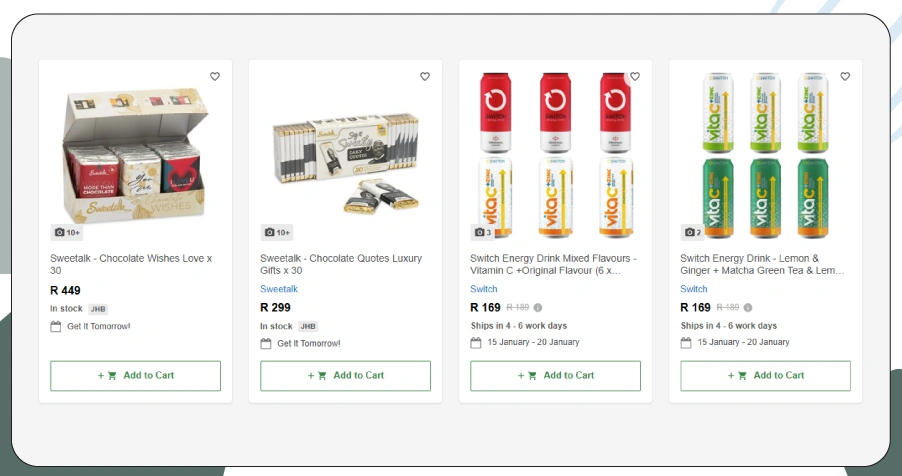
Takealot experiences constant price adjustments driven by promotions, seller competition, demand spikes, and regional purchasing behavior. These frequent changes make it difficult for retailers to rely on manual monitoring or static reports. Automated data extraction transforms raw price fluctuations into structured insights that teams can analyze daily, ensuring that pricing decisions are based on current market conditions rather than outdated assumptions.
By tracking listing-level price updates, retailers gain visibility into how fast competitors react and which price bands attract the most attention. Industry benchmarks indicate that automated monitoring improves reaction speed by nearly 25%, directly influencing conversion rates and reducing missed sales opportunities. This approach supports informed pricing alignment across categories without requiring continuous human intervention.
External datasets such as Amazon Fashion Product Datasets are sometimes referenced to validate cross-market positioning, especially for globally influenced categories. This comparison helps retailers understand whether local pricing deviations reflect regional demand or internal misalignment.
| Observed Metric | Insight Derived | Strategic Benefit |
|---|---|---|
| Hourly price changes | Detection of short-lived discounts | Timely repricing |
| Category price averages | Market baseline identification | Reduced margin risk |
| Brand-level comparisons | Competitive positioning clarity | Stronger pricing confidence |
| Seller count variations | Market intensity assessment | Better entry decisions |
By converting volatile pricing signals into structured intelligence, businesses reduce uncertainty and improve responsiveness without increasing operational complexity.
Using Market Signals to Optimize Product Assortments
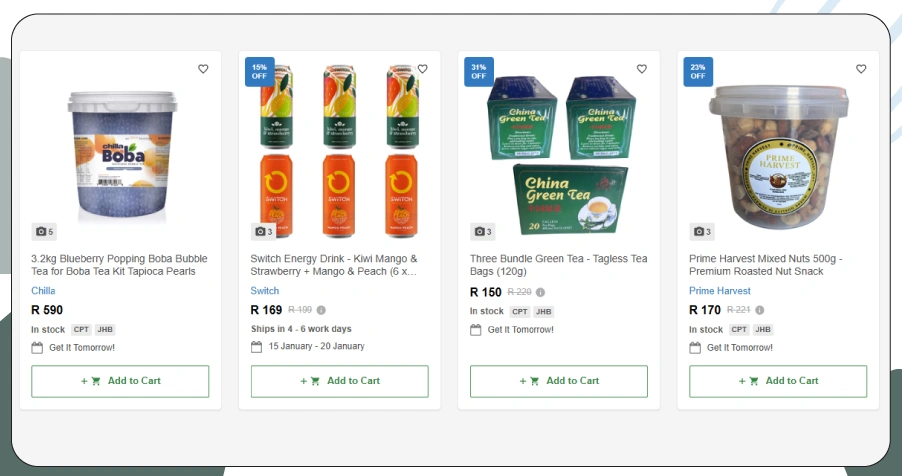
Product assortment decisions directly affect visibility, sales velocity, and inventory efficiency on large ecommerce platforms. Takealot’s extensive catalog provides valuable signals about which product types resonate with shoppers and which struggle due to price sensitivity or oversaturation. Extracted marketplace data enables retailers to observe these signals at scale and refine assortment strategies accordingly.
Insights derived from Africa Ecommerce Market Research help identify category-level performance patterns, including demand concentration, price tolerance, and regional preferences. For example, if mid-tier products consistently outperform premium listings within a category, assortment adjustments can be made to better match consumer expectations.
This data-driven approach also reduces excess inventory risks. Research shows that informed assortment planning can lower unsold stock levels by up to 18%. Metrics such as listing frequency, stock availability, and consumer feedback trends help forecast demand more accurately and support smarter replenishment cycles.
| Assortment Indicator | Data Captured | Decision Support |
|---|---|---|
| SKU availability trends | Stock consistency patterns | Inventory planning |
| Price-band performance | Entry vs premium movement | Portfolio balance |
| Category expansion rate | New product frequency | Growth targeting |
| Review accumulation | Engagement measurement | Quality evaluation |
By aligning product offerings with real marketplace behavior, retailers improve sell-through rates while minimizing operational waste.
Speeding Pricing Decisions Through Automated Intelligence
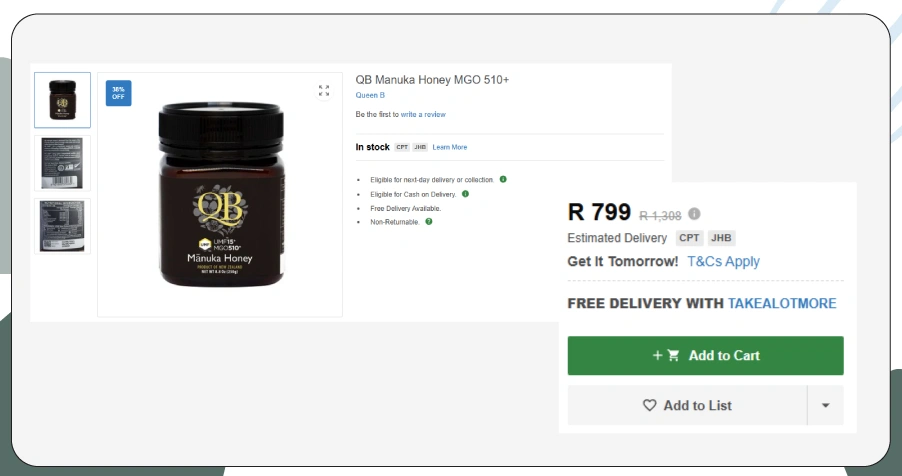
In competitive ecommerce environments, decision speed often determines profitability. Automated data pipelines enable continuous monitoring of marketplace changes, delivering structured insights that teams can act on without delay. This reduces dependency on manual reporting cycles and improves consistency across pricing operations.
A Data-Driven Pricing Strategy Africa allows organizations to test scenarios, forecast outcomes, and deploy pricing updates with confidence. Historical and real-time datasets support elasticity analysis, helping teams understand how price changes influence demand across different categories and regions.
Automation also minimizes human error. Rule-based alerts notify teams when prices fall outside defined thresholds, ensuring timely intervention. Historical comparisons further support predictive planning by revealing seasonal patterns and recurring promotional behaviors.
| Automation Layer | Core Function | Business Outcome |
|---|---|---|
| Continuous extraction | Live data capture | Current visibility |
| Analytical dashboards | Trend visualization | Faster interpretation |
| Alert mechanisms | Threshold detection | Immediate response |
| Historical analysis | Pattern recognition | Predictive accuracy |
By integrating automated intelligence into pricing workflows, businesses shorten decision cycles, improve accuracy, and maintain consistency across fast-moving digital marketplaces.
How ArcTechnolabs Can Help You?
In fast-changing digital markets, timely intelligence determines success. We support businesses seeking Competitive Pricing Analysis Africa by building customized web scraping frameworks tailored to Takealot’s marketplace structure.
What we deliver::
- Automated data extraction pipelines designed for large product catalogs.
- Structured datasets ready for analytics and BI tools.
- Scalable architectures that adapt to marketplace changes.
- Quality validation processes to reduce data noise.
- Secure delivery methods aligned with enterprise workflows.
- Flexible integration support for internal systems.
By combining these capabilities with Pricing Intelligence Solutions Africa, we enable retailers and brands to transform raw marketplace data into confident, revenue-focused decisions.
Conclusion
Modern ecommerce success depends on how quickly and accurately businesses interpret market signals. When Takealot data is transformed into actionable insights, Competitive Pricing Analysis Africa becomes a powerful driver of faster decisions, improved margins, and resilient pricing structures.
Aligned with Product Pricing Analysis Africa, this approach supports smarter assortment planning and long-term growth. Connect with ArcTechnolabs today to turn Takealot marketplace data into a strategic advantage that fuels measurable retail performance.