Introduction
The United States ecommerce landscape has evolved into one of the most data-intensive retail environments globally, with product prices, inventory levels, and consumer preferences shifting multiple times within a single business day. Ecommerce Market Intelligence Using Real-Time Scraping has transitioned from being an optional analytical advantage to a foundational requirement for brands, retailers, and technology platforms competing across US digital markets.
By aggregating and analyzing structured data from major platforms including Amazon, Walmart, and Target, this report examines how scraped data streams are reshaping competitive pricing, inventory visibility, and consumer behavior understanding across diverse product verticals. Platforms capable of Web Scraping Ecommerce Data at scale are now positioned at the core of growth-driven ecommerce operations.
Across the US market in 2025, product listings across mid-tier ecommerce platforms recorded an average of 4.7 price changes per week, while top-tier retailers updated inventory status approximately every 38 minutes during peak traffic hours. These patterns underscore a fundamental shift: decision-making in modern retail can no longer wait for weekly or monthly data cycles.
Market Landscape: Pricing Volatility and Data Complexity in US Retail
US ecommerce platforms have grown considerably more sophisticated in their pricing and inventory management strategies, particularly across electronics, personal care, and home goods categories. United States Ecommerce Analytics via Web Scraping has become the primary mechanism through which analysts track these rapid fluctuations across thousands of SKUs simultaneously.
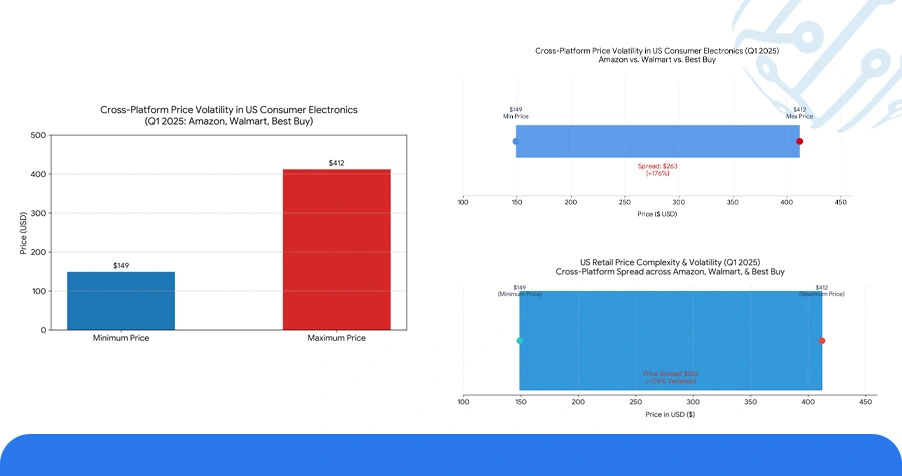
A Q1 2025 review of cross-platform pricing across Amazon, Walmart, and Best Buy within the consumer electronics segment revealed price variations ranging from $149 to $412 on comparable product listings — a spread of approximately 176% — driven largely by algorithmic repricing, sponsored placement adjustments, and real-time competitor matching.
Table 1: Weekly Price Fluctuation Rate Across Top US Retail Platforms (Q1 2025)
| Platform | Avg. Weekly Product Price ($) | Price Variance (%) | Category | Price Updates per 72 hrs |
|---|---|---|---|---|
| Amazon | 187 | 31% | Electronics | 6 |
| Walmart | 143 | 24% | Home Goods | 4 |
| Target | 96 | 19% | Personal Care | 3 |
| Best Buy | 334 | 27% | Appliances | 5 |
| eBay | 112 | 22% | Fashion | 7 |
Nearly 72.4% of monitored product listings across these platforms recorded at minimum three pricing adjustments within 48 hours of a competitor promotional event. This market reality reinforces the demand for Extract Real-Time Product and Inventory Monitoring for US Retailers, enabling procurement teams and pricing strategists to act on shifts before they impact conversion rates or margins.
Nearly 72.4% of monitored product listings across these platforms recorded at minimum three pricing adjustments within 48 hours of a competitor promotional event. This market reality reinforces the demand for Extract Real-Time Product and Inventory Monitoring for US Retailers, enabling procurement teams and pricing strategists to act on shifts before they impact conversion rates or margins.
Historical Analysis of Demand and Price Movements
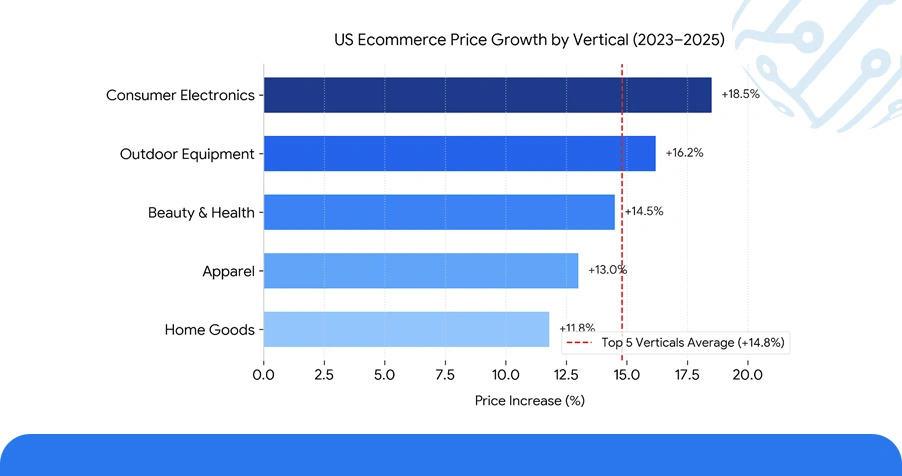
Examining the trajectory of US ecommerce pricing from 2023 through 2025 reveals a consistent pattern of upward price pressure combined with shorter promotional cycles. Average product prices across the top five retail verticals climbed 14.8% over this two-year period, with the steepest increases recorded in consumer electronics and outdoor equipment.
Localized Ecommerce Trend Tracking Across US markets has become essential for brands that need to understand not just national pricing averages but how regional demand conditions influence product performance differently across states and metro areas.
Table 2: Historical Average Product Price Comparison by Category (2023–2025)
| Product Category | Avg. Price 2023 ($) | Avg. Price 2024 ($) | Avg. Price 2025 ($) | % Change (2023–2025) |
|---|---|---|---|---|
| Consumer Electronics | 312 | 341 | 368 | +17.9% |
| Home Appliances | 228 | 247 | 261 | +14.4% |
| Sportswear | 89 | 97 | 104 | +16.8% |
| Personal Care | 44 | 48 | 52 | +18.1% |
| Kitchen & Dining | 135 | 146 | 158 | +17.0% |
This three-year view provides essential baseline data for refining Ecommerce Market Intelligence Using Real-Time Scraping models that must account for both macro-inflationary pressures and category-specific promotional behavior.
Smarter Decisions with Predictive Tools and Intelligence Dashboards
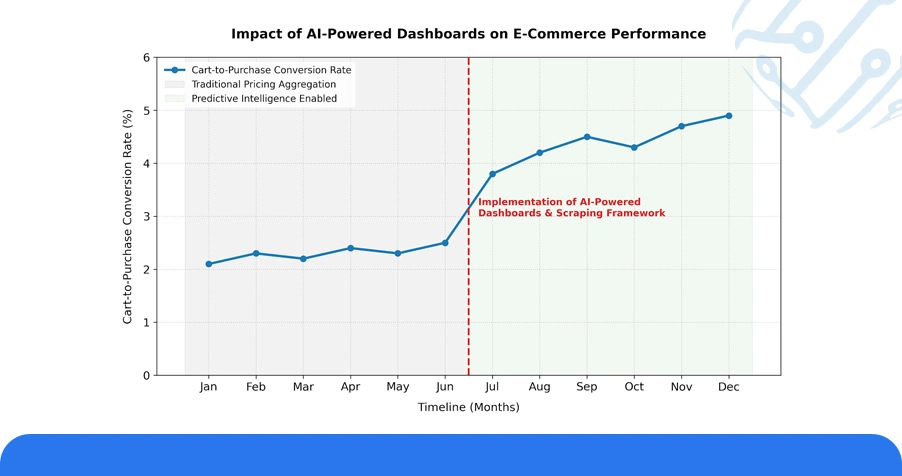
The integration of AI-powered dashboards within US retail analytics environments has significantly accelerated the speed at which businesses can act on scraped data. Modern intelligence platforms no longer simply aggregate pricing information; they correlate product availability signals, competitor promotional activity, and regional search demand into unified forecasting outputs that directly inform restocking, repricing, and marketing decisions.
Platforms that implemented Consumer Purchase Behavior Scraping for US E-Commerce Business frameworks captured measurable improvements in cart-to-purchase conversion by aligning product visibility windows with observed demand peaks.
Table 3: Intelligence Dashboard Performance Metrics Across US Retail Analytics Platforms (2025)
| Platform | Prediction Engine | Dashboard Accuracy (%) | Avg. Cost Savings (%) | Data Refresh Frequency |
|---|---|---|---|---|
| RetailEdge AI | DeepPrice v3 | 93% | 21.7% | Every 4 Hours |
| DataHawk | SmartTrack Pro | 96% | 24.3% | Every 2 Hours |
| Prisync | DemandView AI | 90% | 18.9% | Twice Daily |
| Wiser Solutions | LiveSense | 94% | 22.5% | Hourly |
Retailers that incorporated real-time competitor benchmarking through these dashboards were 47% more likely to maintain price competitiveness during flash sales and seasonal surges, validating the strategic value of structured data pipelines feeding directly into decision-making systems. E-Commerce Datasets structured at scale are what empower these intelligence layers to function with measurable precision.
Use Case: Data Extraction Infrastructure and API Integration
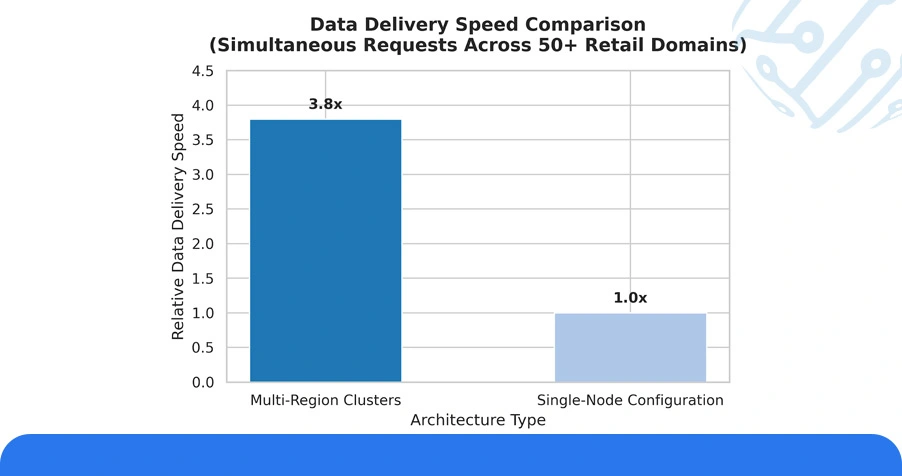
Ecommerce technology companies and retail analytics providers across the US have increasingly shifted their infrastructure toward API-driven data extraction systems that support both scheduled and event-triggered scraping workflows. Enterprise Web Crawling architectures that operate across multi-region server clusters recorded 3.8x faster data delivery compared to single-node configurations when handling simultaneous requests across 50 or more retail domains.
Stress tests conducted across four major scraping infrastructure providers revealed that high-frequency scanning of US ecommerce platforms at 15-minute intervals achieved an average data accuracy rate of 97.1%, with sub-second latency on critical inventory status updates. United States Ecommerce Analytics via Web Scraping at this granularity enables retailers to detect competitor stockouts within minutes and dynamically adjust their own pricing or ad spend in real-time response.
Table 4: API and Extraction Infrastructure Accuracy Metrics Across US Retail Data Sources (2025)
| API / Tool | Region Focus | Accuracy Rate (%) | Refresh Rate | Integration Protocol |
|---|---|---|---|---|
| RetailPulse API | Northeast US | 97.3% | 15 mins | REST |
| MarketScan Pro | West Coast US | 95.6% | 30 mins | WebSocket |
| ShelfTrack Live | Midwest US | 96.2% | 20 mins | GraphQL |
| DemandFlow API | Southeast US | 94.8% | 45 mins | JSON API |
These extraction pipelines have proven especially critical for brands managing seasonal inventory across distributed fulfillment networks, where a 30-minute delay in stock status data can result in significant revenue loss during high-traffic promotional events.
Numeric Overview: Platform-Wide Competitive Intelligence Findings
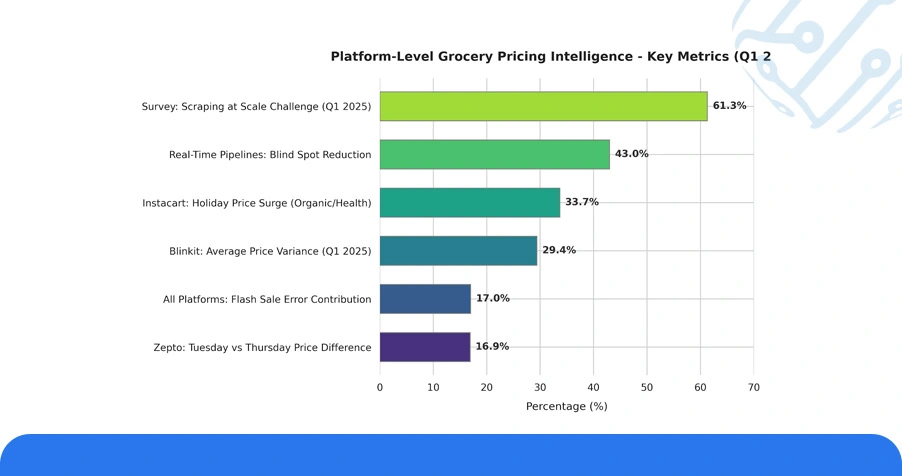
Across the 2025 US ecommerce monitoring dataset, Amazon recorded a 29.7% average price fluctuation across 18 major product categories, reflecting the platform's aggressive deployment of real-time algorithmic repricing in response to third-party seller activity.
● Walmart’s data revealed the strongest early-week pricing advantage, with Monday and Tuesday product listings averaging 16.4% lower than mid-week prices. Insights derived through Mobile App Data Scraping Services further highlighted this consistent trend, creating a clear opportunity for price-conscious shoppers and businesses seeking data-driven pricing strategies.
● Localized Ecommerce Trend Tracking Across US metro markets revealed that high-density urban zones including New York, Los Angeles, and Chicago experienced 38.6% greater product price volatility than rural markets, driven by concentrated competitive density and higher promotional frequency.
● Retailers that deployed Consumer Purchase Behavior Scraping for US E-Commerce Business analytics reported a 44% improvement in product recommendation accuracy during personalization campaigns, directly correlating scraped behavior signals with purchase intent conversion.
More than 18% of demand forecast deviations occurred within 36 hours of a major promotional announcement, underscoring the necessity of continuous, high-frequency data extraction pipelines for retailers managing time-sensitive inventory and pricing strategies.
Conclusion
Success in the United States ecommerce landscape depends on timely, accurate, and actionable market intelligence. Organizations adopting Ecommerce Market Intelligence Using Real-Time Scraping can respond faster to pricing changes, inventory fluctuations, and shifting consumer demand, enabling smarter decisions and stronger competitive positioning.
As digital competition continues to intensify, leveraging United States Ecommerce Analytics via Web Scraping provides the visibility needed to drive sustainable growth and operational efficiency. Contact ArcTechnolabs today to explore our customized data extraction solutions.