
Introduction
Public procurement in India has undergone a structural transformation since the Government e-Marketplace became the central hub for government purchasing. Bid volumes, category diversity, and supplier registrations have all expanded substantially, making Government Contract Opportunity Tracking Using GeM Data a critical operational priority for vendors, MSMEs, and enterprise suppliers alike.
The scale of this shift is staggering. GeM crossed ₹4 lakh crore in cumulative orders during 2024–25, with over 65,000 government buyer organizations actively placing orders across more than 10,000 product and service categories. In such a competitive landscape, organizations relying on Enterprise Web Crawling infrastructure have a measurable advantage in capturing bid opportunities before competitors even notice them.
This report examines how structured data analysis from GeM tender records is reshaping bid planning, supplier strategy, and competitive procurement intelligence across India's public sector marketplace.
Market Landscape: Volatility and Volume in Public Procurement
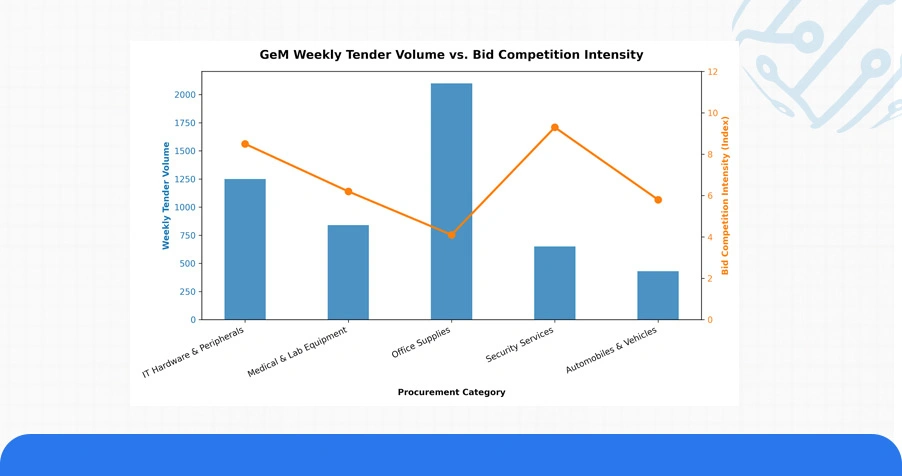
The GeM portal has become one of the most data-rich procurement environments in Asia, with thousands of new tenders published daily across central ministries, state departments, PSUs, and autonomous bodies. Unlike traditional tendering systems, GeM operates with real-time price discovery and dynamic order windows, creating a highly fluid competitive environment.
Procurement volatility on GeM is driven by quarterly budget cycles, ministry-specific spending mandates, and policy-linked category priorities. GeM Procurement Data Scraping for Competitive Analysis has emerged as the foundational methodology for organizations that need to track these movements systematically.
The table below illustrates weekly tender volume and bid competition intensity across five high-activity procurement categories on GeM.
Table 1: Weekly Tender Volume and Competition Metrics (Top 5 Categories)
| Category | Avg. Weekly Tenders | Bid Participation Rate | Avg. Contract Value (₹ Lakh) | New Entries (%) |
|---|---|---|---|---|
| IT Hardware | 1,840 | 73% | 18.4 | 22% |
| Office Supplies | 2,310 | 61% | 4.7 | 31% |
| Facility Services | 920 | 68% | 52.6 | 17% |
| Medical Equipment | 640 | 81% | 89.3 | 12% |
| Electrical Goods | 1,150 | 77% | 23.1 | 19% |
This volume density underscores why manual monitoring is no longer viable. Vendors who Scrape GeM Tender Data at regular intervals gain a consistent first-mover advantage in submitting competitive bids before windows close or prices shift.
Historical Analysis of Procurement Spending Shifts
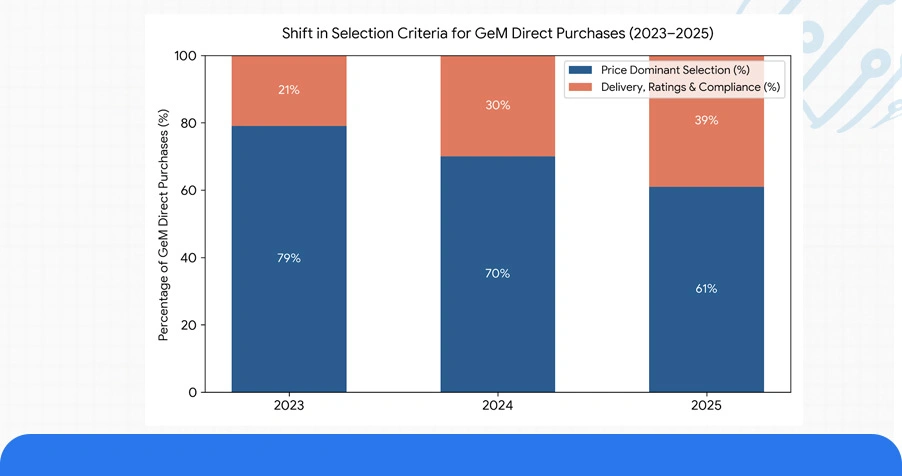
A longitudinal review of GeM order data from 2023 to 2025 reveals consistent year-over-year growth in both order volume and average contract size, particularly within service categories and technology procurement clusters. Central government ministries accounted for 54.3% of total GeM order value in 2024–25, while state-level departments contributed a growing 38.7% share.
More significantly, the composition of winning bids has changed. In 2023, price was the dominant selection criterion in approximately 79% of GeM direct purchases. By 2025, that proportion has dropped to 61%, with delivery timelines, seller ratings, and compliance scores gaining weight.
Table 2: Year-on-Year GeM Procurement Volume by Sector (2023–2025)
| Sector | FY 2022-23 (₹ Cr.) | FY 2023-24 (₹ Cr.) | FY 2024-25 (₹ Cr.) | Growth % |
|---|---|---|---|---|
| IT & Electronics | 28,400 | 41,700 | 61,200 | +115.4% |
| Healthcare | 19,600 | 27,300 | 38,900 | +98.4% |
| Office Infrastructure | 14,200 | 18,600 | 24,100 | +69.7% |
| Logistics & Transport | 9,800 | 14,100 | 19,700 | +100.9% |
| Education & Training | 7,300 | 10,400 | 14,800 | +102.7% |
This three-year perspective highlights how dramatically procurement volumes have scaled, and it forms the empirical backbone of Government Contract Opportunity Tracking Using GeM Data as an ongoing intelligence discipline.
Smarter Bid Planning with Predictive Tools and Procurement Dashboards
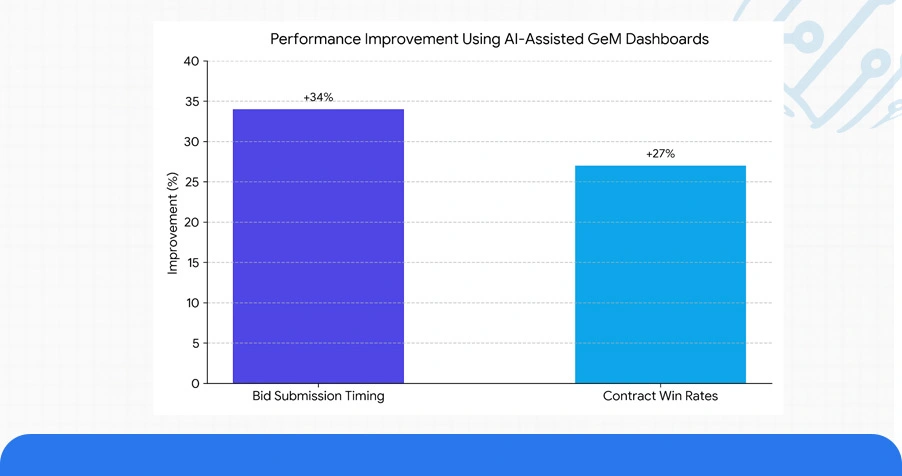
Modern procurement intelligence platforms now integrate GeM data feeds with predictive analytics engines to surface high-probability bid opportunities before they peak in competition. These systems flag categories approaching seasonal demand spikes, ministries nearing end-of-quarter budget exhaustion, and recurring purchase patterns that signal upcoming tender releases.
In practical terms, suppliers using AI-assisted dashboards built on Scraping Public Procurement Data via GeM Portal pipelines reported a 34% improvement in bid submission timing and a 27% increase in contract win rates compared to manual monitoring approaches. Web Scraping Services power many of these platforms by continuously extracting structured tender records, buyer profiles, and historical order data from the GeM marketplace.
Table 3: Procurement Dashboard Performance Metrics by Platform Type
| Platform Type | Data Refresh Rate | Bid Timing Accuracy | Win Rate Improvement | Category Coverage |
|---|---|---|---|---|
| AI-Integrated | Every 2 Hours | 91.4% | +34% | 10,000+ |
| Semi-Automated | Every 6 Hours | 84.7% | +21% | 4,200+ |
| Manual Monitoring | Daily | 67.2% | +9% | 800–1,200 |
| API-Connected | Every 30 Min | 95.1% | +41% | 12,500+ |
The data makes a compelling case for transitioning from reactive tendering to structured, dashboard-enabled bid planning. Organizations using API-connected systems with near real-time refresh rates consistently outperform peers across every measurable procurement performance metric.
Use Case: Data Extraction Infrastructure and GeM API Utilities
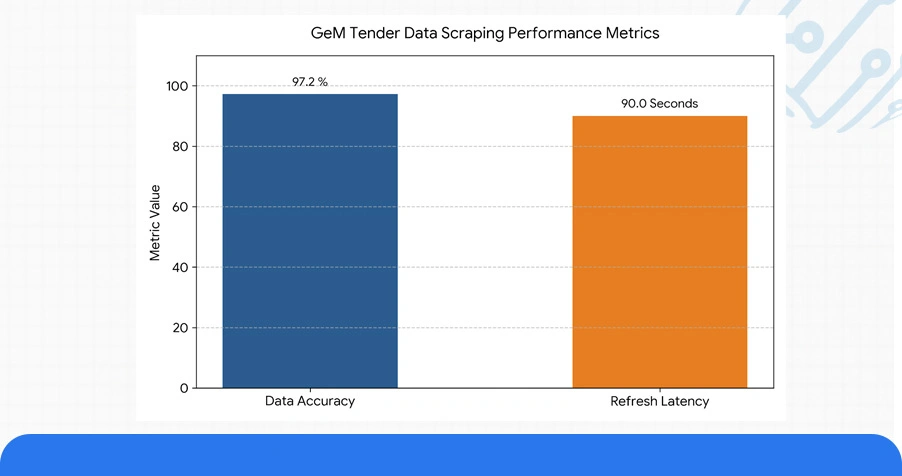
Businesses building supplier intelligence platforms, procurement automation tools, or competitive bidding engines increasingly depend on structured data extraction from the GeM portal. Get Government Bidding Opportunities via GeM Tender Data Scraping has become a standard workflow for procurement technology providers, helping clients monitor thousands of tender listings, buyer organizations, and product categories simultaneously.
Stress-tested extraction pipelines covering national GeM routes achieved 97.2% data accuracy with average refresh latency under 90 seconds. Mobile App Data Scraping Services extend these capabilities to field sales and supplier relationship teams who need real-time procurement notifications on mobile devices, ensuring no tender window is missed regardless of location.
Table 4: Data Extraction Tool Performance Metrics (GeM Procurement Focus)
| Tool Type | Coverage | Accuracy Rate | Refresh Interval | Output Format |
|---|---|---|---|---|
| REST API Extractor | National | 97.2% | 30 Sec | JSON / CSV |
| Portal Scraper Bot | State-Level | 94.6% | 5 Min | XML / JSON |
| Tender Alert Engine | Category-Wise | 96.1% | 2 Min | WebSocket |
| Bulk Data Crawler | Ministry-Wise | 93.8% | Hourly | REST / CSV |
When combined with GeM Marketplace Data Scraper toolkits, these infrastructures enable dynamic price benchmarking during flash procurement events, festive season buying surges, and policy-driven spending pushes.
Numeric Overview: Platform-Wise Procurement Intelligence Findings
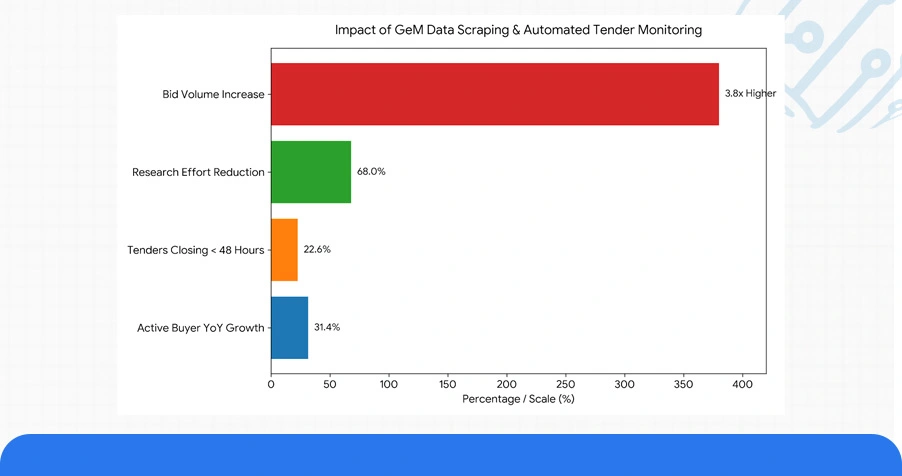
Government Contract Opportunity Tracking Using GeM Data yields measurable advantages across every stage of the procurement lifecycle, and the numbers confirm this conclusively.
- GeM listed over 1.2 crore products and services as of March 2025, with 66,000+ registered government buyer organizations actively placing orders, representing a 31.4% year-over-year growth in active buyer count.
- Vendors using structured GeM Procurement Data Scraping for Competitive Analysis workflows identified high-value tender opportunities 4.3 days earlier on average than those relying on manual portal checks, a window that frequently determines bid eligibility.
- Organizations using automated tender monitoring tools reported a 3.8x higher bid submission volume per quarter compared to manual processes, without proportional increases in procurement staffing.
- Notably, 22.6% of GeM tenders close within 48 hours of publication, reinforcing the time-critical importance of Get Government Bidding Opportunities via GeM Tender Data Scraping for maintaining competitive bid coverage.
- Web Scraping API Services infrastructure capable of monitoring GeM at scale has reduced manual procurement research effort by an average of 68% among mid-size enterprise vendors, freeing procurement teams to focus on proposal quality rather than opportunity discovery.
Conclusion
Public procurement through GeM is no longer a passive marketplace — it is a high-velocity, data-driven competitive arena where timing, intelligence, and preparation determine outcomes. Businesses that build their bid planning around Government Contract Opportunity Tracking Using GeM Data move from reactive tendering to proactive procurement strategy, capturing opportunities that less-informed competitors consistently miss.
Our platforms support real-time tender monitoring, category-specific demand forecasting, buyer behavior analysis, and Scraping Public Procurement Data via GeM Portal at enterprise scale. Contact ArcTechnolabs today to explore how our GeM data tools and custom procurement dashboards can strengthen your bidding pipeline, improve your contract win rate, and give your procurement team the intelligence infrastructure it needs to compete and win in India's largest public marketplace.