Introduction
Modern grocery shoppers now demand fast delivery, real-time stock accuracy, and competitive pricing, yet many retailers still find it difficult to track what truly influences purchase decisions. To bridge this gap, Grocery Delivery Data Scraping for E-Commerce Intelligence helps businesses capture live market movements and understand customer behavior with greater precision.
By monitoring product listings, category changes, and delivery-based inventory patterns, businesses can identify demand signals much earlier than traditional reports. Retailers can also track how FreshDirect adjusts pricing, promotions, and product availability across different areas.
Using Web Scraping Grocery and Supermarket Data, businesses can gather structured information from FreshDirect listings, including product prices, bundles, discounts, delivery time slots, and category ranking patterns. This helps brands analyze which items surge during specific periods and which products lose traction due to competitor activity.
Monitoring Market Shifts Through Product-Level Signals
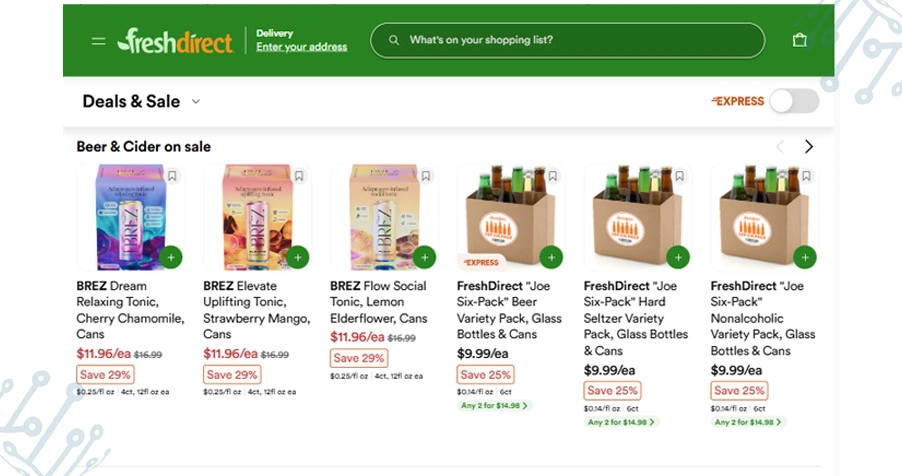
FreshDirect frequently adjusts prices, updates product listings, and reshuffles category placements based on consumer buying patterns. For grocery brands and e-commerce teams, these changes are not random. They are direct signals of what customers are searching for, what is selling faster, and which products are losing traction.
By applying Grocery & Supermarket Data Scraping, retailers can capture real-time product details such as price changes, discount banners, category rank movements, and stock visibility. For instance, if FreshDirect reduces snack prices during weekends or pushes organic produce to higher positions, these are indicators that demand is shifting and pricing strategy should follow.
Retailers can also detect hidden pricing tactics such as pack-size modifications, where the product quantity changes but the price stays constant. These subtle shifts influence customer perception and purchasing behavior. With consistent tracking, companies improve their pricing response speed and align promotional campaigns more effectively.
| Tracked Data Element | What It Helps Measure | Example Outcome |
|---|---|---|
| Product Price Updates | Market price volatility | Detect sudden 10% drops |
| Discount & Offer Labels | Promotion intensity | Identify weekly deal cycles |
| Category Rank Shifts | Consumer interest movement | Spot rising organic products |
| Stock Availability | Demand pressure | Predict stock-out trends |
| Pack Size Changes | Hidden price strategy | Track shrinkflation patterns |
This structured approach helps reduce guesswork, improves decision-making accuracy, and supports faster pricing corrections. It also strengthens category planning by identifying which segments are expanding, declining, or being replaced by alternatives.
Building Smarter Comparisons Across Competing Sellers
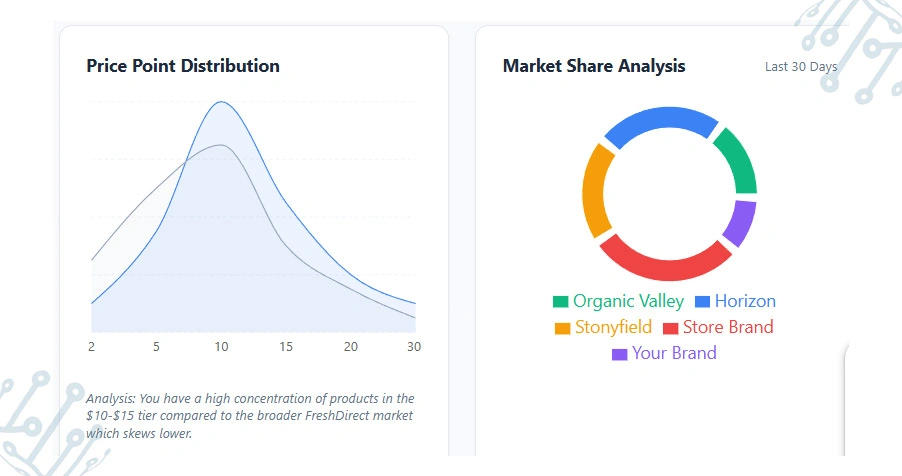
FreshDirect does not operate in isolation. Its pricing and promotional activity is strongly influenced by other online grocery platforms. Without a benchmark system, retailers may overprice products, miss key promotional windows, or underestimate demand spikes triggered by competitor discounts.
Using FreshDirect Competitor Benchmarking, businesses can compare similar SKUs across platforms and identify which products FreshDirect positions aggressively and which categories it keeps premium. These insights allow retailers to detect pricing gaps, monitor promotion cycles, and evaluate demand shifts caused by competitor strategies.
A structured solution such as the FreshDirect Competitive Pricing Analysis API supports automation by delivering organized feeds that simplify daily monitoring. Many grocery businesses using competitive tracking have reported measurable improvements in demand prediction because they align decisions with real marketplace movements instead of internal assumptions.
| Benchmark Factor | What It Reveals | Business Advantage |
|---|---|---|
| SKU Price Gap | Overpricing or underpricing risk | Better margin planning |
| Discount Frequency | Promotion pressure | Improved campaign timing |
| Category Expansion | Market trend direction | Smarter assortment strategy |
| Delivery Fee Changes | Platform competitiveness | Better customer pricing models |
| Stock-Out Comparison | Demand transfer signals | Faster replenishment planning |
This process also improves inventory planning. When competitor stock-outs occur, FreshDirect demand often rises in those categories, and retailers can prepare for sudden demand transfers. As a result, businesses improve their ability to react with smarter pricing adjustments and better campaign execution.
Using Location Patterns to Improve Planning
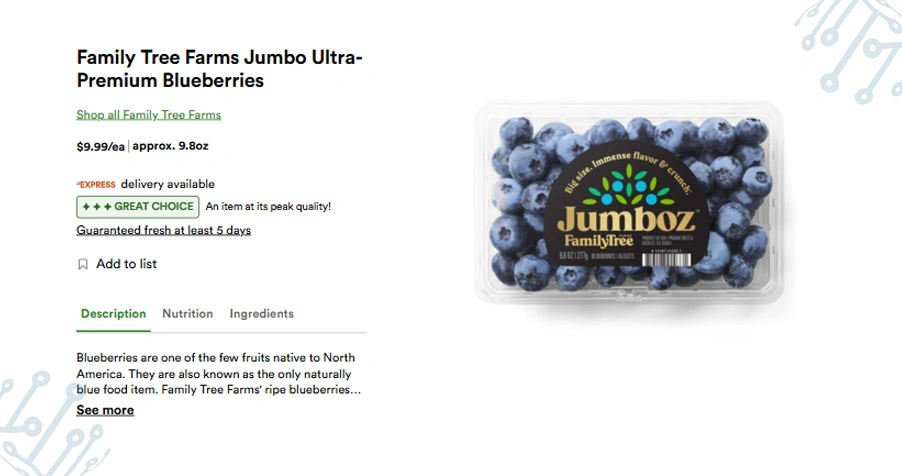
Customer demand on FreshDirect is heavily influenced by delivery zones. Certain neighborhoods show higher demand for premium organic items, while other areas consistently favor affordable packaged goods. These differences create strong hyperlocal trends that retailers often overlook when using generalized pricing and forecasting models.
Retailers can measure how discounts perform across zones and understand which locations respond better to price cuts. This is where Grocery Pricing Strategy Using Scraped Data becomes important, because it allows brands to align pricing actions with real customer behavior rather than applying the same discount strategy everywhere.
Retailers can also monitor how FreshDirect adjusts product availability based on region. Some categories may disappear temporarily in one area while remaining fully stocked elsewhere. These changes reflect supply planning decisions and help businesses forecast demand at a deeper level.
| Hyperlocal Metric | What It Tracks | Practical Business Result |
|---|---|---|
| Delivery Slot Availability | Local demand intensity | Detect surge order zones |
| Zone-Based Pricing | Regional price differences | Optimize margins locally |
| Local Stock Status | Inventory movement patterns | Reduce stock-out losses |
| Promotion Performance by Zone | Discount effectiveness | Improve campaign ROI |
| Product Access Changes | Regional demand behavior | Strengthen distribution planning |
With Hyperlocal Delivery Data Extraction, businesses can collect insights from delivery slot availability, region-based stock visibility, and localized product access. These indicators reveal which areas are experiencing high demand pressure and which zones have slower movement.
How ArcTechnolabs Can Help You?
We help businesses convert FreshDirect Grocery Delivery Data Scraping for E-Commerce Intelligence into measurable performance outcomes by delivering customized data pipelines that track real-time category changes, SKU-level updates, and location-based availability.
Our Support Includes:
- Automated extraction of product listings and catalog changes.
- Pricing and discount monitoring with scheduled updates.
- Category performance tracking with structured data outputs.
- Data cleansing, validation, and duplication removal.
- API-ready delivery formats such as JSON, CSV, and database feeds.
- Custom reporting for decision-making and analytics automation.
Our team also provides advanced scraping frameworks aligned with Online Grocery Data Scraping Services, ensuring businesses receive reliable datasets without disruption, missing fields, or formatting issues.
Conclusion
FreshDirect data offers a powerful advantage for grocery retailers looking to predict demand and reduce pricing mistakes. This is why FreshDirect Grocery Delivery Data Scraping for E-Commerce Intelligence plays a critical role in improving demand prediction accuracy, optimizing inventory planning, and strengthening digital grocery performance.
By applying FreshDirect Competitor Benchmarking, businesses can refine pricing, adjust promotions faster, and improve product placement decisions with real marketplace signals. Contact ArcTechnolabs today to build your customized scraping solution and start improving grocery decision intelligence with real-time data.