Introduction
Rising food costs have become a central concern for households, retailers, and policymakers across Canada. Subtle price changes across everyday essentials often signal broader economic movements long before official inflation reports are released. By analyzing large-scale pricing behavior across supermarket chains, data-driven teams can uncover early indicators of inflationary pressure, demand imbalance, and supply-side stress.
Modern analytical approaches rely heavily on Canadian Retail Price Tracking to monitor how product prices evolve across regions, store formats, and time periods. Instead of relying on limited surveys, businesses can now observe thousands of SKUs daily, capturing micro-level price fluctuations that aggregate into macro-level inflation trends.
Access to a unified Grocery Store Dataset further strengthens this visibility by enabling consistent comparisons between national chains, discount grocers, and regional players. Such datasets help analysts normalize price differences, identify persistent inflation pockets, and quantify the real consumer impact behind headline inflation numbers. As grocery inflation continues to reshape purchasing behavior, structured price intelligence has become a critical input for smarter retail and economic decision-making.
Uncovering Category-Level Price Movements Across Retailers
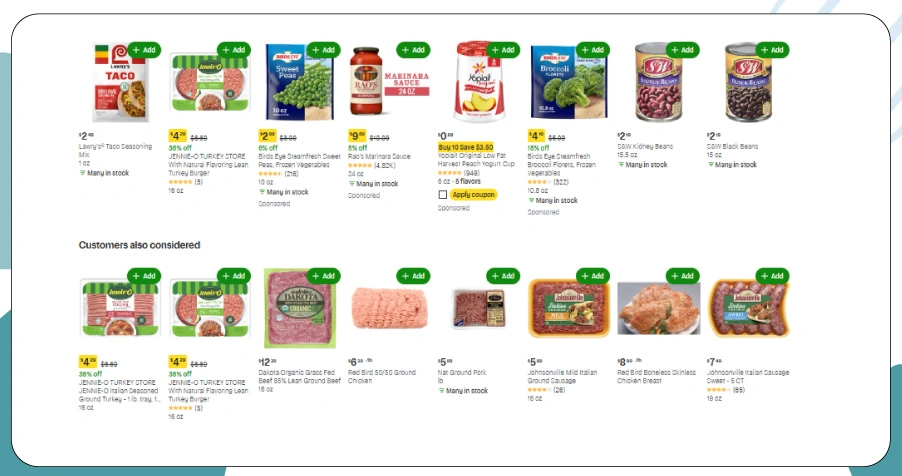
Grocery inflation often appears uniform at a national level, yet price movements vary significantly when observed at the category and store level. Retailers price essential goods differently based on sourcing costs, private label strategies, and regional demand elasticity. By applying Grocery & Supermarket Data Scraping, analysts gain structured access to daily shelf prices across multiple banners, enabling visibility into where inflation pressure truly concentrates.
Data collected at scale highlights pricing gaps between premium and discount retailers, exposing how individual chains manage cost absorption or consumer pass-through. These insights allow businesses to identify which categories experience accelerated price escalation and which remain price-stable despite supply challenges. Additionally, Retail Price Scraping Canada supports banner-level comparisons that reveal inconsistencies in promotional frequency and markdown intensity across regions.
Such intelligence is critical for forecasting demand shifts, as even small price increases can trigger substitution behavior among cost-sensitive shoppers. When monitored consistently, scraped pricing data becomes a reliable inflation proxy that reflects real consumer exposure rather than delayed macro indicators.
| Category Type | Price Change Trend | Promotion Dependency |
|---|---|---|
| Dairy Products | High Increase | Moderate |
| Packaged Essentials | Steady Increase | High |
| Fresh Produce | Seasonal Volatile | Low |
| Frozen Items | Stable | Moderate |
Evaluating Global Reference Markets For Pricing Context
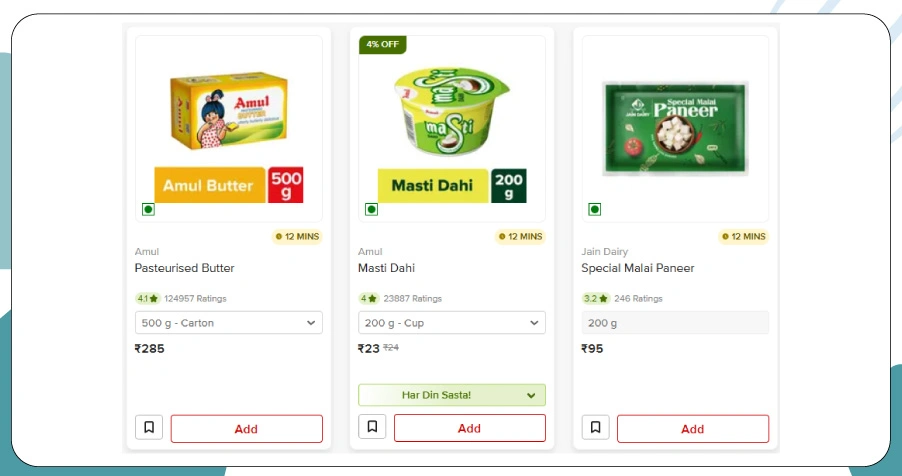
Domestic grocery pricing does not operate in isolation; global supply chains and commodity markets influence cost structures across borders. Comparing external markets offers valuable context for understanding how inflation develops and stabilizes over time. Through Scraping Indian Grocery Inventory, analysts can observe pricing behavior in a high-volume, cost-sensitive retail environment that reacts quickly to supply and demand changes.
Cross-market comparisons highlight differences in promotion intensity, private label penetration, and consumer price tolerance. When aligned with Canadian datasets, these insights help distinguish global inflation triggers from region-specific pricing decisions. Emerging markets often demonstrate faster price corrections due to competitive density, providing early indicators of stabilization patterns that may later appear in developed markets.
Automation through Web Scraping Grocery Price Data allows analysts to collect and normalize international retail listings without manual intervention. This method enables consistent benchmarking of staple items, discount cycles, and category-level inflation across multiple countries. The resulting comparisons strengthen pricing models by revealing how retailers elsewhere mitigate cost pressure while preserving sales volume.
| Market Comparison | Avg Price Volatility | Discount Frequency |
|---|---|---|
| Canada | Moderate | Medium |
| India | High | High |
| United Kingdom | Low | Low |
Converting Price Signals Into Strategic Planning
Raw pricing data becomes truly valuable only when transformed into actionable intelligence. Retailers increasingly rely on structured analytics to interpret inflation signals, demand elasticity, and promotional effectiveness. Using Retail Strategies With Grocery Price Intelligence Datasets, organizations can align pricing decisions with evolving consumer behavior while protecting margins.
Advanced modeling evaluates how sustained price increases affect category substitution and basket composition. By integrating Food Price Data Extraction, businesses gain SKU-level visibility into cost drivers, allowing for more accurate forecasting and supplier negotiations. These insights also inform promotion planning by identifying price thresholds beyond which demand sharply declines.
Decision-makers benefit from predictive outputs that translate historical pricing trends into future scenarios. When supported by Retail Price Analytics Canada, analytics frameworks help retailers transition from reactive price adjustments to proactive planning. This approach enables better assortment optimization, localized pricing strategies, and long-term resilience against inflation volatility.
| Insight Category | Strategic Outcome |
|---|---|
| Elasticity Modeling | Optimized price thresholds |
| Trend Forecasting | Improved demand planning |
| Regional Analysis | Localized pricing execution |
How ArcTechnolabs Can Help You?
Retail pricing challenges demand scalable and accurate intelligence systems capable of tracking thousands of SKUs daily. Through Canadian Retail Price Tracking, our solutions enable businesses to monitor inflation signals, competitor pricing, and category-level trends with unmatched accuracy.
What we deliver:
- Real-time retail price monitoring across major supermarkets.
- Automated data validation and normalization processes.
- Category-level inflation and demand analysis.
- Competitive pricing intelligence dashboards.
- Historical trend analysis with forecasting models.
- Secure and scalable data delivery formats.
Our analytics framework also integrates Grocery Price Comparison Canada, helping brands and retailers translate raw price data into smarter pricing and merchandising decisions.
Conclusion
Inflation visibility requires more than national averages; it demands real shelf-level insights that reflect consumer reality. By applying Canadian Retail Price Tracking, businesses gain a clearer understanding of where and how grocery prices shift across regions and categories, enabling informed responses to inflationary pressure.
Accurate comparisons and structured analysis further enhance decision-making when supported by Supermarket Data Scraping. To transform grocery price data into strategic advantage, partner with ArcTechnolabs today and start building resilient, data-driven pricing strategies.