.webp "What Makes Real-Time Grocery Price Tracking Using Blinkit Data Deliver 30% More Accurate Trends?")
Introduction
The rapid evolution of India’s quick-commerce ecosystem has made grocery pricing one of the most volatile data points in retail analytics. Prices fluctuate multiple times a day due to demand surges, stock availability, hyperlocal competition, and logistics constraints. Brands, aggregators, and retailers that rely on static or delayed pricing feeds often struggle to interpret real market behavior accurately. This is where Web Scraping Grocery and Supermarket Data becomes essential for building timely, actionable intelligence.
Blinkit, as one of India’s most dynamic instant-delivery platforms, reflects real consumer demand in near real time. Every price update, stock change, and location-based variation reveals valuable patterns that traditional reports fail to capture. Businesses that analyze Blinkit’s live ecosystem can measure pricing elasticity, understand micro-market demand, and respond faster to competitors.
By combining automated extraction, intelligent normalization, and continuous validation, modern data systems can convert Blinkit’s fast-moving grocery environment into structured insights. When executed correctly, Real-Time Grocery Price Tracking Using Blinkit Data enables organizations to detect early market shifts, improve forecasting accuracy, and reduce decision latency by up to 30%. This blog explores how real-time tracking solves critical pricing challenges, improves accuracy, and drives measurable business outcomes.
Handling Rapid Price Changes Across Locations
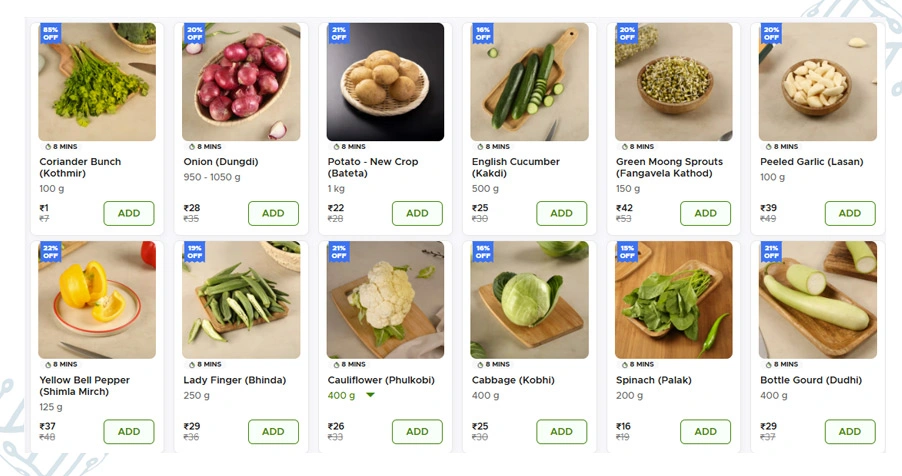
Rapid price shifts across quick-commerce platforms create serious challenges for retailers and analysts trying to interpret market behavior accurately. Grocery pricing varies by neighborhood, delivery window, and demand intensity, often changing multiple times within a single day. This is where structured Web Scraping Blinkit Product Data enables deeper clarity by recording price movements at a hyperlocal level.
Automated systems collect SKU-level pricing data across multiple locations, allowing businesses to compare regional variations in real time. Studies show that hyperlocal grocery prices can differ by as much as 15–20% within the same city during peak demand hours. Capturing these shifts helps teams understand demand elasticity, competitor positioning, and promotional timing with greater accuracy.
Additionally, Blinkit Price Scraping ensures limited-time discounts, surge adjustments, and bundled offers are not overlooked. Over time, this builds a reliable historical dataset that supports trend analysis and predictive pricing models. Rather than reacting to outdated averages, decision-makers gain visibility into live market behavior.
| Pricing Aspect | Manual Tracking | Automated Monitoring |
|---|---|---|
| Update Speed | Low | High |
| Regional Accuracy | Limited | Granular |
| Price Variance Detection | Delayed | Instant |
| Decision Reliability | Moderate | Strong |
By transforming volatile pricing signals into structured intelligence, businesses can stabilize margins, improve forecasting, and align strategies with real consumer demand.
Achieving Clear Inventory Visibility Across Zones
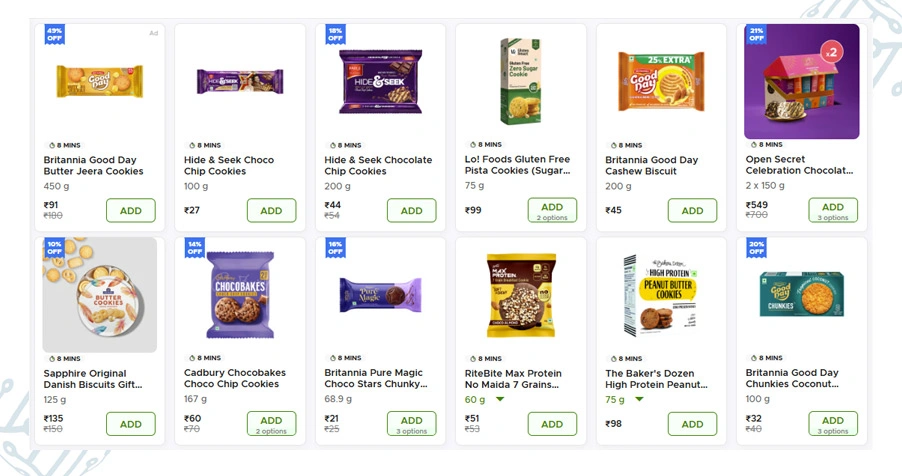
Price intelligence alone does not reflect true market conditions without availability context. Products frequently go out of stock during high-demand periods, distorting demand analysis and causing false pricing signals. When availability gaps are ignored, businesses misjudge consumer interest and overestimate price sensitivity. To solve this, advanced systems now Monitor Blinkit Product Availability in Real Time alongside pricing data.
Availability tracking highlights when demand exceeds supply, revealing fulfillment inefficiencies and replenishment delays. Industry data suggests that nearly one-quarter of abandoned grocery carts result from sudden stock unavailability. Capturing these changes helps brands understand lost sales opportunities and optimize inventory placement across delivery zones.
Through Blinkit Availability Tracking, analysts can map how often products disappear, how quickly they return, and which regions experience persistent shortages. This insight feeds directly into Grocery Market Insights Using Web Scraping, enabling clearer separation between demand-driven and supply-driven pricing movements.
| Availability Signal | Strategic Insight |
|---|---|
| Frequent Stockouts | High Demand Pressure |
| Short Outages | Logistics Gaps |
| Stable Availability | Balanced Supply |
| Repeated Delays | Replenishment Risk |
When availability data is paired with pricing trends, organizations gain a realistic picture of consumer behavior, helping reduce misaligned promotions and improve demand planning accuracy.
Driving Smarter Decisions Through Continuous Data
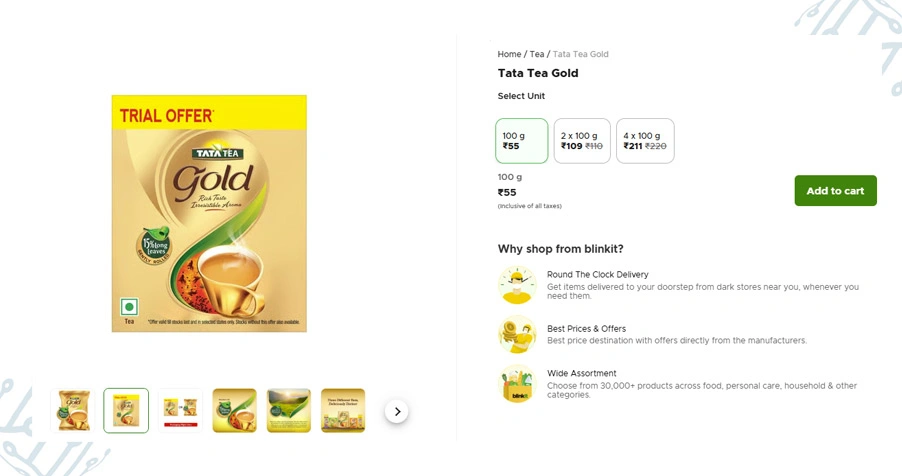
Collecting data is only the first step; real value emerges when insights directly influence business decisions. Continuous grocery data feeds support dynamic pricing, competitive benchmarking, and promotion planning when integrated into analytics workflows. Companies using Blinkit Grocery Data Scraping report significantly faster reaction times to market changes compared to manual monitoring approaches.
Automated intelligence allows teams to evaluate competitor price shifts, demand surges, and inventory constraints simultaneously. This holistic view supports Retail Price Optimization Using Blinkit Data by adjusting prices based on real consumption patterns rather than static assumptions. Businesses adopting these methods see measurable improvements in margin stability and promotional ROI.
Moreover, real-time grocery analytics enhances category planning and assortment decisions, ensuring products align with local demand trends. As datasets mature, predictive models become more accurate, helping organizations anticipate price movements before they impact performance.
| Optimization Area | Business Outcome |
|---|---|
| Dynamic Pricing | Margin Protection |
| Competitive Tracking | Faster Adjustments |
| Promotion Planning | Higher Conversions |
| Assortment Control | Reduced Overstock |
By converting continuous market signals into actionable intelligence, organizations move from reactive pricing to proactive strategy execution, strengthening their competitive position in fast-moving grocery markets.
How ArcTechnolabs Can Help You?
Modern grocery analytics demands speed, accuracy, and scalability. Our solutions combine automated extraction, intelligent validation, and seamless integration with analytics platforms to support Real-Time Grocery Price Tracking Using Blinkit Data at scale.
Our capabilities include:
- High-frequency data capture with minimal latency.
- Scalable pipelines for multi-city coverage.
- Automated data normalization and cleansing.
- Custom dashboards for actionable insights.
- Secure delivery via APIs or cloud storage.
- Continuous quality monitoring systems.
By combining these capabilities with Blinkit Price Scraping, we ensure your pricing intelligence remains accurate, timely, and business-ready.
Conclusion
In a market defined by speed and hyperlocal competition, delayed insights create costly blind spots. When businesses rely on outdated reports, they miss critical demand signals that shape consumer behavior. Accurate analytics begins with Real-Time Grocery Price Tracking Using Blinkit Data, enabling organizations to interpret trends with confidence rather than assumptions.
As quick-commerce continues to evolve, visibility into pricing and inventory will define winners. With Monitor Blinkit Product Availability in Real Time, decision-makers can act faster, reduce uncertainty, and build resilient strategies. Connect with ArcTechnolabs today to transform live Blinkit data into measurable business impact.