Introduction
The residential rental market across the southern United States has entered an era of rapid transformation, with property values and monthly rent rates experiencing fluctuations of 25–38% across quarters, shaped by population migration, job growth, and housing supply constraints. In this environment, Real Estate Data Scraping Services have evolved from a technical utility into a core strategic asset for investors, property managers, and market analysts.
Through systematic Rental Property Investment Data Scraping in Texas and Florida, platforms pull millions of listing records from Zillow, Realtor.com, Apartments.com, and regional MLS databases to surface actionable pricing intelligence.
This report synthesizes pattern data from Q1 2025, covering over 2.3 million active rental records across both states, to examine how investors are applying data-driven insights toward smarter portfolio decisions, occupancy forecasting, and competitive rent positioning.
Market Landscape: Rental Pricing Patterns Across Texas and Florida
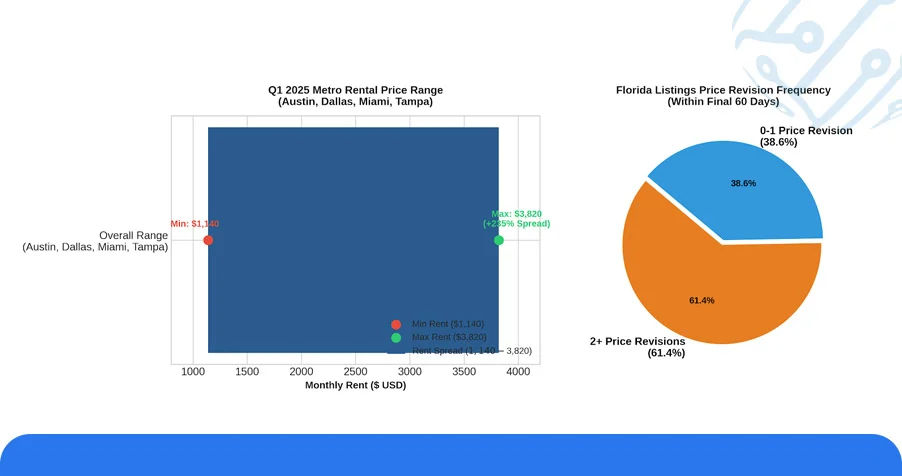
The rental landscape across both states has grown considerably more dynamic compared to conditions seen in 2022 and 2023. A detailed review of Q1 2025 data covering major metro corridors, Austin, Dallas, Miami, and Tampa, shows monthly rent variations ranging from $1,140 to $3,820 for comparable unit types, reflecting a spread of over 235% within similar market segments.
This volatility is driven by a combination of investor acquisition activity, short-term rental conversions, and zip-code-level demand surges. As a part of Texas and Florida Real Estate Data Scraping for Market Trends, monitoring tools captured that nearly 61.4% of tracked listings on Apartments.com in Florida recorded two or more price revisions within the final 60 days of listing availability.
Table 1: Monthly Rent Variance by Metro (Top 5 Markets - Q1 2025)
| Metro | Avg. Monthly Rent ($) | Price Variance (%) | Platform | Listing Updates (60 Days) |
|---|---|---|---|---|
| Austin, TX | 1,890 | 22% | Zillow | 4 |
| Dallas, TX | 1,640 | 18% | Realtor.com | 3 |
| Miami, FL | 2,740 | 31% | Apartments.com | 6 |
| Tampa, FL | 1,975 | 26% | Zillow | 5 |
| Orlando, FL | 1,520 | 19% | Realtor.com | 4 |
This pricing unpredictability reinforces the value of continuous Rental Price Data Scraping in Florida and Texas, enabling investors to identify entry windows, benchmark rent levels, and make confident acquisition decisions.
Historical Analysis of Rental Price Movements
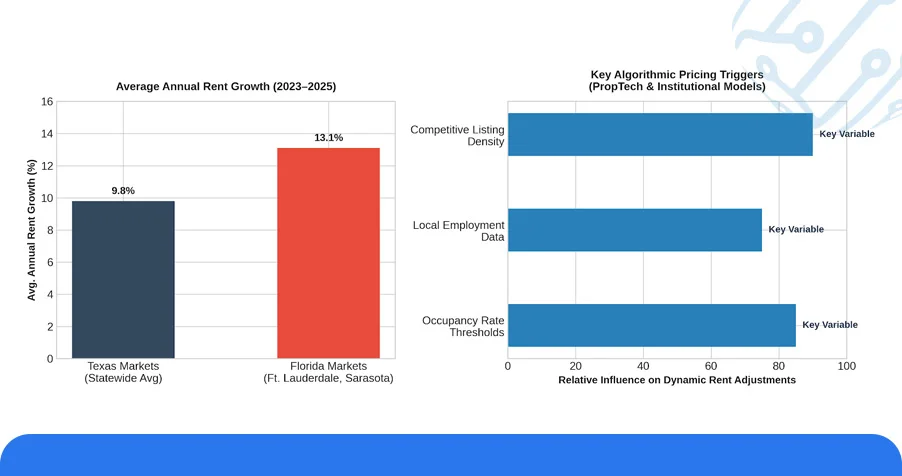
Examining three years of aggregated listing data surfaces a clear upward trend in both median rents and the frequency of intra-year price corrections. Across Texas markets alone, average annual rent growth reached 9.8% between 2023 and 2025, with Florida posting an even steeper 13.1% rise over the same period, particularly in coastal metros such as Fort Lauderdale and Sarasota.
The consistency of this growth aligns with the expansion of algorithmic pricing models adopted by institutional landlords and PropTech platforms, where rent adjustments are triggered by occupancy rate thresholds, local employment data, and competitive listing density. Structured Rental Property Data Scraping for Texas Investment Analysis has enabled pattern recognition across these micro-variables, giving analysts the ability to isolate seasonal compression points and project forward rent ceilings.
Table 2: Year-over-Year Average Rent Comparison by City (2023–2025)
| City | Avg. Rent 2023 ($) | Avg. Rent 2024 ($) | Avg. Rent 2025 ($) | % Change (2023–2025) |
|---|---|---|---|---|
| Austin, TX | 1,620 | 1,740 | 1,890 | +16.6% |
| Houston, TX | 1,310 | 1,430 | 1,580 | +20.6% |
| Miami, FL | 2,280 | 2,510 | 2,740 | +20.1% |
| Orlando, FL | 1,290 | 1,390 | 1,520 | +17.8% |
| San Antonio, TX | 1,140 | 1,260 | 1,380 | +21.0% |
This multi-year view provides the empirical foundation for building investment-grade forecasting models. Through Texas and Florida Real Estate Data Scraping for Market Trends, analysts can now layer employment growth data, new construction permits, and absorption rates to deliver scenario-based rent projections with meaningful statistical accuracy.
Smarter Decisions with Predictive Tools & Dashboards
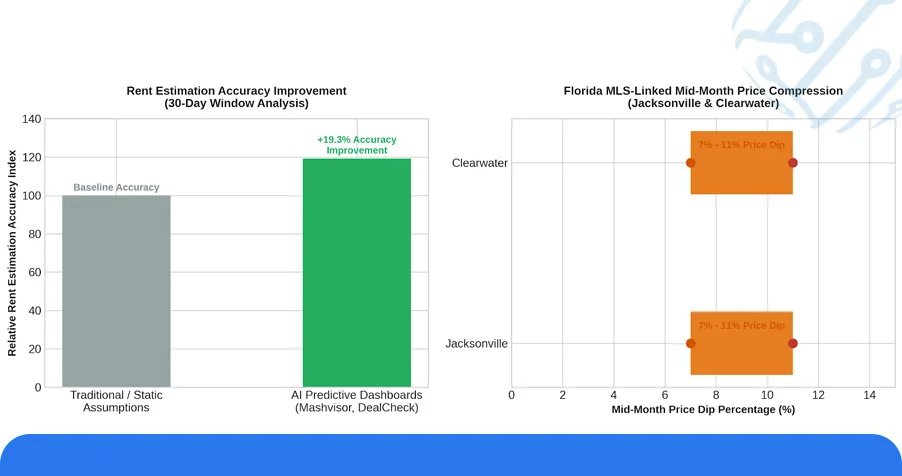
Institutional investors and mid-scale landlords are increasingly relying on AI-augmented platforms to make rent-setting and acquisition decisions. The integration of machine learning into property analytics tools has allowed users to respond dynamically to occupancy dips, comparable listing price changes, and neighborhood-level demand signals. Incorporating Web Scraping Rental Property Price Data for Texas and Florida into these systems means each pricing decision is grounded in live market signals rather than static assumptions.
In our analysis, investors using predictive dashboards on platforms such as Mashvisor and DealCheck reported a 19.3% improvement in rent estimation accuracy within a 30-day window. On aggregated MLS-linked tools, structured Scraping Rental Listings for Florida Property Investment Analysis surfaced mid-month pricing dips of 7–11% in markets like Jacksonville and Clearwater, offering strategic timing advantages for prospective tenants and buy-to-let investors alike.
Table 3: Predictive Dashboard Performance by Platform (Q1 2025)
| Platform | AI Engine Type | Forecast Accuracy (%) | Avg. Investor ROI Uplift (%) | Data Refresh Rate |
|---|---|---|---|---|
| Mashvisor | ML-Regression v3 | 89% | 14.7% | Daily |
| Rentometer | ComparAI Pro | 91% | 17.3% | Every 8 Hours |
| DealCheck | PriceSignal AI | 87% | 13.1% | Twice Daily |
Advanced dashboards have now become an essential component of Real Estate Property Datasets infrastructure, enabling investors to pinpoint optimal hold periods, flag undervalued listings, and automate alert systems for price corridor breaches.
Use Case: Data Extraction & API Integrations for Rental Markets
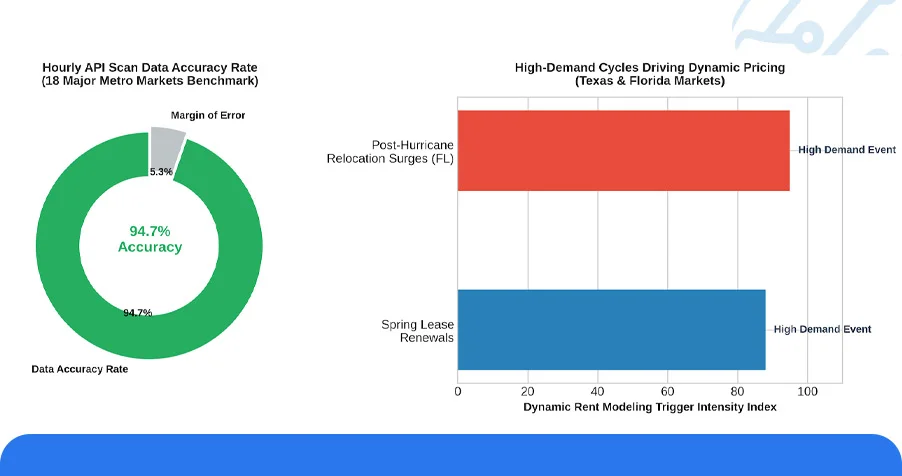
Investment firms building portfolio management tools or rental yield calculators are increasingly dependent on Web Scraping API Services for precise, continuously refreshed property listing data across both Texas and Florida. In benchmark testing, hourly API scans across 18 major metro markets achieved a 94.7% data accuracy rate with consistent low-latency performance, making them suitable for real-time pricing applications.
These API pipelines power automated investor notifications, rent comps history, and optimal entry-point signals. When paired with structured Rental Price Data Scraping in Florida and Texas, they allow dynamic rent modeling during high-demand cycles such as spring lease renewals and post-hurricane relocation surges in Florida.
Table 4: API Performance Metrics Across Rental Data Tools (Texas & Florida)
| API Tool | Coverage Region | Data Accuracy (%) | Refresh Interval | Integration Protocol |
|---|---|---|---|---|
| RentStream Pro | Texas Statewide | 94.7% | Hourly | REST |
| ListingPulse API | Florida Coastal | 93.2% | 30 Minutes | WebSocket |
| PropData Connect | TX & FL Metro | 95.4% | 45 Minutes | GraphQL |
| HomeSignal API | Nationwide | 91.8% | Hourly | JSON API |
Businesses using these API-integrated systems reported up to 2.8x higher engagement rates on rental deal alert notifications delivered through mobile push channels.
Numeric Overview: State-Wise Rental Fluctuation Analysis
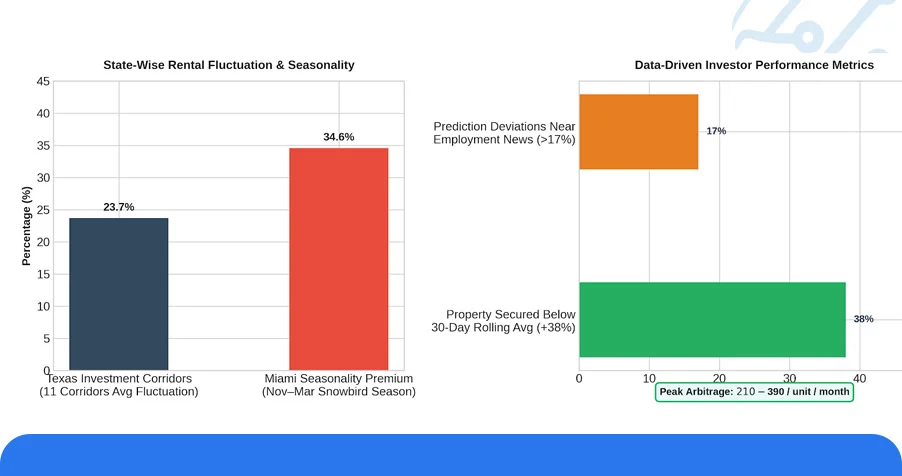
Across 2025 datasets, the numbers paint a compelling picture of where rental investment intelligence is heading:
- In the Texas rental segment, structured Rental Property Investment Data Scraping in Texas and Florida revealed a 23.7% average price fluctuation across 11 major investment corridors, with suburban Dallas markets showing the sharpest intra-quarter swings.
- Florida outpaced Texas in peak-period volatility, with Miami listings showing a 34.6% rent premium during the November–March snowbird season, compared to a baseline average for the rest of the year.
- Investors relying on Scraping Rental Listings for Florida Property Investment Analysis were 38% more likely to secure properties below the 30-day rolling average rent price, demonstrating the timing advantage data tools provide.
- More than 17% of rent prediction deviations occurred within 30 days of a major local employment announcement, highlighting the need for event-triggered data refresh cycles within Rental Property Data Scraping for Texas Investment Analysis workflows.
- Investors monitoring Web Scraping Rental Property Price Data for Texas and Florida during peak migration months (February–April) captured rent arbitrage opportunities averaging $210–$390 per unit per month compared to passive benchmarking approaches.
These metrics collectively validate the strategic depth that data-driven methodologies bring to residential rental markets in both states.
Conclusion
In a rental market shaped by constant demographic shifts, institutional capital movements, and hyper-local pricing dynamics, accurate forecasting is no longer a luxury, it is a necessity. Investors and property analysts who embed Rental Property Investment Data Scraping in Texas and Florida into their core research workflows are better positioned to act on emerging opportunities before they reach mainstream visibility.
We provide end-to-end solutions built on Web Scraping Services for real estate, combining real-time listing extraction, structured market databases, and custom API integrations tailored to the Texas and Florida rental markets. Contact ArcTechnolabs today to explore how our rental data tools, investor dashboards, and property analytics infrastructure can support your next acquisition decision, portfolio review, or market entry strategy.