
Introduction
Real estate project research requires reliable data on registrations, approvals, developers, construction progress, possession timelines, locations, and project status. RERA portals provide valuable records, but collecting data manually across state-level platforms can be time-consuming and inconsistent. RERA Data Scraping for Builder and Developer Intelligence helps streamline this process, enabling structured and continuously updated project analysis.
Organizations can organize these records into structured datasets through systematic data collection and processing. This approach helps developers compare projects, examine promoter activity, monitor timelines, evaluate locations, and identify relevant market patterns. Real Estate Data Scraping Services can support this process by converting publicly available project information into organized formats suitable for research and analysis.
For builders, developers, investors, consultants, and construction companies, structured RERA information can improve project evaluation and planning. The collected records can provide a clearer view of registrations, approvals, completion schedules, project phases, and developer activity. When this information is regularly updated, teams can make research processes more consistent and build stronger foundations for property-related business decisions.
Transforming Regulatory Records Into Actionable Project Insights
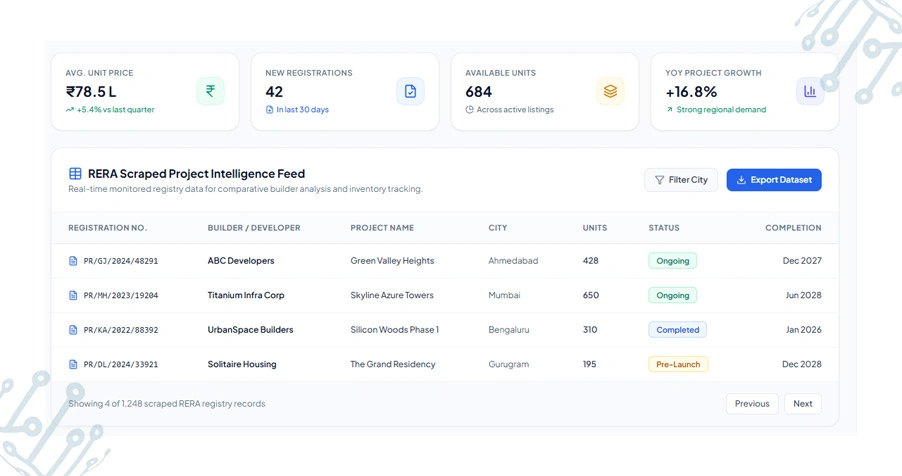
RERA portals contain extensive information about registered projects, promoters, locations, approvals, construction timelines, and development stages. However, reviewing these records manually can become difficult when research involves hundreds or thousands of projects. Structured collection allows teams to bring scattered information into a consistent format, making comparison easier across locations, developers, and project categories. As records become standardized, analysts can spend more time interpreting project trends instead of repeatedly locating and organizing individual details.
For organizations conducting large-scale property research, RERA Project Intelligence Using Real Estate Data Extraction can help convert regulatory information into a more usable analytical resource. Data can be organized around registration details, promoter information, project locations, proposed completion dates, development phases, and available project attributes. When these fields follow consistent structures, research teams can compare projects more efficiently and identify information that requires additional review.
Businesses can further connect these workflows with Web Scraping API Services when they require recurring collection or integration with internal applications. API-based delivery can support automated data movement into databases, dashboards, analytics environments, or other business systems. This reduces repetitive manual activities and creates a more consistent approach to handling project records across multiple sources.
Key benefits of structured collection include:
- Standardized project information across multiple records
- Faster comparison between developers and projects
- Easier identification of incomplete or changing information
- Better organization for historical project research
- Support for recurring data collection workflows
| Research Measure | Manual Process | Structured Process |
|---|---|---|
| Projects reviewed | 120 | 500 |
| Processing time | 18 hours | 5 hours |
| Standardized fields | 55% | 94% |
| Review frequency | Weekly | Daily |
Creating Structured Data For Construction Market Analysis
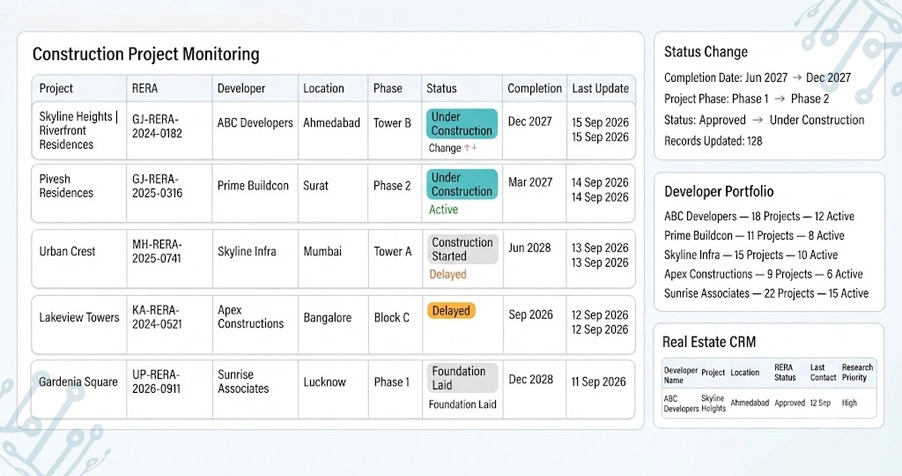
RERA information becomes considerably more useful when project records are converted into structured datasets with consistent fields and standardized values. Details such as registration numbers, promoter names, project locations, approval information, completion schedules, project phases, and development status can be organized for systematic evaluation. This creates a stronger foundation for construction market research and makes it easier to compare projects operating within similar geographic or property segments.
For companies requiring dependable project information at scale, RERA Approved Projects Data Extraction Services can support the collection of relevant approval and registration details from available RERA records. Structured extraction can reduce inconsistencies caused by different page layouts, field arrangements, naming conventions, or document formats. Researchers can then organize the collected information according to business requirements and prepare it for further analysis.
Combining regulatory records with broader Real Estate Property Datasets can also provide additional context for market evaluation. Project-level information can be analyzed alongside property characteristics, locations, pricing indicators, or other relevant market attributes. This broader view can help teams identify development patterns, compare geographical markets, assess project concentrations, and organize information for investment or construction research.
Important applications can include:
- Building location-based project research databases
- Comparing development activity across markets
- Organizing approval and registration information
- Supporting project screening and portfolio analysis
- Creating historical datasets for market research
| Data Category | Basic Collection | Structured Collection |
|---|---|---|
| Project identification | Scattered | Consistent |
| Developer records | Variable | Standardized |
| Dates | Mixed formats | Normalized |
| Project status | Manual review | Categorized |
| Location details | Inconsistent | Organized |
Strengthening Construction Monitoring And Developer Research
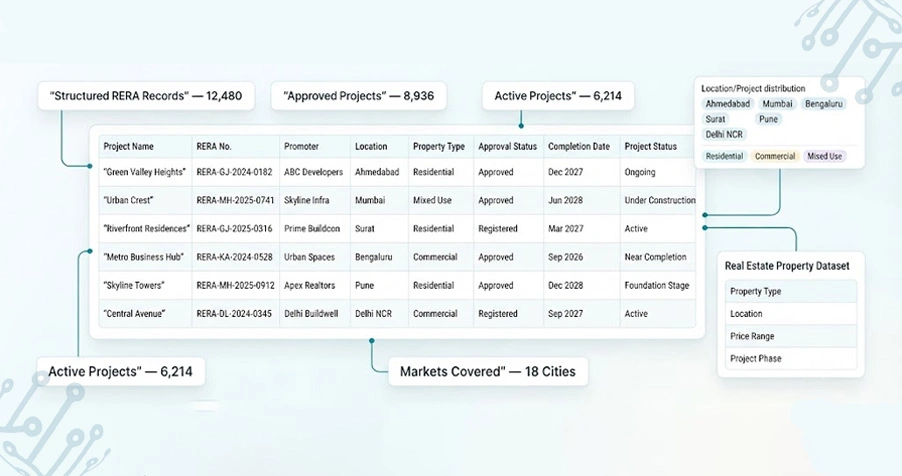
Continuous project monitoring requires more than collecting information once. Construction teams and property researchers often need to review changes in project status, expected completion dates, development phases, and other available records over time. RERA Data Extraction for Construction Progress Monitoring can help organize relevant information into repeatable monitoring workflows, allowing teams to compare current records with earlier observations.
Construction companies can also create broader research systems by Web Scraping RERA Data for Construction Companies across multiple projects, regions, and development categories. Centralized records can make it easier to review project portfolios and identify changes requiring attention. Instead of relying on separate manual checks, teams can maintain structured information that supports recurring monitoring and historical comparisons.
Another practical application involves Using RERA Project Data for Real Estate CRM Platforms, where organized project and developer information can contribute to internal research, prospect management, and relationship workflows. Relevant records can be mapped to business requirements so sales, research, and strategy teams can work with a more consistent information base.
A structured monitoring approach can support:
- Tracking project information across multiple periods
- Comparing planned and reported timelines
- Reviewing developer activity across locations
- Maintaining historical project records
- Supporting internal research and reporting
| Monitoring Area | Conventional Review | Centralized Workflow |
|---|---|---|
| Projects monitored | 80 | 350 |
| Review frequency | Monthly | Daily |
| Status classification | Manual | Automated |
| Historical comparison | Limited | Centralized |
| Reporting preparation | 12 hours | 4 hours |
Organizations can also apply Automated RERA Data Extraction for Real Estate Businesses when recurring collection is required across large project portfolios. Automated workflows can reduce repetitive research tasks and help maintain more current records for ongoing project intelligence and developer analysis.
How ArcTechnolabs Can Help You?
Project research becomes more manageable when regulatory information is collected through a structured, repeatable, and business-focused workflow. For organizations assessing property markets across multiple locations, RERA Data Scraping for Builder and Developer Intelligence can help organize project records into formats suitable for research, monitoring, comparison, and analysis.
The approach can be tailored around the specific requirements of builders, developers, construction companies, property consultants, investors, and research teams. Rather than relying on scattered records, organizations can establish a centralized information workflow that supports regular project evaluation and market analysis.
Key capabilities can include:
- Collecting relevant project and promoter information
- Structuring records into consistent data formats
- Monitoring important project timeline changes
- Organizing location-specific project information
- Supporting recurring data collection processes
- Preparing information for analytics and reporting
These capabilities can help reduce repetitive research activities while improving consistency across large project portfolios. Depending on requirements, collected records can be prepared for databases, dashboards, reporting environments, CRM systems, or other internal applications. Data workflows can also be configured around specific locations and project categories.
With appropriate automation and validation processes, businesses can maintain more organized information for recurring project research. This can support construction planning, developer comparisons, portfolio evaluation, and market intelligence initiatives while reducing the operational effort involved in manually reviewing numerous RERA records.
Conclusion
Reliable regulatory information can improve how builders, developers, investors, and research teams evaluate projects and understand construction activity. By organizing fragmented records into structured information, RERA Data Scraping for Builder and Developer Intelligence can support project comparison, developer research, market evaluation, and more informed planning across different property markets.
A consistent collection process can also strengthen recurring monitoring and research activities. When organizations apply structured extraction alongside RERA Data Extraction for Construction Progress Monitoring, they can create a stronger foundation for reviewing project timelines, development activity, and changing market information. Connect with ArcTechnolabs today to build a customized RERA data extraction solution for your project research and intelligence needs.