

Introduction
In today's hyper-competitive grocery market, tracking competitor discounts across major chains is essential for maintaining market share. Grocery giants constantly adjust prices, flash sales, and promotional bundles to capture price-sensitive shoppers. Utilizing Retail Promotion Data Scraping for Competitor Price Analysis gives retailers actionable intelligence to optimize their pricing strategies dynamically.
Automated data extraction allows businesses to observe shifting pricing strategies across leading global brands like Aldi, Tesco, and Walmart in real time. Rather than relying on manual checks, automated scraping tools compile price fluctuations, promo codes, and regional discounts continuously. This ensures pricing teams can react instantly to competitor moves without sacrificing profit margins.
By leveraging a structured Web Scraping for Retail Competitive Pricing Insights Guide, supermarket chains and analytics providers can refine their promotional monitoring workflows. Understanding how different grocery leaders deploy promotions provides a massive strategic advantage. Below is a comparative breakdown of how promotional scraping functions across three major retail environments.
Comparative Supermarket Pricing Strategies Across Major Global Retail Chains
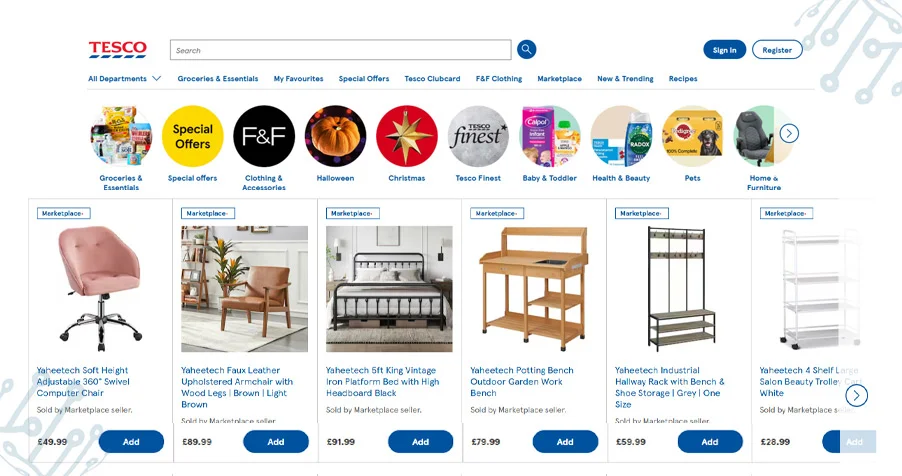
Supermarket pricing strategies diverge significantly across everyday low pricing models, promotional rollbacks, and localized discount structures. Aldi relies heavily on private-label dominance and lean supply chains, offering consistent value with fewer promotional fluctuations. Tesco utilizes sophisticated Clubcard loyalty frameworks to deploy personalized discounts, changing digital coupon values dynamically based on consumer purchasing history. Meanwhile, Walmart implements vast multi-tier rollback campaigns, matching local competitor prices across thousands of physical locations and digital fulfillment centers.
Utilizing Tesco Datasets, market research teams can analyze the exact cadence of loyalty-driven promotions and quantify their conversion impact. These datasets allow analysts to map recurring promotional loops and consumer engagement trends without manual auditing delays. By observing how loyalty tiers influence basket sizes, pricing strategists construct precise forecasting models that anticipate upcoming competitive moves effectively.
Studies indicate that automated retail monitoring increases pricing accuracy by up to 34% while reducing manual audit overhead by half. Market researchers deploying Tesco Promotion Data Scraping for Market Research uncover seasonal promotional variance that informs overarching merchandising strategies. Competitor price intelligence platforms synthesize these vast metrics into unified dashboards, allowing executives to benchmark promotional depth against historical performance benchmarks.
| Supermarket Chain | Primary Pricing Strategy | Promotional Frequency | Data Extraction Complexity |
|---|---|---|---|
| Aldi | Everyday Low Pricing (EDLP) | Low (Stable baseline pricing) | Moderate (Dynamic regional inventory) |
| Tesco | Loyalty-Based & Clubcard Discounts | High (Weekly rotating offers) | High (Personalized digital coupon structures) |
| Walmart | Rollbacks & Competitive Matching | Very High (Continuous automated updates) | High (Massive catalog size & geo-blocking) |
- Automated extraction monitors continuous baseline pricing stability across private-label dominant retail networks.
- Loyalty program tracking isolates personalized digital coupon shifts and member-exclusive basket savings.
- Rollback evaluation measures multi-tier discount campaigns across expansive geographic footprints.
Maintaining a competitive advantage in fast-moving grocery sectors requires continuous tracking of cross-channel promotional adjustments and discount behaviors. Automated pipelines aggregate millions of product records daily, ensuring that pricing committees receive clean, standardized data feeds immediately.
Technical Infrastructure Standards For High Volume Retail Data Extraction
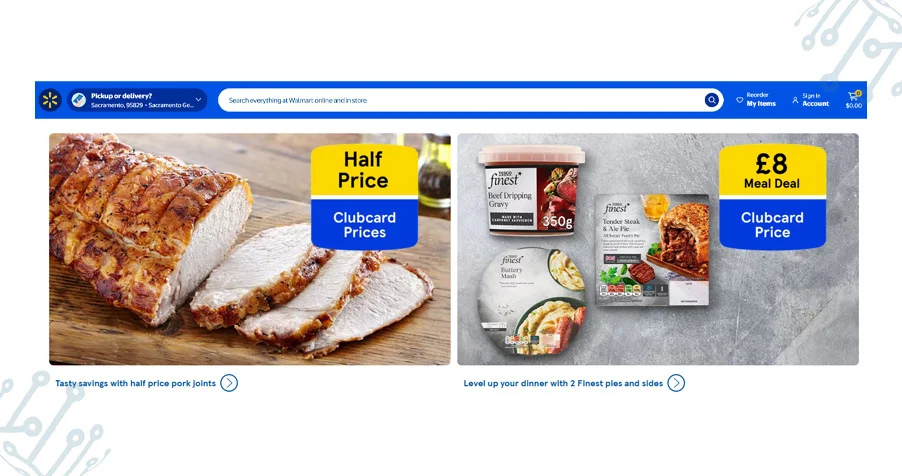
Extracting high-frequency retail promotion feeds demands resilient technical architectures that handle JavaScript rendering, headless browser evasion, and proxy rotation. Retailers incorporating Tesco App Grocery Data Scraping Services extract deep mobile-exclusive offers and localized app-only discounts. These specialized scrapers bypass API restrictions and simulate genuine user sessions to retrieve accurate pricing payloads without triggering rate limits.
Distributed cloud architectures ensure that data ingestion pipelines remain operational even when target websites implement aggressive bot-mitigation protocols. Automated error-handling routines detect blocked IP addresses instantly and rotate residential proxies without human intervention. This technical resilience guarantees uninterrupted data flow for time-sensitive pricing engines operating around the clock.
Industry statistics demonstrate that structured web extraction reduces data collection latency from several days to mere minutes. Executing Walmart Discount Web Data Scraper for Retail Analytics enables enterprise inventory managers to process massive seasonal price cuts across thousands of distinct SKUs. Maintaining clean data pipelines ensures that predictive pricing models receive pristine inputs for machine learning forecasting algorithms.
| Extraction Component | Technology Standard | Functionality & Purpose |
|---|---|---|
| Proxy Network | Rotating Residential IPs | Prevents IP blacklisting during heavy catalog crawls |
| Parser Engine | BeautifulSoup / Scrapy | Extracts unstructured HTML into clean JSON/CSV formats |
| Headless Browser | Playwright / Selenium | Renders dynamic JavaScript elements and promo banners |
- Asynchronous request handling parses multiple category pages concurrently to accelerate ingestion speeds.
- Headless browser rendering captures dynamic promotional banners and hidden discount pop-ups accurately.
- JSON parsing pipelines convert raw web data into standardized formats for immediate analytics consumption.
Enterprise analytics teams rely heavily on these robust extraction layers to feed downstream business intelligence and dynamic pricing algorithms. By converting unstructured markup into structured JSON files, technical architects empower category managers to execute rapid price matching strategies.
Granular Inventory Tracking And Regional Supermarket Performance Benchmarks
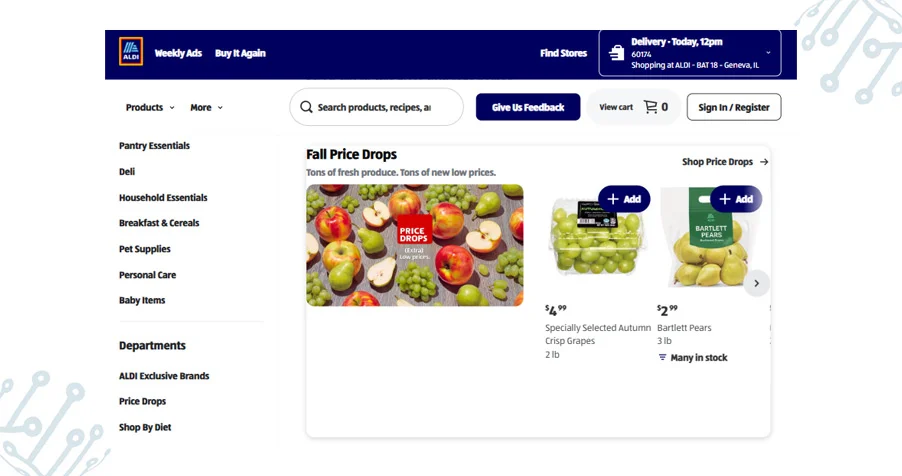
Hyperlocal inventory tracking requires granular data collection methods to account for regional price discrepancies and stock availability variations. Supermarket pricing varies substantially between urban fulfillment hubs and suburban superstores, requiring zip-code specific extraction parameters. Retail strategists evaluating micro-market variations optimize regional pricing elasticity through precise geographic filtering.
Regional fulfillment analysis reveals how localized supply chain constraints impact competitor discounting frequency and shelf availability. By segmenting data collection by postal codes, analytics teams uncover localized pricing anomalies that national averages routinely conceal. This granularity allows brands to adjust regional pricing models dynamically rather than relying on uniform, broad-stroke adjustments.
Market analysts incorporating Aldi Groceries Datasets analyze private-label pricing stability against branded manufacturer alternatives over multi-month observation windows. Comprehensive tracking models reveal exact markdown schedules, helping retail executives time their own promotional campaigns for maximum competitive advantage. These historical datasets provide a reliable baseline for measuring the long-term effectiveness of private-label expansion strategies.
| Tracking Parameter | Data Point Captured | Business Impact |
|---|---|---|
| Zip-Code Specificity | Localized store inventory & pricing | Uncovers regional pricing variances and gaps |
| Stock Status | Real-time availability flags | Identifies competitor stockouts immediately |
| Markdown Velocity | Clearance percentage and duration | Predicts end-of-lifecycle inventory clearing patterns |
- Postal-code filtering captures hidden regional price discrepancies across suburban and urban store locations.
- Real-time stock availability flags expose immediate competitor supply chain gaps and stockouts.
- Clearance velocity tracking forecasts end-of-lifecycle markdown patterns for seasonal retail merchandise.
Sustained market dominance requires continuous cross-referencing of localized inventory levels against aggressive competitor promotional schedules and seasonal markdown velocities. Automated intelligence systems synthesize these complex data streams into intuitive dashboards that drive executive decision-making.
How ArcTechnolabs Can Help You?
Modern supermarket chains require fast, reliable, and scalable web data extraction infrastructure to stay ahead of rival promotional shifts. Deploying automated systems centered around Retail Promotion Data Scraping for Competitor Price Analysis allows brands to track complex pricing shifts seamlessly across global markets without technical bottlenecks.
We provide tailor-made scraping solutions designed to handle high-frequency data extraction across complex e-commerce platforms.
- Customized enterprise data pipeline development for large-scale grocery extraction.
- Advanced anti-bot handling and geo-targeted proxy rotation infrastructure.
- High-speed extraction of web and mobile application data payloads.
- Clean, structured data delivery in JSON, CSV, or direct database feeds.
- Real-time pricing alert integrations for dynamic pricing platforms.
- Scalable extraction models tailored for global retail footprints.
Our robust technical architecture incorporates a powerful Retail Promotion Data Scraping API for Supermarket Analytics, empowering enterprise clients to receive reliable, cleaned market datasets delivered on demand. Partnering with us eliminates the burden of maintaining in-house scrapers, giving your strategy team full focus on outperforming competitors.
Conclusion
Navigating the fast-moving grocery landscape demands continuous market visibility and rapid strategic adjustments. Implementing robust Retail Promotion Data Scraping for Competitor Price Analysis equips modern business leaders with the accurate pricing intelligence needed to protect profit margins, predict competitor moves, and capture market share effectively across top retail chains.
Relying on old pricing data creates severe competitive disadvantages in today's digital-first economy. Utilizing an enterprise-grade Aldi Promotion Web Scraping for Product Price Monitoring solution ensures your business maintains real-time pricing advantages day after day. Partner with ArcTechnolabs today to scale your retail data pipelines and dominate market pricing strategy.


