Introduction
Retail grocery intelligence has become essential for brands, aggregators, and analytics firms seeking better pricing visibility. With thousands of stock keeping units changing daily across platforms, data collection is no longer just about gathering prices. Many businesses fail because fragmented sources create mismatched product mapping and duplicate records that weaken strategic decisions. This is where Web Scraping Grocery and Supermarket Data supports reliable multi-store visibility for decision makers.
As digital grocery ecosystems expand, companies need to compare promotions, stock availability, and category trends across stores. Organizations that understand How to Solve Grocery Data Scraping Challenges Efficiently can convert fragmented datasets into structured intelligence for planning pricing strategies. This helps benchmark competitors, track assortment changes, and monitor promotional shifts accurately.
Modern teams also rely on Grocery Web Data Scraping for Smarter Decisions to connect multi-retailer insights with category planning, supplier negotiations, and customer demand forecasting. The focus is not just collection but ensuring quality, freshness, and structured output that scales across every grocery source without losing store-level accuracy.
Building Better Product Matching Across Store Catalogs
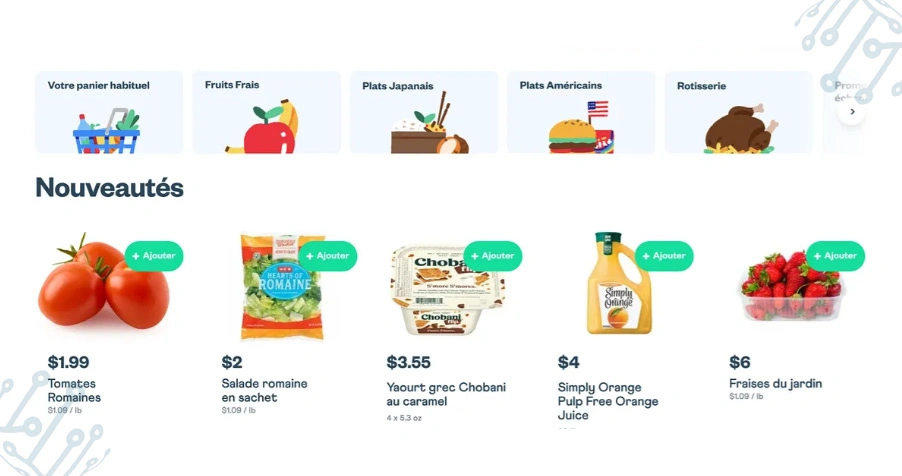
Retail grocery platforms present the same product in many different ways, creating inconsistencies across names, sizes, units, and packaging formats. A single cereal brand may appear with different descriptions on multiple websites, which creates confusion during comparison. To improve data quality, businesses must normalize titles, categories, SKUs, and store-specific identifiers before analysis begins.
This process reduces mismatches and supports more accurate tracking of product availability. These apps frequently change product assortments based on local demand, making data extraction more difficult when listings shift every few hours. Businesses that fail to match items correctly often experience incomplete insights and misleading benchmarks.
At the same time, Grocery Web Data Scraping for Smarter Decisions helps companies align pricing intelligence with catalog changes across national and local retailers. Structured collection supports better monitoring of substitutions, promotional discounts, and inventory rotations without duplicating records. This improves strategic planning for pricing and assortment reviews.
| Data Issue | Operational Impact | Recommended Fix |
|---|---|---|
| Duplicate listings | Inaccurate matching | Product normalization |
| Missing variants | Incomplete tracking | Attribute mapping |
| Different units | Comparison errors | Standardized schema |
| Fast updates | Data lag | Frequent refresh |
Businesses also integrate Quick Commerce Datasets into internal dashboards to identify new launches and removed products quickly. With automated validation, teams can maintain accurate catalog comparisons across retailers while reducing manual review. Consistent mapping improves product-level insights and strengthens decision-making across changing grocery ecosystems.
Managing Regional Catalog Variations With Better Accuracy
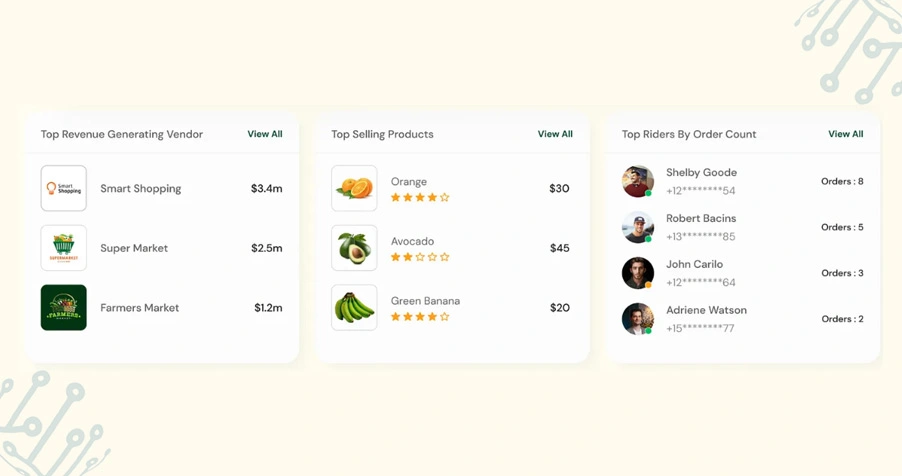
Grocery retailers operate different assortments depending on fulfillment zones, store formats, and customer demand. The same item may be available in one city but missing in another, even under the same brand. These differences create challenges for brands monitoring pricing consistency, product availability, and category presence. Regional mapping becomes essential when businesses want store-level visibility across multiple markets.
Reliable Grocery & Supermarket Datasets support location-based comparisons for pricing, assortment depth, and stock movement. Businesses can identify where private labels perform better, where promotions differ, and which products disappear from specific neighborhoods. This helps improve category planning and retail intelligence.
In addition, Web Scraping Grocery Reviews Data provides extra visibility into customer feedback, substitutions, and delivery quality. Reviews often reveal issues such as unavailable items, replacement patterns, or delivery dissatisfaction that standard pricing datasets may not capture. This adds context to raw pricing data and improves retail analysis.
| Regional Factor | Business Impact | Suggested Method |
|---|---|---|
| Different assortments | Missing comparisons | Geo-tagging |
| Local promotions | Wrong pricing view | Store-level scraping |
| Temporary products | Data gaps | Scheduled refresh |
| Local suppliers | Incomplete catalog | Regional classification |
Structured regional extraction ensures that every store, city, and fulfillment point remains visible within the final dataset. This improves assortment analysis, pricing decisions, and long-term planning for grocery intelligence teams working across broad markets.
Strengthening Data Collection Against Technical Barriers
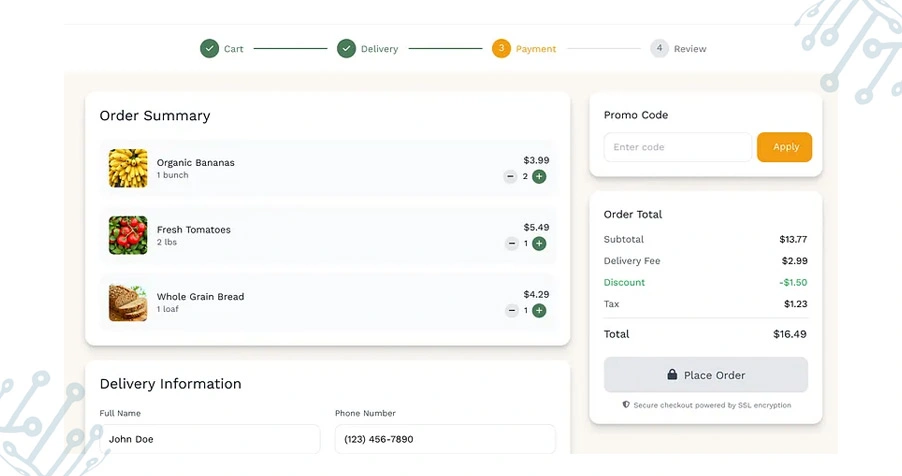
Retail grocery websites frequently introduce systems that interrupt automated extraction. CAPTCHA prompts, JavaScript rendering, dynamic loading, and throttled requests often prevent complete access to pricing and catalog information. These issues create data gaps, especially when businesses monitor multiple stores simultaneously. Stable infrastructure is required to ensure consistent collection without interruptions.
Large-scale Enterprise Web Crawling allows businesses to collect data from thousands of product pages, store categories, and regional storefronts in parallel. These frameworks distribute requests efficiently and reduce the risk of blocked sessions. This supports large datasets that remain accurate even during retailer platform changes.
Businesses also depend on Best Solutions for Grocery Ecommerce Data Scraping Challenges to combine scraping with validation systems. When websites change layouts or hide fields, backup workflows ensure continuity. Adaptive parsers help maintain extraction quality and prevent data loss from page updates.
| Technical Issue | Data Problem | Practical Approach |
|---|---|---|
| CAPTCHA | Interrupted scraping | Proxy rotation |
| Dynamic pages | Missing fields | Browser rendering |
| Rate limits | Partial data | Request control |
| Layout changes | Broken parsers | Auto adaptation |
Combined with strong monitoring systems, these solutions reduce downtime and improve freshness. Accurate extraction helps analysts compare pricing, stock, and promotions without interruption, even when retailer platforms continuously update their systems and product presentation structures.
How ArcTechnolabs Can Help You?
Retail intelligence programs often struggle when data pipelines fail to adapt to multi-retailer changes. Businesses focusing on How to Solve Grocery Data Scraping Challenges Efficiently need robust systems that preserve accuracy, scale, and store-level consistency across every source.
We deliver customized grocery scraping solutions that collect structured data from multiple online retailers while maintaining regional mapping and validation controls.
- Build scalable data extraction workflows
- Maintain region-wise product synchronization
- Monitor price changes automatically
- Standardize multi-source product catalogs
- Deliver clean datasets for analytics
- Integrate custom validation pipelines
Organizations seeking better competitive visibility often combine these solutions with Grocery API Data Scraping to Improve Household Shopping Decisions, ensuring consistent product, price, and availability tracking for analytics teams.
Conclusion
Multi-store grocery intelligence requires systems that preserve location context, product accuracy, and frequent refresh cycles. Businesses that implement How to Solve Grocery Data Scraping Challenges Efficiently reduce pricing blind spots and improve competitive planning.
Reliable grocery analytics also depends on Best Solutions for Grocery Ecommerce Data Scraping Challenges that connect automation with structured validation. Contact ArcTechnolabs today to build scalable grocery data pipelines that improve business decisions.