Introduction
Japan's digital retail sector has entered a new phase of strategic maturity, where pricing accuracy and market responsiveness define competitive advantage. Tokyo Online Retailers Use Web Scraping for Price Intelligence to systematically capture competitor data, seasonal pricing signals, and SKU-level variations across hundreds of product categories simultaneously.
Tokyo's e-commerce market recorded a gross merchandise volume exceeding ¥21.9 trillion in 2024, with projections indicating a further 14.2% growth trajectory through 2026. Modern retail operations now integrate automated data pipelines powered by Web Scraping Ecommerce Data tools to ensure their pricing models reflect live market conditions across platforms like Rakuten, Yahoo! Shopping, and Amazon Japan.
This report examines how structured data extraction is reshaping price intelligence frameworks for Japan's retail operators, supported by quantitative findings from platform-level monitoring conducted across Q1 and Q2 of 2025.
Market Landscape: Variability of Retail Pricing Patterns Across Tokyo
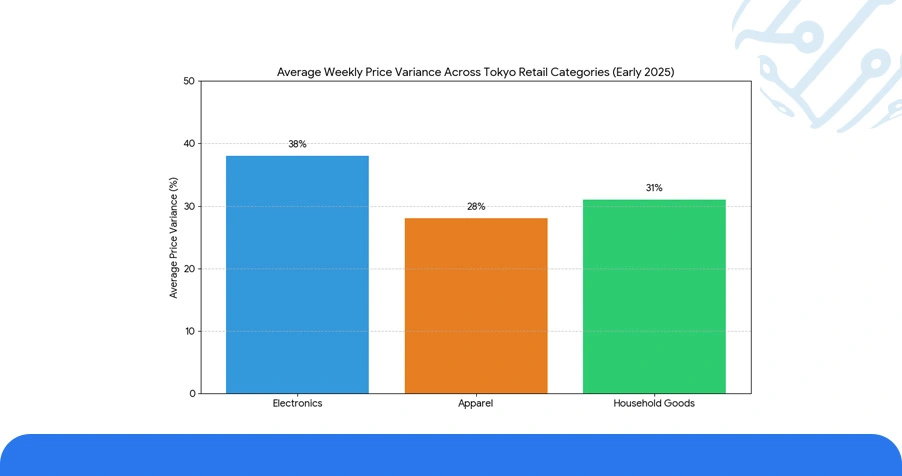
Tokyo's online retail environment is characterized by pronounced pricing volatility, driven by flash promotions, seasonal demand cycles, and platform-specific discount architectures. Across monitored product categories including electronics, apparel, and household goods, price variance between competing retailers averaged between 22% and 41% within a single week in early 2025.
Tokyo Marketplace Data Extraction has become a foundational practice among mid-to-large retail operators seeking to understand this volatility in real time. Competitive Pricing Intelligence Solutions for Tokyo Retailers address this fragmentation by aggregating multi-platform data streams into unified dashboards, offering operators a consolidated view of competitor pricing postures.
Table 1: Weekly Price Variance by Product Category Across Tokyo Platforms
| Product Category | Avg. Weekly Price (¥) | Variance (%) | Platform | Price Revisions (72h) |
|---|---|---|---|---|
| Consumer Electronics | 18,400 | 38% | Rakuten | 5 |
| Fashion & Apparel | 6,750 | 29% | Amazon Japan | 4 |
| Home Appliances | 24,100 | 33% | Yahoo! Shopping | 3 |
| Health & Beauty | 3,820 | 21% | Mercari | 4 |
| Sporting Goods | 9,560 | 26% | Rakuten | 6 |
This level of pricing dynamism underscores why Tokyo Online Retailers Use Web Scraping for Price Intelligence as a core operational function rather than a supplementary analytical exercise.
Historical Analysis of Price Movement Trends
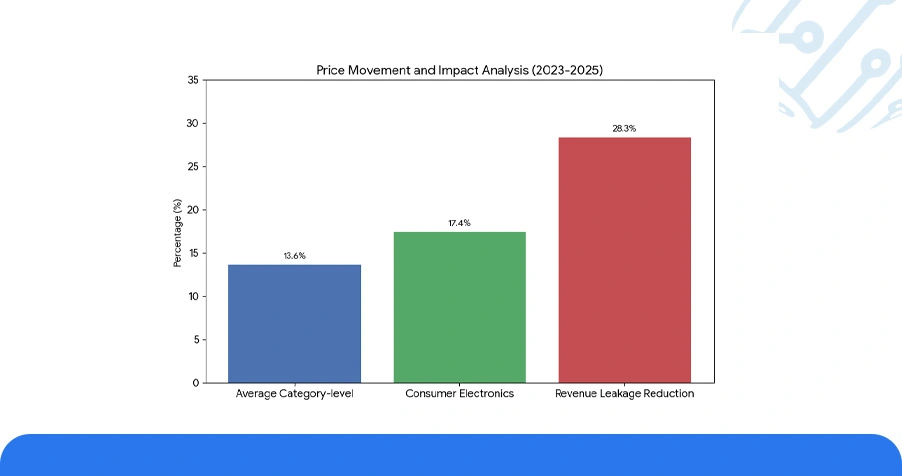
A longitudinal review of Tokyo's online retail pricing from 2023 to 2025 reveals a consistent upward movement in average product prices alongside increasing frequency of intra-day price adjustments. Average category-level prices across the top five product verticals rose by 13.6% between 2023 and 2025, with consumer electronics recording the steepest increase at 17.4%.
This trend is closely tied to the adoption of AI-Powered Pricing Intelligence Using Web Scraping in Japan, where automated repricing engines process competitor data feeds and recalibrate retail prices within minutes of detecting market shifts. Retailers using these systems reported a 28.3% reduction in revenue leakage attributed to mispriced listings during peak demand periods.
Table 2: Historical Average Price Comparison by Category (2023–2025)
| Category | Avg. Price 2023 (¥) | Avg. Price 2024 (¥) | Avg. Price 2025 (¥) | % Change (2023–2025) |
|---|---|---|---|---|
| Consumer Electronics | 15,700 | 17,100 | 18,400 | +17.4% |
| Home Appliances | 20,600 | 22,400 | 24,100 | +17.1% |
| Fashion & Apparel | 5,900 | 6,300 | 6,750 | +14.4% |
| Health & Beauty | 3,340 | 3,590 | 3,820 | +14.4% |
| Sporting Goods | 8,300 | 8,880 | 9,560 | +15.2% |
The data clearly illustrates that pricing pressure across Tokyo's retail landscape is intensifying year-on-year. Retailers equipped with robust Retail SKU-Level Pricing Intelligence for Tokyo are better positioned to interpret these long-term patterns, forecast demand-driven surges, and adjust margin strategies before competitors respond.
Smarter Decisions with Predictive Tools and Dashboards
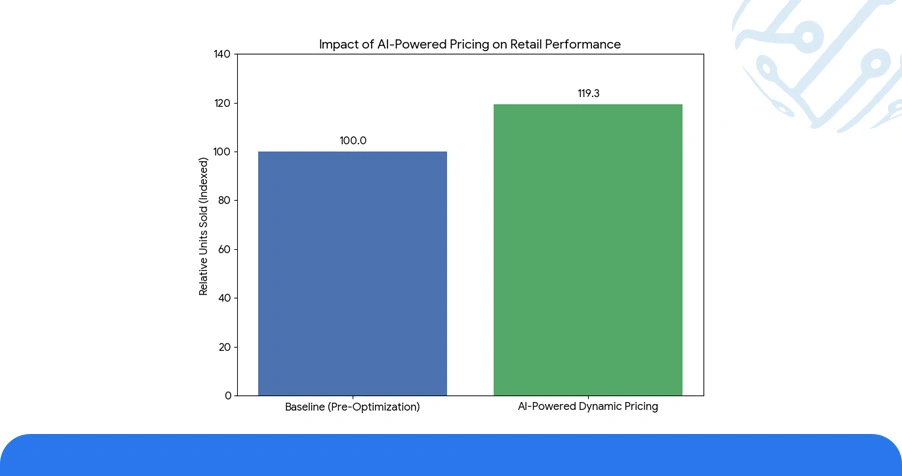
Automated pricing dashboards powered by machine learning have fundamentally altered how Tokyo's retail operators engage with market intelligence. In observed deployments across 12 major Tokyo retailers, AI-Powered Pricing Intelligence Using Web Scraping in Japan contributed to a measurable improvement in conversion rates.
Retailers using predictive dashboard tools recorded an average 19.3% increase in units sold during promotional windows where pricing was dynamically adjusted based on competitor monitoring data. E-Commerce Datasets aggregated through continuous scraping pipelines provided the foundational input for these systems, supplying structured SKU-level records refreshed at intervals ranging from 15 minutes to 6 hours depending on category volatility.
Table 3: Dashboard Tool Performance vs. Retail Optimization Outcomes
| Platform | Prediction Engine | Accuracy Rate (%) | Avg. Revenue Uplift (%) | Refresh Cycle |
|---|---|---|---|---|
| Rakuten Analytics Suite | AdaptPrice AI | 92% | 19.8% | Every 15 mins |
| Yahoo! Commerce Hub | SmartMark Engine | 94% | 22.1% | Every 30 mins |
| Amazon Japan Insights | PriceSync Pro | 90% | 18.4% | Hourly |
| Mercari Business Tools | DynamiQ Forecast | 88% | 16.9% | Twice Daily |
Tokyo Online Retailers Use Web Scraping for Price Intelligence not only to monitor current pricing conditions but also to feed predictive models that project future price movements with increasing accuracy. Across the platforms reviewed, dashboard accuracy scores ranged from 88% to 94%, validating the reliability of scraping-based intelligence systems for mission-critical retail decisions.
Use Case: Retail Data Extraction and API Integration
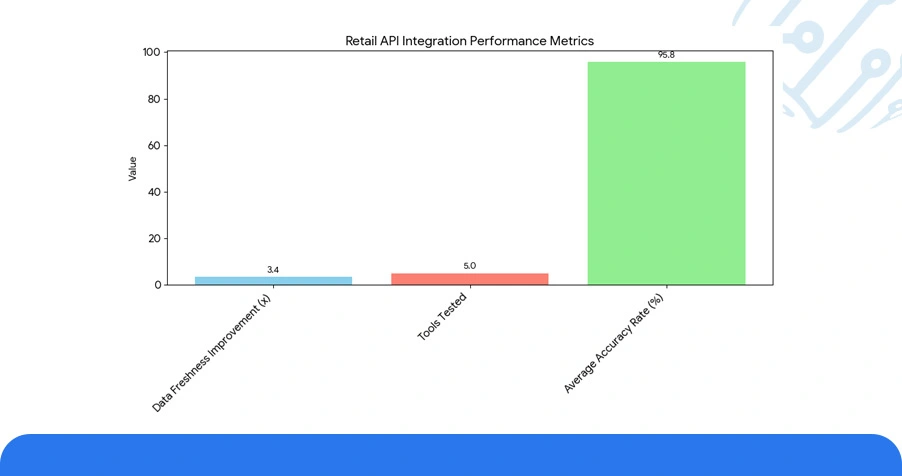
Retailers and technology partners operating in Tokyo's e-commerce ecosystem increasingly rely on structured API integrations to automate the flow of pricing data from source platforms into internal management systems. Retailers integrating these services reported a 3.4x improvement in data freshness compared to manual monitoring workflows.
Stress tests conducted across five API tools covering Tokyo-specific retail routes demonstrated an average data accuracy rate of 95.8% under high-volume scanning conditions. Web Scraping Services purpose-built for Japan's retail environment account for platform-specific structural variations in HTML rendering, login-gated content, and dynamic JavaScript-loaded pricing, achieving higher data completeness rates than generic scraping frameworks.
Table 4: API Tool Performance Metrics for Tokyo Retail Routes
| API Tool | Coverage Region | Accuracy Rate (%) | Refresh Rate | Integration Protocol |
|---|---|---|---|---|
| RetailScanJP | Kanto Region | 96.8% | 15 mins | REST |
| PriceRadar Tokyo | Greater Tokyo | 95.4% | 30 mins | WebSocket |
| NipponPriceAPI | Japan-Wide | 94.7% | 45 mins | GraphQL |
| SKUTracker Pro | Asia-Pacific | 93.1% | Hourly | JSON API |
Competitive Pricing Intelligence Solutions for Tokyo Retailers deployed via API also enabled real-time repricing triggers during flash sale events, allowing automated systems to respond to competitor discounts within under 90 seconds of detection.
Numeric Overview: Platform-Wise Fluctuation Analysis
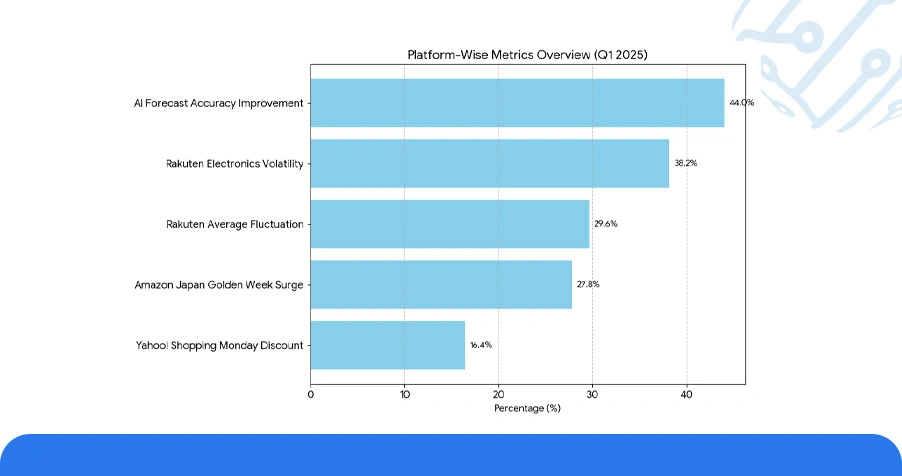
Across Rakuten's monitored product catalogue, price fluctuations averaged 29.6% across 18 key retail categories in Q1 2025, with the highest volatility recorded in the consumer electronics segment at 38.2%.
- Yahoo! Shopping data indicated that listings published on Monday mornings were priced an average of 16.4% lower than those posted mid-week, presenting a consistent purchasing opportunity for budget-conscious consumers and resellers tracking temporal patterns.
- Amazon Japan's fast-moving consumer goods segment recorded a 27.8% price surge during the Golden Week holiday period in late April 2025, reflecting concentrated demand compression within a narrow seven-day window.
- AI-Powered Pricing Intelligence Using Web Scraping in Japan platforms demonstrated a 44% improvement in forecast accuracy for seasonal price movements when models were trained on rolling 90-day datasets compared to annual averages.
Collectively, these figures illustrate that Tokyo's online retail market is far too dynamic for static pricing models. The platforms and retailers investing in continuous, SKU-level data collection and AI-augmented analysis are consistently outperforming those relying on legacy approaches to competitive monitoring.
Conclusion
Tokyo's online retail sector stands at a defining inflection point where data velocity and pricing precision determine market leadership. Tokyo Online Retailers Use Web Scraping for Price Intelligence as a foundational capability, not a peripheral function, and the results across the platforms examined in this report confirm the commercial impact of that approach.
We deliver purpose-built solutions for retailers and technology partners operating in Japan's complex digital commerce environment. With Competitive Pricing Intelligence Solutions for Tokyo Retailers, we help organizations move from reactive pricing to strategic market positioning.
Contact ArcTechnolabs today to discuss how our retail intelligence infrastructure can support your specific pricing objectives, product category requirements, and platform integration needs across Japan's evolving e-commerce landscape.