Introduction
Understanding shifting grocery prices has become a critical priority for retail decision-makers, especially as stores face unpredictable competition and fluctuating consumer preferences. With a rise in competitive benchmarking needs, leaders now rely on smarter ways to track category-level performance, evaluate discount patterns, and examine regional variations.
This is where Trader Joe’s Grocery Store Datasets begin to reshape real-time monitoring, offering retailers structured perspectives into product updates, price variations, promotional cycles, and seasonal swings. By decoding category changes and understanding shelf-level rotations, businesses gain clarity on how pricing reacts to demand economics and localized inventory strategies.
As markets rapidly evolve, many price variations across stores fall into a predictable rhythm that retailers often struggle to monitor manually. This gap drives the need for analytical automation powered by Trader Joe’s Data Scraping for Grocery Pricing Insights, providing multi-layered visibility into 37% pricing fluctuations observed across key baskets such as fresh produce, specialty items, packaged snacks, and beverages.
Understanding Drivers Behind Multiregional Price Variations
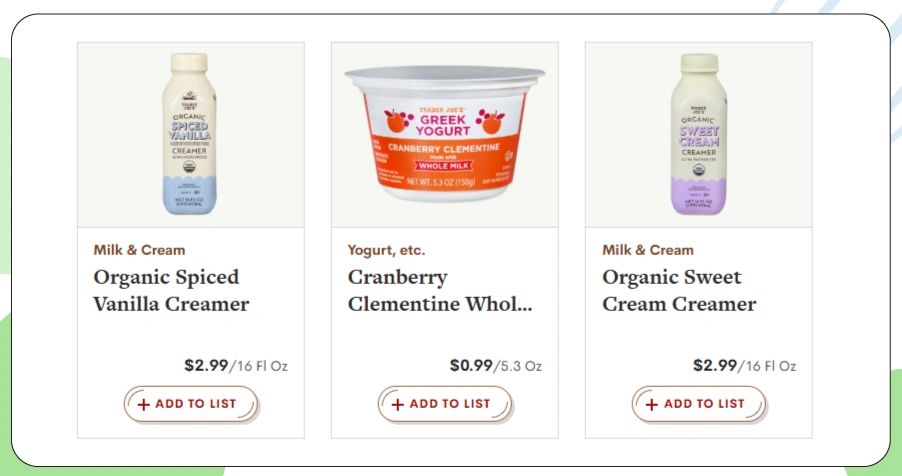
Retail pricing continues to shift rapidly across regions, influenced by seasonal dynamics, supply-side limitations, discount strategies, and competitor interventions. The inclusion of Quick Commerce Datasets strengthens these monitoring cycles by revealing how fast-delivery platforms modify their pricing or promotions in real time, leading to measurable impacts on store-level variations.
Extraction-oriented strategies also help planners to Extract Trader Joe’s Grocery Data, enabling teams to examine regional fluctuations with increased precision. These insights are essential for interpreting why certain categories reflect sharper changes—such as seasonal produce—while others maintain steadier ranges due to stable supplier networks.
Using such structured evaluations ensures planners maintain consistency when comparing long-term category performance, negotiating supplier contracts, or assessing promotional outcomes. To support granular analysis, businesses often examine cluster-level performance tables that show observed variations and their underlying drivers.
1. Category Comparison for Price Variability:
| Product Category | Avg Monthly Price | Observed Change (%) | Driver Behind Change |
|---|---|---|---|
| Organic Produce | $4.85 | 37% | Seasonal supply limitations |
| Snacks & Crackers | $3.10 | 22% | Competitor promotion cycles |
| Frozen Meals | $5.40 | 18% | Shelf rotation dynamics |
| Beverages | $2.95 | 28% | Regional sourcing differences |
Evaluating Pricing Shifts Through Customer Sentiment Signals
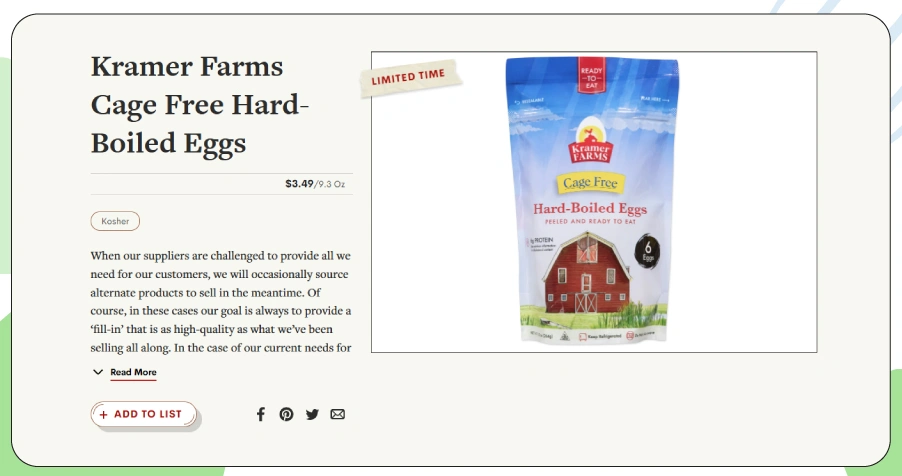
Customer sentiment has become a defining indicator in interpreting how pricing shifts affect perceived value across store sections. Retail teams rely heavily on structured insights derived from Web Scraping Trader Joe’s Customer Reviews & Rating, which uncover detailed behavioral signals associated with freshness, packaging appeal, product consistency, and brand familiarity.
The integration of Grocery & Supermarket Datasets strengthens this interpretation by revealing how customer reactions align with product placement, category importance, and regional desirability. Analysts often compare these sentiment indicators with historical pricing patterns to determine whether adjustments align with customer expectations or require strategic intervention.
Category planners also rely on broader validation frameworks such as US Grocery Pricing Analysis via Crawler, which helps correlate pricing performance with feedback intensity, purchase frequency, and perception gaps. Such analysis highlights why certain items experience price variations even without major supply disruptions—because customer sentiment often drives their placement within value-sensitive categories.
The data-driven approach allows retailers to refine pricing decisions while ensuring alignment with customer expectations throughout different regions. It bridges the gap between numerical pricing data and customer-influenced demand forecasts, allowing planners to develop more effective and customer-aware pricing strategies.
2. Feedback Influence on Price Movements:
| Factor | Sentiment Score | Pricing Impact | Trend Observation |
|---|---|---|---|
| Product Freshness | 4.6/5 | High | Demand strengthening |
| Packaging Appeal | 4.1/5 | Medium | Seasonal variation |
| Customer Value Perception | 3.9/5 | Strong | Increasing sensitivity |
| Repeat Purchase Behavior | 4.3/5 | Medium | Loyalty-driven demand |
Strengthening Predictive Pricing Models Through Automated Workflows
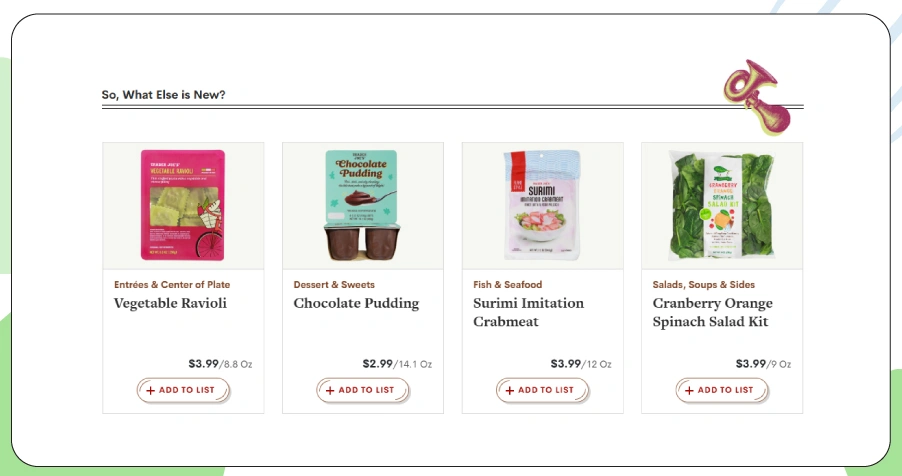
Retailers increasingly adopt automated systems to enhance pricing accuracy, reduce manual dependencies, and track competitive signals in real time. These workflows integrate data streams from multiple sources to interpret patterns that influence price stability across segments. By incorporating large-scale extraction systems supported by Enterprise Web Crawling, retailers ensure continuous visibility into category updates, competitor adjustments, discount cycles, and regional shifts.
Predictive modeling benefits substantially from structured analytical inputs gathered through US Grocery Pricing Analysis via Crawler, which captures ongoing changes across SKUs, categories, and store regions. These insights form the foundation for forecasting engines that calculate fluctuation probabilities, identify emerging pricing anomalies, and recommend optimized discount periods.
To maintain consistent pricing operations, automated modules evaluate competitor activity, rule-based triggers, and product-specific behaviors, ensuring that teams receive timely and accurate signals for every pricing decision. These automated frameworks detect unusual market movements earlier, helping decision-makers adjust strategies before fluctuations impact margin stability.
3. Automation and Pricing Forecasting Structure:
| Component | Functionality | Benefit to Retailers |
|---|---|---|
| Forecast Engine | Calculates pricing fluctuation risks | Higher forecasting accuracy |
| Competitor Module | Monitors external price movements | Stronger competitive edge |
| Rule-Based Algorithms | Identifies ideal discount timeframes | Better margin management |
| Real-Time Sync | Updates cross-channel pricing instantly | Faster operational response |
How ArcTechnolabs Can Help You?
Retailers aiming to improve pricing accuracy benefit greatly when structured insights such as Trader Joe’s Data Scraping for Grocery Pricing Insights are transformed into fully operational workflows. We build end-to-end analytical pipelines that automate extraction, price monitoring, and category-level evaluations across multiple regions.
Our Support Includes:
- Designing scalable data extraction systems.
- Automating category-level pricing updates.
- Offering competitive benchmarking models.
- Setting up real-time market monitoring flows.
- Improving regional pricing visibility.
- Implementing predictive pricing frameworks.
Our expertise further allows teams to enhance cross-category evaluations supported by tools like Trader Joe’s Retail Pricing Data Scraper. With our integration capabilities, businesses streamline price intelligence operations while maintaining structured accuracy through improved analytical control.
Conclusion
Retailers today gain meaningful clarity when Trader Joe’s Data Scraping for Grocery Pricing Insights is strategically integrated into pricing workflows, enabling data-centric precision across categories and elevating retail decision-making. This approach not only clarifies pricing fluctuations but also ensures long-term category stability with enhanced accuracy built into every step.
With deeper evaluation supported tools to Extract Trader Joe’s Grocery Data, brands strengthen competitive benchmarking, improve price modeling, and boost operational efficiency across evolving retail environments. Contact ArcTechnolabs today to build intelligent, future-ready pricing systems.