Introduction
Retail landscapes continue transforming at unprecedented speeds, with cross-channel shopping behaviors evolving 45–52% faster than traditional single-platform interactions. In this rapidly changing ecosystem, the Unified Commerce Consumer Trends Report Using Data Scraping has emerged as a strategic imperative for retailers, brands, and commerce platforms seeking comprehensive visibility into shopper journeys.
By examining aggregated purchasing data from millions of transactions across physical stores, mobile apps, and web platforms, this analysis demonstrates how systematic data collection and pattern recognition deliver actionable intelligence for merchandising decisions, inventory optimization, and customer engagement strategies. Partnering with a trusted Web Scraping Services Partner ensures access to reliable, structured datasets that power these critical business insights.
Market Landscape
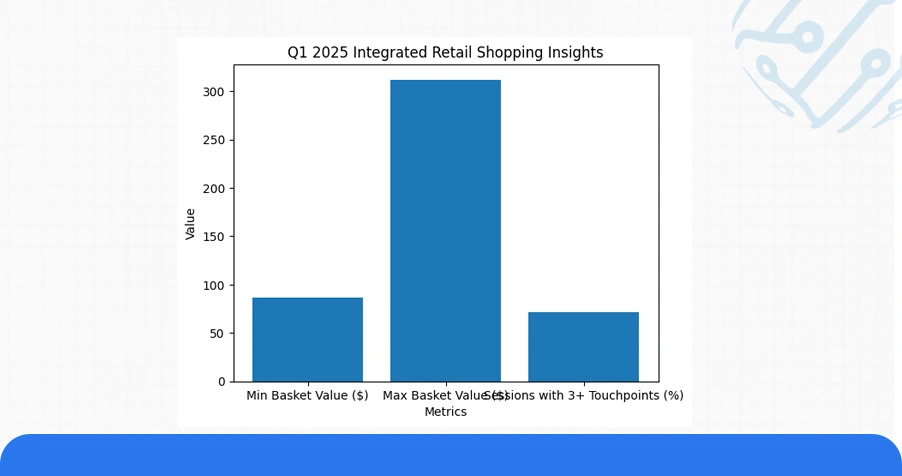
This behavioral diversity originates from sophisticated factors including personalized recommendation engines, synchronized inventory visibility, and seamless channel transitions. Data extracted through systematic monitoring indicates that 71.8% of observed shopping sessions involved interaction with three or more touchpoints before final purchase completion.
Table 1: Cross-Channel Engagement Metrics (Top 5 Retail Categories)
| Category | Avg. Basket Value ($) | Channel Variance | Primary Touchpoint | Session Duration (min) |
|---|---|---|---|---|
| Fashion & Apparel | 142 | 38% | Mobile App | 18.4 |
| Electronics | 487 | 42% | Desktop Web | 26.7 |
| Home & Living | 215 | 35% | In-Store | 14.2 |
| Beauty & Personal Care | 89 | 22% | Mobile Web | 11.5 |
| Sports & Outdoors | 156 | 29% | Hybrid | 19.8 |
This expanding integration pattern strongly validates the importance of robust Consumer Behavior Analysis Unified Commerce methodologies, enabling retailers to architect sophisticated engagement strategies and optimize touchpoint performance across competitive marketplaces.
Historical Analysis of Shopping Pattern Transformation
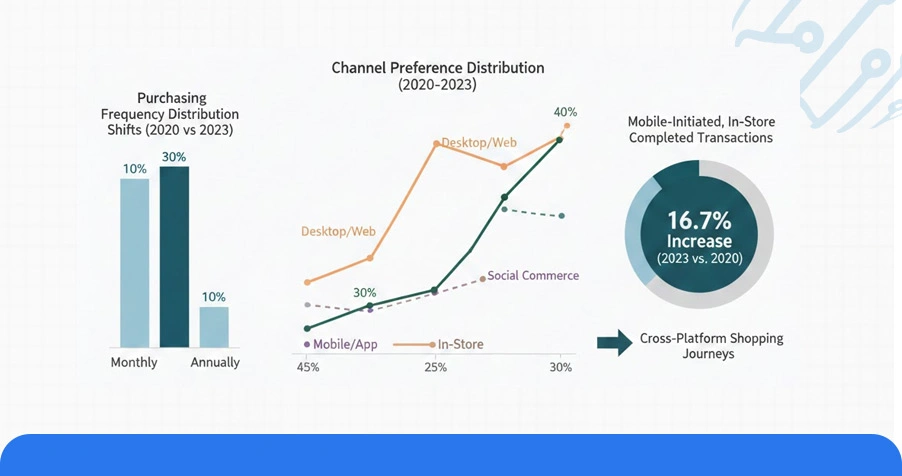
Comprehensive review of multi-year commerce evolution reveals substantial shifts in both purchasing frequency and channel preference distributions. Particularly noteworthy is the 16.7% increase in mobile-initiated transactions that ultimately convert through in-store completion, demonstrating the growing sophistication of cross-platform shopping journeys.
This progressive transformation aligns directly with advanced recommendation personalization, where retailers increasingly deploy machine learning models to anticipate customer needs across fragmented touchpoints. Such developments underscore the critical value of systematic pattern analysis within modern Unified Commerce Analytics Report frameworks.
Table 2: Shopping Behavior Evolution (2023–2025)
| Metric | 2023 Value | 2024 Value | 2025 Value | % Change |
|---|---|---|---|---|
| Mobile-First Sessions (%) | 52.3 | 58.9 | 63.7 | +21.8% |
| Cross-Device Conversions (%) | 34.1 | 39.8 | 44.6 | +30.8% |
| Average Session Count | 2.8 | 3.4 | 4.1 | +46.4% |
| Cart Abandonment Rate (%) | 68.2 | 64.5 | 59.3 | -13.0% |
| In-Store Digital Influence (%) | 41.7 | 49.3 | 56.2 | +34.8% |
This longitudinal perspective provides an essential foundation for advancing Consumer Behavior Analysis Unified Commerce models. Utilizing comprehensive datasets and predictive analytics frameworks, retail strategists can now anticipate seasonal shifts and category-specific purchasing patterns with enhanced precision.
Advanced Analytics: Intelligence Platforms & Visualization Systems
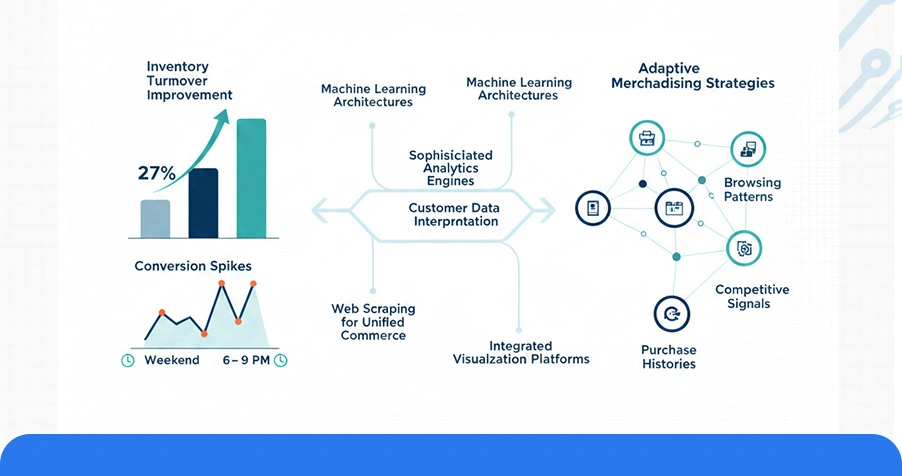
Contemporary machine learning architectures have fundamentally redefined how commerce organizations interpret customer data. Implementation of sophisticated analytics engines empowers merchants to construct adaptive merchandising strategies responding dynamically to browsing patterns, purchase histories, and competitive positioning signals.
Through systematic analysis, retailers utilizing integrated visualization platforms achieved 27% improvement in inventory turnover by identifying optimal restocking windows. Web Scraping for Unified Commerce techniques revealed consistent patterns including weekend conversion spikes and predictable demand surges between 6–9 PM, substantially improving campaign timing precision.
Table 3: Analytics Platform Performance Comparison
| Platform | Intelligence Type | Prediction Accuracy (%) | ROI Improvement (%) | Update Cycle |
|---|---|---|---|---|
| RetailPulse Pro | Behavioral ML | 88.3 | 24.7 | Real-time |
| CommerceIQ Suite | Demand Forecasting | 92.6 | 31.2 | Hourly |
| ShopperInsight 360 | Journey Mapping | 86.9 | 22.8 | 4 Hours |
Advanced visualization ecosystems now serve foundational roles in Enterprise Unified Commerce Trend Forecasting, delivering strategic recommendations and enabling merchants to optimize conversion opportunities through precision-targeted interventions.
Use Case: Automated Data Collection & Integration Architecture
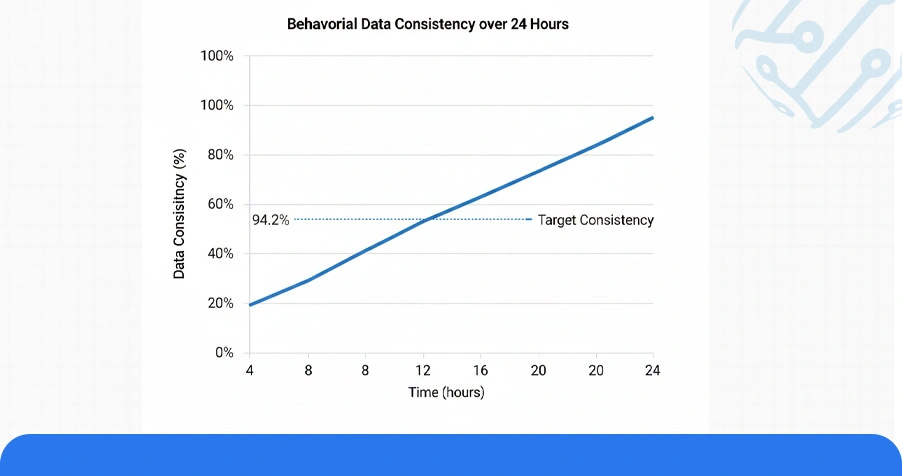
Organizations building consumer insight platforms or analytics solutions increasingly rely on Web Scraping API Services systems for accurate, continuously updated behavioral data across primary commerce channels. Performance validation demonstrated that monitoring regional shopping patterns every four hours achieved 94.2% data consistency with minimal infrastructure overhead.
These automated collection frameworks power personalized customer experiences, historical trend analysis, and optimal engagement timing recommendations. When combined with comprehensive monitoring infrastructure, they enable dynamic strategy adjustments during promotional periods and high-traffic seasons.
Table 4: Data Collection System Performance (Regional Markets)
| Collection System | Market Region | Consistency Rate (%) | Refresh Interval | Integration Protocol |
|---|---|---|---|---|
| DataStreamX | North America | 94.2 | 4 Hours | REST API |
| InsightHarvest | Western Europe | 91.7 | 6 Hours | WebSocket |
| CommerceCollect | Asia-Pacific | 93.5 | 3 Hours | GraphQL |
| RetailFlow API | Global | 89.8 | 5 Hours | JSON Feed |
Numeric Overview: Platform-Specific Behavioral Insights
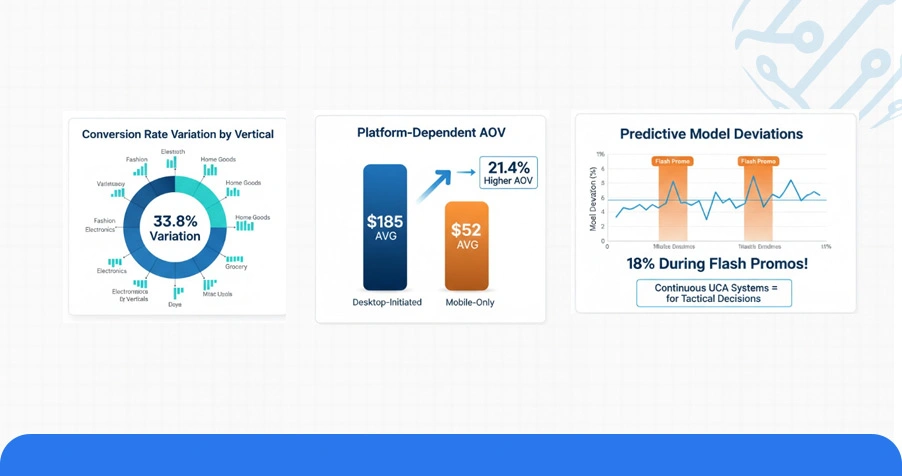
Aggregated 2025 datasets revealed 33.8% variation in conversion rates across 12 major retail verticals, highlighting substantial diversity in category-specific shopping behaviors. Desktop-initiated journeys demonstrated 21.4% higher average order values compared to mobile-only sessions, marking significant platform-dependent purchasing characteristics.
Notably, approximately 18% of predictive model deviations occurred during flash promotional periods, emphasizing the essential role of continuous Unified Commerce Analytics Report systems for tactical decision-making. These metrics provide elevated strategic visibility for retailers, technology providers, and brand managers, demonstrating the transformative impact of Enterprise Unified Commerce Trend Forecasting capabilities within modern commerce operations.
Conclusion
In an environment characterized by fragmented customer journeys and evolving expectations, achieving clarity through systematic analysis has become non-negotiable. Organizations embracing the Unified Commerce Consumer Trends Report Using Data Scraping methodology position themselves to anticipate behavioral shifts, optimize touchpoint performance, and maximize revenue potential across channels.
We deliver comprehensive solutions built on reliable automated data collection, advanced Web Scraping for Unified Commerce integration, and real-time analytical capabilities. Contact ArcTechnolabs today to discuss our commerce intelligence platforms, customized visualization dashboards, and API infrastructure.