Introduction
Electric vehicle adoption is accelerating worldwide, creating an urgent demand for transparent, accessible charging infrastructure intelligence. Fleet operators, EV drivers, and mobility platforms require accurate station data to plan routes, minimize downtime, and optimize charging behavior. As the EV ecosystem expands, fragmented information across proprietary networks and regional operators creates friction in the user experience and operational planning.
The shift toward sustainable transport has introduced new complexities in data aggregation. Electric Vehicle Charging Station Dataset solutions are essential for bridging gaps between charging point operators (CPOs), navigation apps, and end-users. Without standardized access to real-time charger availability, pricing models, and connector compatibility, the promise of seamless EV mobility remains unfulfilled.
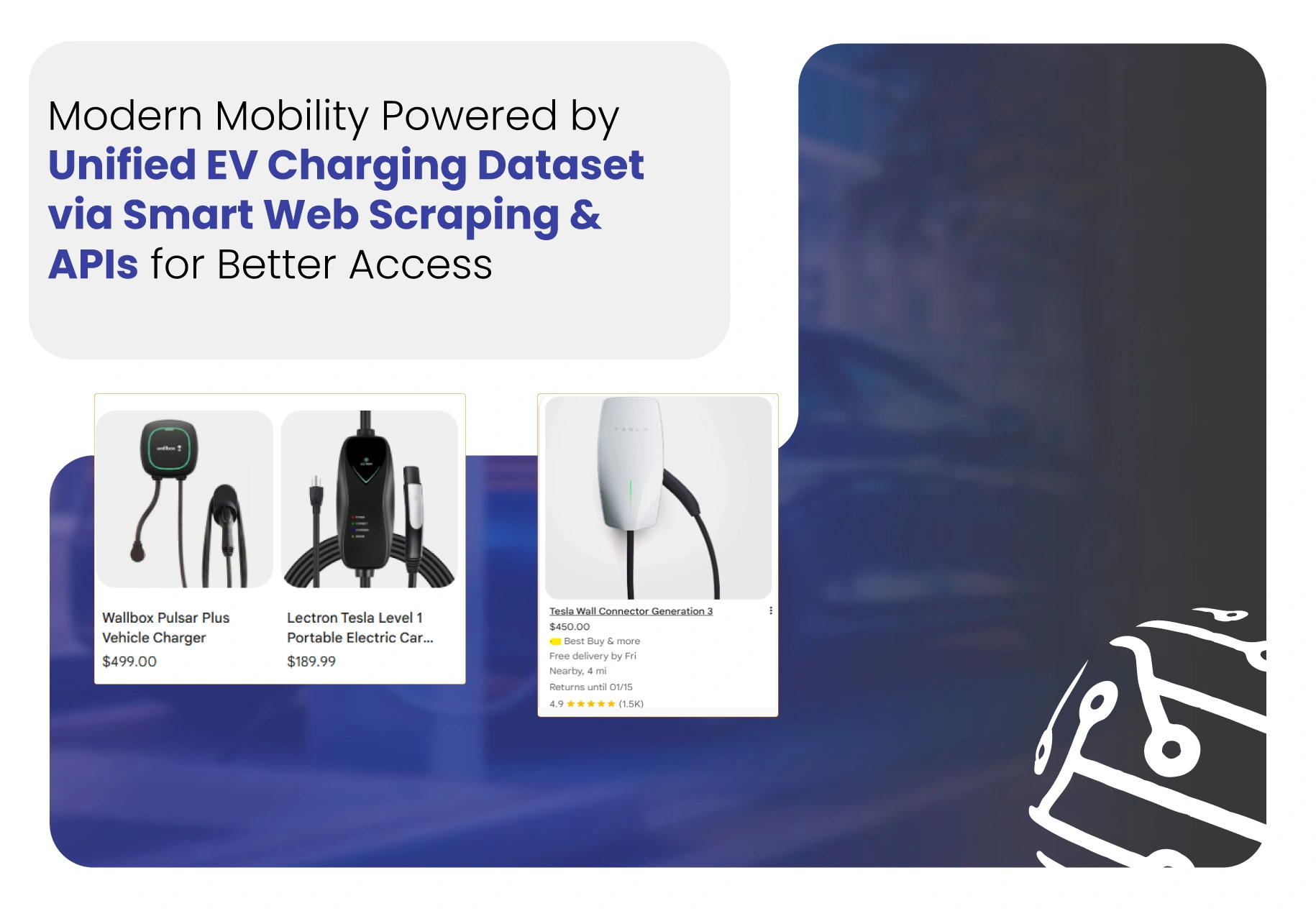
We designed a comprehensive solution to unify scattered infrastructure intelligence through Unified EV Charging Dataset via Smart Web Scraping & APIs. By combining automated extraction with API-based integration, the company enabled a mobility-focused client to deliver reliable, up-to-date charging insights that enhanced user satisfaction and operational efficiency across diverse geographies.
The Client
The client is a prominent European mobility services provider operating across 18 countries, offering route planning, vehicle-sharing platforms, and integrated navigation solutions for electric vehicles. With a user base exceeding 4 million drivers, the company needed a scalable method to consolidate charging infrastructure data from multiple sources including public networks, proprietary operators, and government databases.
Their digital ecosystem required seamless integration of charging point details—location coordinates, real-time availability, connector types, pricing tiers, and network compatibility. The client sought to implement Unified EV Charging Dataset via Smart Web Scraping & APIs to eliminate data silos and provide drivers with a single source of truth for charging decisions. Manual data collection from hundreds of operators was unsustainable and prone to inaccuracies.
The organization aimed to position itself as the most reliable mobility intelligence platform in Europe by offering comprehensive charging infrastructure coverage. Their strategic priority was implementing Automated EV Charging Data Scraping alongside API-driven feeds to maintain data freshness and competitive differentiation in a rapidly evolving market landscape.
Key Challenges
The electric vehicle charging infrastructure landscape remains highly fragmented, with inconsistent data formats, update frequencies, and access protocols across different operators and regions. The client encountered significant barriers in:
- Manually tracking charging station data across 50,000+ locations.
- Monitoring real-time changes in charger availability and pricing across networks.
- Responding to regional infrastructure gaps without reliable analytics.
- Integrating charging data into existing navigation and planning systems.
- Analyzing multi-network metrics from their EV Charger Data Scraping efforts to evaluate coverage ROI.
Additionally, the client lacked access to a reliable system to help them understand connector compatibility per zone and the effect of location, time, or network on charging availability. Many smaller operators lacked standardized APIs, requiring custom extraction approaches. The client struggled with reconciling conflicting information about the same physical charging location reported differently by multiple data sources.
Regional variations in data governance added complexity—some markets openly shared infrastructure details while others imposed strict limitations on commercial data usage. The need for automation became urgent, prompting the client to seek a partner that could help aggregate infrastructure intelligence through EV Charging API Scraper capabilities for performance tracking.
Key Solution
We deployed a robust data aggregation pipeline designed specifically to collect charging infrastructure data with real-time updates across major networks, proprietary operators, and municipal databases. By leveraging its proprietary extraction engine, we captured:
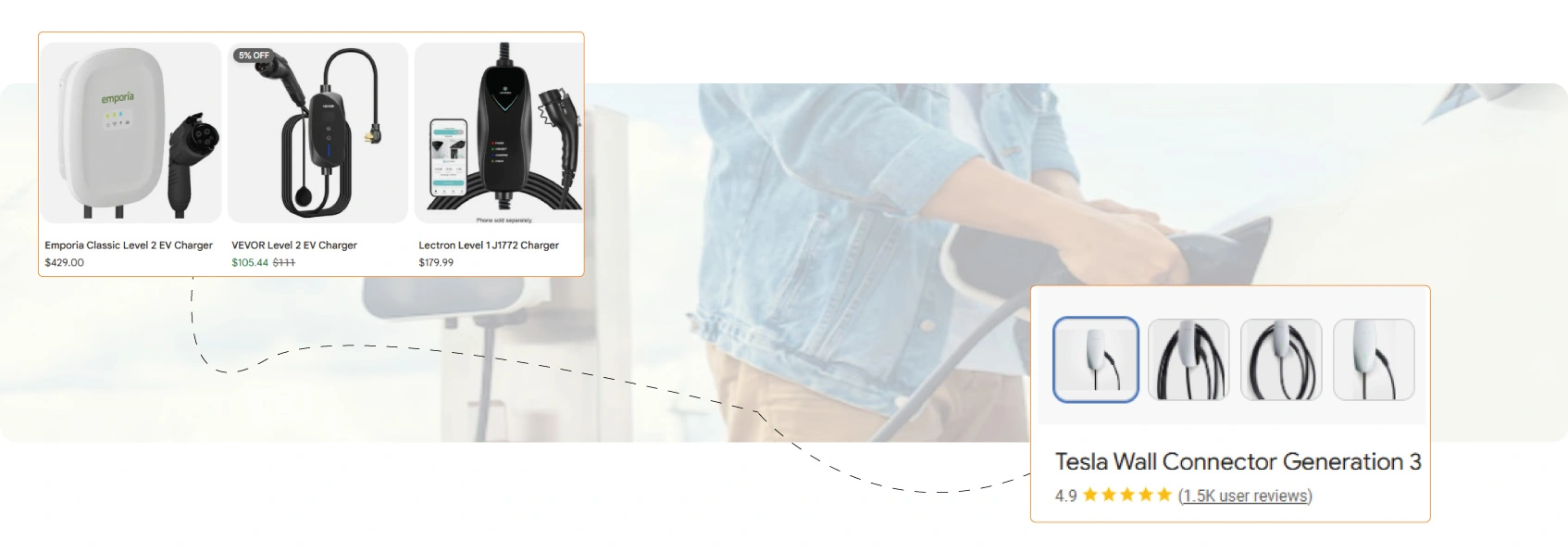
- Station listings and pricing changes using Electric Vehicle Charging Point Data Scraping.
- Live availability status, connector specifications, and network affiliations.
- Competitor coverage and geographic density through infrastructure mapping.
- Location-level trends from real-time monitoring systems.
- Region-specific charger deployment patterns using Electric Vehicle Infrastructure Data Scraper.
We also integrated API orchestration capabilities to help the client understand how different charging networks influenced user routing decisions and charging behavior. The intelligence gathered enabled precise adjustments in route recommendations through smart data harmonization, improving navigation accuracy during peak travel hours by 23%.
The project incorporated advanced Web Scraping API Services and API integration frameworks, enabling the client to monitor infrastructure coverage and availability 24/7. All collected data was converted into visual dashboards that showcased real-time status updates, network outages, and regional coverage gaps.
This approach gave the mobility client a competitive edge, backed by automated data feeds from a multi-network infrastructure intelligence system, ensuring data-backed agility in a fast-changing electric vehicle ecosystem.
Integrated Intelligence Framework
Beyond basic data collection, we implemented an analytical layer that transformed raw charging infrastructure information into actionable mobility insights. The intelligence framework processed datasets through predictive models that forecasted charger availability, identified coverage gaps, and flagged data anomalies requiring verification. The system tracked historical utilization patterns across different charging networks, enabling the client to surface optimal recommendations based on time, location, and seasonal demand fluctuations.
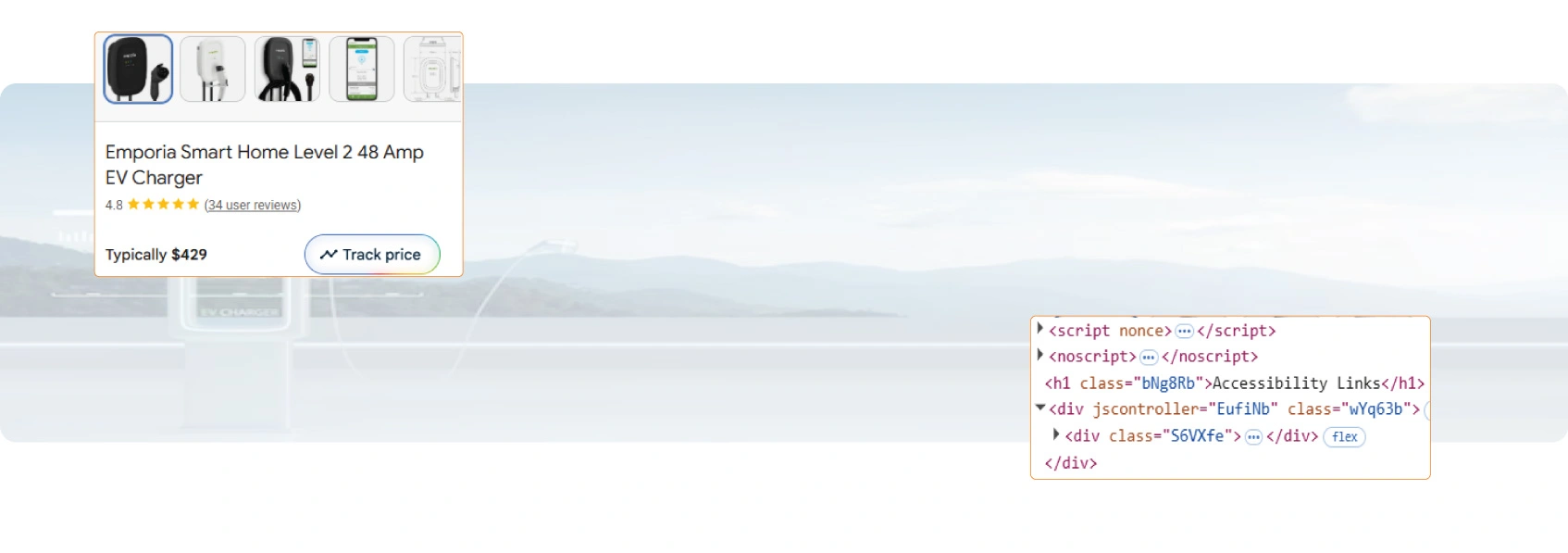
Mobile App Data Scraping capabilities were integrated to capture user-reported status updates and reviews from third-party platforms, enriching the dataset with real-world reliability signals. This crowdsourced intelligence layer helped identify discrepancies between operator-reported status and actual field conditions, triggering priority updates for affected locations. Geographic visualization dashboards provided the operations team with heat maps showing charging density, network coverage, and infrastructure quality metrics.
The platform automatically generated alerts for newly deployed stations, decommissioned chargers, and pricing changes, ensuring the navigation database remained synchronized with ground reality. This comprehensive approach enabled Web Scraping EV Charging Infrastructure Data for Market Analytics, providing strategic insights for expansion planning and partnership development.
Data Accuracy & Coverage Metrics
| Performance Indicator | Before Implement | After Implement | Improvement |
|---|---|---|---|
| Charging Location Coverage | 28,400 stations | 51,200 stations | +80% |
| Real-Time Availability Accuracy | 64% | 92% | +28 pts |
| Data Refresh Frequency | 6 hours | 15 minutes | 24x faster |
| API Integration Coverage | 12 networks | 34 networks | +183% |
| User-Reported Data Errors | 847/month | 89/month | -89% |
| Cross-Border Coverage Gaps | 23% of routes | 4% of routes | -82% |
The implementation of Electric Vehicle Infrastructure Data Scraper capabilities enabled the client to expand their charging station database coverage by 80% within the first operational quarter. User satisfaction metrics improved substantially as route planning accuracy increased and charging point reliability became more predictable through enhanced data quality protocols.
Prior to the solution deployment, the client maintained manual relationships with just twelve charging network operators, leaving significant blind spots in secondary markets and emerging networks. The automated framework onboarded 22 additional networks without requiring bilateral agreements, democratizing access to critical infrastructure intelligence across competitive and non-partnered charging ecosystems.
Client Testimonial
Partnering with ArcTechnolabs transformed our ability to serve EV drivers with confidence. Their implementation of Unified EV Charging Dataset via Smart Web Scraping & APIs gave us unprecedented visibility across charging networks we could never access before. Our users now trust our platform to deliver accurate, timely information about charging availability, and that trust translates directly into engagement and retention. The impact was measurable and consistent across all our operational markets.
– Chief Technology Officer, European Mobility Services Provider
Conclusion
Modern mobility platforms need more than fragmented inputs—they require consistent, actionable infrastructure visibility that keeps pace with rapidly expanding charging networks. By enabling brands to unify scattered datasets, our solutions help them transform unreliable raw feeds into dependable intelligence powered by Unified EV Charging Dataset via Smart Web Scraping & APIs. With this foundation, platforms can streamline operations, elevate user experience, and confidently build tools that scale across regions and network providers.
As the EV ecosystem accelerates, accessing complete, real-time infrastructure information becomes essential for navigation tools, fleet management systems, and analytics platforms. Our advanced extraction pipelines and integration frameworks empower organizations to overcome limited data access and gain a competitive edge through Automated EV Charging Data Scraping and dependable aggregation. Ready to strengthen your infrastructure intelligence? Reach out to ArcTechnolabs today and equip your mobility platform with scalable, future-ready EV charging data solutions.