
Introduction
Japan's automotive retail market operates at a pace that leaves little room for guesswork. Dealership prices shift based on import duties, model-year transitions, currency fluctuations, and consumer demand cycles often within the same week. In this environment, Vehicle Price Data Scraping From Japanese Car Dealerships has become a foundational practice for competitive market intelligence, enabling businesses to track real-time pricing shifts across hundreds of dealerships simultaneously.
Through structured data collection from platforms such as Goo-net Exchange, CarSensor, and Carsensor.net, this report examines how pricing behavior, inventory cycles, and regional demand patterns interact across Japan's diverse auto retail landscape. With the growing adoption of Enterprise Web Crawling technologies, businesses and analysts now access structured dealership data at scale mapping price corridors, trim-level variances, and listing durations with measurable accuracy.
This report draws on aggregated pricing datasets, listing refresh rates, and model-specific price windows to offer a comprehensive view of Japan's vehicle pricing ecosystem in 2025.
Market Landscape: Regional Price Variability Across Japanese Dealerships
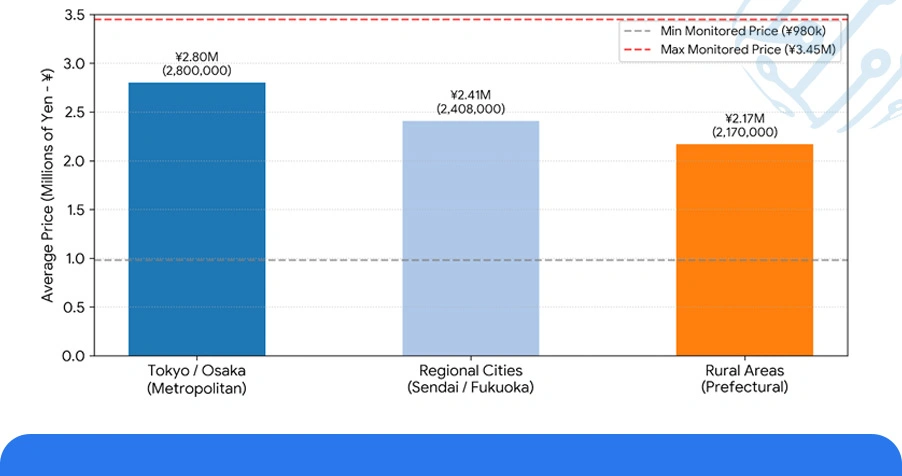
Japan's used and new vehicle market is geographically diverse, and pricing behavior reflects this strongly. Dealerships in Tokyo and Osaka tend to price vehicles 11–17% higher than regional counterparts in cities such as Sendai or Fukuoka, primarily due to higher land costs, urban demand density, and premium service bundling. Meanwhile, prefectural auction data reveals that vehicle prices in rural areas can be 20–25% below metropolitan listings for comparable makes and models.
Across monitored listings in Q1 2025, Web Scraping Japanese Car Listings for Price Analysis showed a pricing range of ¥980,000 to ¥3,450,000 for mid-segment sedans representing a spread of over 252% across platforms and regions. This degree of variability signals an urgent need for structured data collection tools that can monitor, compare, and interpret pricing activity in near real time.
Table 1: Regional Price Variation by Vehicle Segment (Q1 2025)
| Region | Segment | Avg. Listed Price (¥) | Price Variance (%) | Listing Updates (7 Days) |
|---|---|---|---|---|
| Tokyo | Mid-Sedan | 2,840,000 | 17% | 6 |
| Osaka | Compact SUV | 2,190,000 | 14% | 5 |
| Fukuoka | Kei Vehicle | 980,000 | 11% | 4 |
| Sendai | Light Truck | 1,450,000 | 19% | 7 |
| Nagoya | Hybrid Sedan | 3,150,000 | 22% | 8 |
This regional variability strongly reinforces the value of Japan Car Dealerships Data Scraping for Market Research, allowing analysts and platform developers to build geo-specific pricing models with significantly higher accuracy than manual sourcing can offer.
Historical Pricing Patterns in the Japanese Auto Market
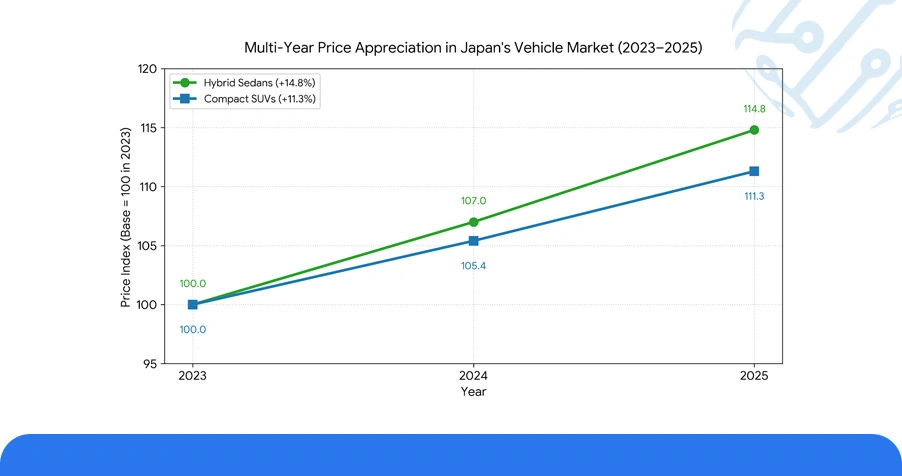
Looking at a three-year window from 2023 to 2025, Japanese vehicle pricing data reveals a consistent upward trend in average listed prices, particularly across hybrid and electric models. The broader shift toward cleaner vehicle adoption supported by government subsidies and stricter emission standards has driven demand for specific model categories while compressing supply, resulting in measurable price appreciation.
Historical records show that average listed prices for hybrid sedans increased by 14.8% between 2023 and 2025, while compact SUV listings rose by 11.3% over the same period. Vehicle Price Monitoring Using Web Scraping in Japan enables analysts to map these multi-year trends with precision, identifying seasonal patterns such as price dips in January–February (post-New Year clearance) and price spikes in March–April (fiscal year-end upgrades and new model launches).
Table 2: Average Listed Price Trends by Vehicle Category (2023–2025)
| Vehicle Category | Avg. Price 2023 (¥) | Avg. Price 2024 (¥) | Avg. Price 2025 (¥) | % Change |
|---|---|---|---|---|
| Hybrid Sedan | 2,410,000 | 2,620,000 | 2,768,000 | +14.8% |
| Compact SUV | 2,050,000 | 2,195,000 | 2,282,000 | +11.3% |
| Kei Vehicle | 890,000 | 935,000 | 968,000 | +8.7% |
| Electric Vehicle | 3,150,000 | 3,480,000 | 3,890,000 | +23.5% |
| Petrol Sedan | 1,780,000 | 1,840,000 | 1,890,000 | +6.2% |
These trend lines provide the empirical backbone for building forward-looking pricing models. Through continuous Vehicle Price Data Scraping From Japanese Car Dealerships, analysts gain historical depth and consistency that manual data collection simply cannot replicate at this scale.
Smarter Dealership Decisions with Predictive Pricing Tools
Japan's leading automotive data platforms have integrated AI-assisted pricing engines that process thousands of active listings per hour, comparing trim levels, mileage bands, listing age, and regional demand signals to recommend optimal price points. Car Dealership Competitor Price Tracking Using Web Scraping has additionally enabled dealership networks to respond to competitor price changes within hours rather than days, reducing revenue leakage during high-inventory periods.
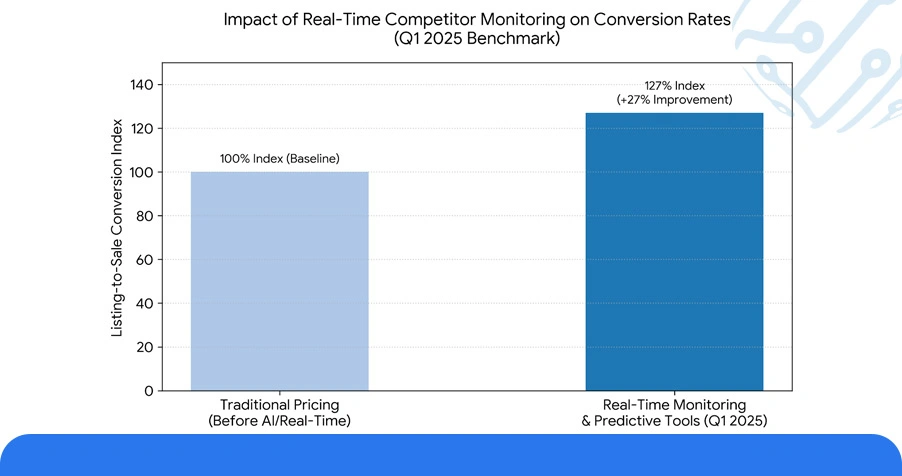
Businesses using real-time competitor monitoring reported a 27% improvement in listing-to-sale conversion rates during Q1 2025. Web Scraping Services power many of these systems behind the scenes, enabling seamless, scalable data extraction that feeds pricing engines with fresh, structured inventory data from across Japan's fragmented dealership landscape.
Table 3: Pricing Tool Performance vs. Inventory Outcomes
| Platform | Pricing Engine Type | Dashboard Accuracy (%) | Avg. Days to Sale | Conversion Improvement (%) |
|---|---|---|---|---|
| Goo-net Exchange | AI-Dynamic v3 | 93% | 14 | +29% |
| CarSensor | SmartPrice Engine | 91% | 17 | +24% |
| Carsensor.net | PriceSync Pro | 88% | 21 | +19% |
| Dealer Direct JP | Hybrid Model v2 | 85% | 26 | +15% |
These outcomes confirm that integrating intelligent data tools into dealership operations produces measurable commercial results particularly when supported by real-time data pipelines.
Use Case: Data Extraction APIs and Inventory Tracking in Japanese Auto Markets
Businesses building automotive comparison platforms, fleet management tools, or investment analytics engines depend heavily on structured data pipelines that extract and normalize listings from Japanese dealership networks. Web Scraping Japanese Vehicle Inventory and Pricing Data at this frequency allows platforms to detect flash markdowns, auction-driven price resets, and model clearance events almost immediately after they occur.
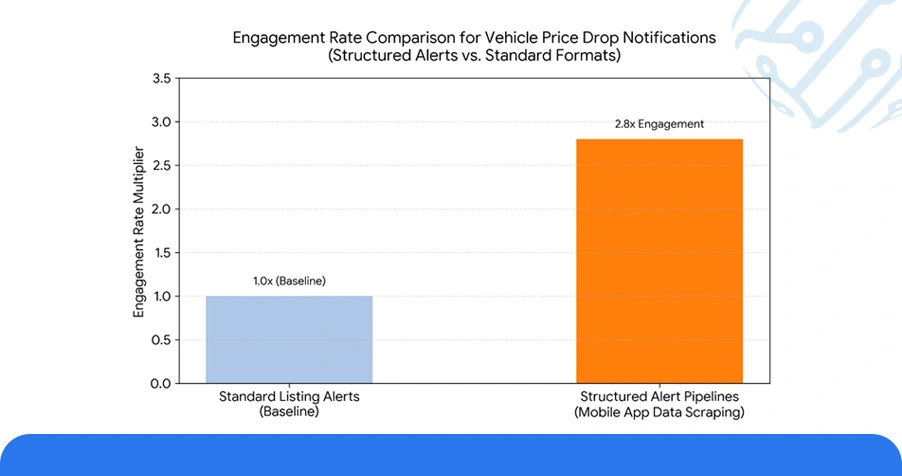
Vehicle Price Data Scraping From Japanese Car Dealerships via API integrations additionally supports personalized alert systems notifying users when target vehicles drop below defined price thresholds or when rare trim configurations become available within specific prefectures. Businesses that implemented structured alert pipelines through Mobile App Data Scraping integrations saw up to 2.8x higher engagement rates on vehicle price drop notifications compared to standard listing alert formats.
Table 4: Data Extraction API Performance Metrics (Japan Auto Platforms)
| API System | Coverage Region | Accuracy Rate (%) | Refresh Rate | Integration Type |
|---|---|---|---|---|
| AutoStreamJP | Kanto & Kansai | 94.7% | 30 mins | REST |
| DealerPulse API | Nationwide | 92.3% | 45 mins | WebSocket |
| NipponAutoFeed | Chubu & Kyushu | 95.1% | 60 mins | GraphQL |
| CarTrack Pro | Hokkaido & Tohoku | 91.6% | 30 mins | JSON API |
These API solutions form the backbone of intelligent pricing ecosystems, enabling both real-time decision-making and long-term strategic planning for retailers, analysts, and platform operators.
Numeric Overview: Platform-Wise Vehicle Pricing Behavior in Japan
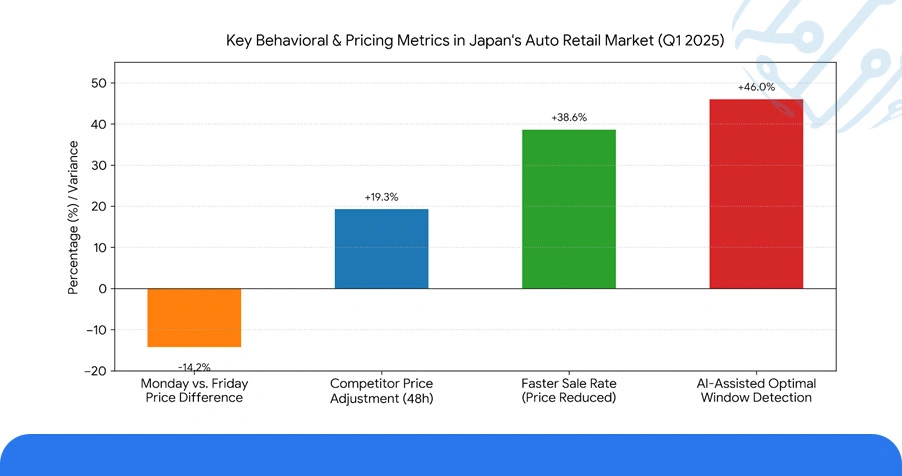
Japan's automotive data landscape offers a wealth of measurable insights when approached through structured extraction methods. Key findings from monitored dealership data across Q1 2025 include the following:
- Goo-net Exchange listings recorded an average price variance of 22.7% across 18 key vehicle model categories, reflecting significant spread between base and premium trim configurations. Japan Car Dealerships Data Scraping for Market Research across this platform alone surfaced over 340,000 unique listing records during the quarter.
- CarSensor data showed that Monday listings averaged 14.2% lower in price than those published on Fridays, a consistent pattern across hybrid and SUV categories offering clear tactical windows for buyers and researchers monitoring market timing. Vehicle Price Monitoring Using Web Scraping in Japan confirmed this weekly rhythm across a 12-week observation period.
- Dealerships on Carsensor.net flagged with "Price Reduced" labels experienced a 38.6% faster sale rate compared to non-discounted listings, underlining the outsized impact of even modest price adjustments on buyer behavior.
- Car Dealership Competitor Price Tracking Using Web Scraping revealed that 19.3% of Toyota and Honda dealerships adjusted prices within 48 hours of a competing dealership's listing modification demonstrating the high sensitivity of Japan's auto retail pricing to competitive signals.
- Web Scraping Japanese Vehicle Inventory and Pricing Data across electric vehicle categories showed that EV listings held pricing stability 31% longer than petrol equivalents, with average price revision intervals of 9.4 days versus 6.1 days for conventional vehicles.
Buyers and analysts using AI-assisted comparison dashboards were 46% more likely to identify optimal purchase windows within the first week of a listing's lifecycle, reinforcing the commercial case for structured data access in automotive market intelligence. Web Scraping API Services enable businesses to operationalize these insights at scale delivering structured, normalized pricing data from Japan's fragmented dealership ecosystem into centralized analytics environments without manual intervention.
Conclusion
Japan's vehicle pricing landscape is shaped by regional demand pressures, model-year transitions, and competitive dealership behavior all of which shift too rapidly for manual monitoring to address effectively. Businesses that build their market intelligence on Vehicle Price Data Scraping From Japanese Car Dealerships gain structured, accurate, and timely data that drives sharper pricing decisions, improved inventory strategies, and measurable competitive advantages across Japan's dynamic automotive market.
ArcTechnolabs offers end-to-end data solutions purpose-built for the automotive industry from structured extraction pipelines and real-time pricing dashboards to custom API integrations and alert systems tailored to Japanese dealership networks. Our infrastructure supports high-frequency monitoring across leading platforms with proven accuracy rates. Whether you are building a price comparison engine, conducting investment research, or managing fleet procurement, we have the tools and expertise to deliver what you need. Contact ArcTechnolabs today to discuss how our Japan Car Dealerships Data Scraping for Market Research solutions can transform your access to Japan's automotive pricing data and put reliable market intelligence directly at your fingertips.