Introduction
Retail pricing in New Zealand changes frequently as online stores respond to demand, promotions, competitor movements, and seasonal shopping patterns. Businesses that manually monitor these changes can struggle to maintain timely records. Web Scraping for E-Commerce Price Monitoring in New Zealand provides structured product, price, availability, and promotional information for regular retail analysis.
Online retailers and analysts can compare product prices across multiple websites while maintaining consistent historical records. Web Scraping Ecommerce Data helps organize information such as product names, listed prices, discounts, brands, categories, and stock status into usable datasets. This supports more efficient market observation without relying on scattered manual checks.
A structured monitoring process also helps identify pricing gaps, recurring promotional patterns, and changes across product categories. Businesses can use these insights to review pricing strategies, evaluate competitors, and improve reporting accuracy. The resulting data can support both day-to-day retail decisions and broader e-commerce market analysis across New Zealand.
Strategic Foundations for More Accurate New Zealand Retail Price Analysis
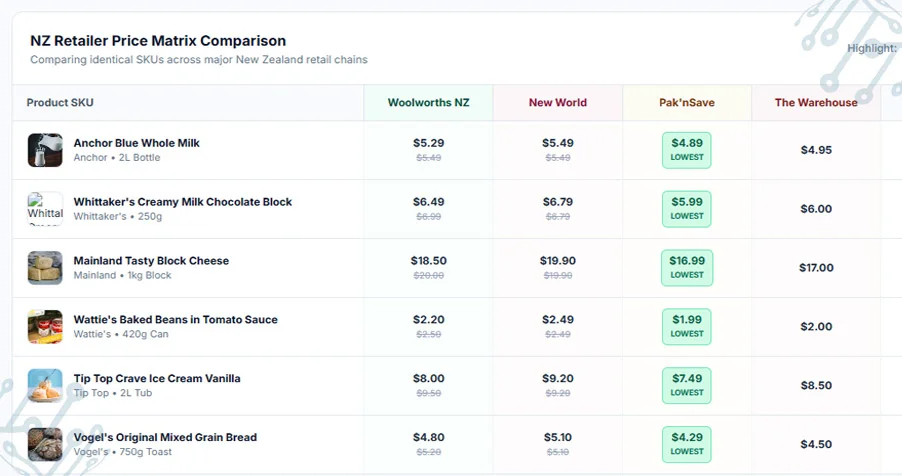
Retailers require consistent information to understand how product prices change across competing online stores. New Zealand Online Retail Price Comparison Using Scraped Data can organize product prices, discounts, brands, availability, and other attributes into comparable records. Instead of reviewing individual websites repeatedly, teams can work with structured information that simplifies comparison and reporting.
Price monitoring becomes more valuable when collection takes place at regular intervals. Businesses can define specific products, categories, retailers, and data points for recurring collection based on their analytical requirements. Mobile App Data Scraping can extend this process by capturing pricing information displayed through retailer applications. Combining website and application information provides a broader view of how offers may vary between digital channels.
A standardized collection workflow can also improve data consistency across large product catalogs. Retail teams may monitor hundreds or thousands of SKUs depending on their category coverage, business scale, and selected sources. Regular timestamps help analysts identify when prices changed, while product identifiers allow historical observations to remain connected.
Key monitoring elements can include:
- Product prices across selected retailers
- Discount and promotional information
- Product availability and stock status
- Brand and category details
- Collection timestamps for verification
| Monitoring Metric | Example Use |
|---|---|
| Product Price | Compare listed prices |
| Discount Rate | Track promotional changes |
| Stock Status | Identify availability shifts |
| SKU Count | Measure monitoring coverage |
| Update Frequency | Maintain current records |
Consistent collection ultimately provides retailers with a clearer picture of online pricing conditions. By bringing information from different sources into a standardized structure, analysts can examine market differences more efficiently. This creates a practical foundation for ongoing retail price analysis, competitor observation, and category-level reporting.
Historical Intelligence Revealing Meaningful Patterns in Online Retail Pricing
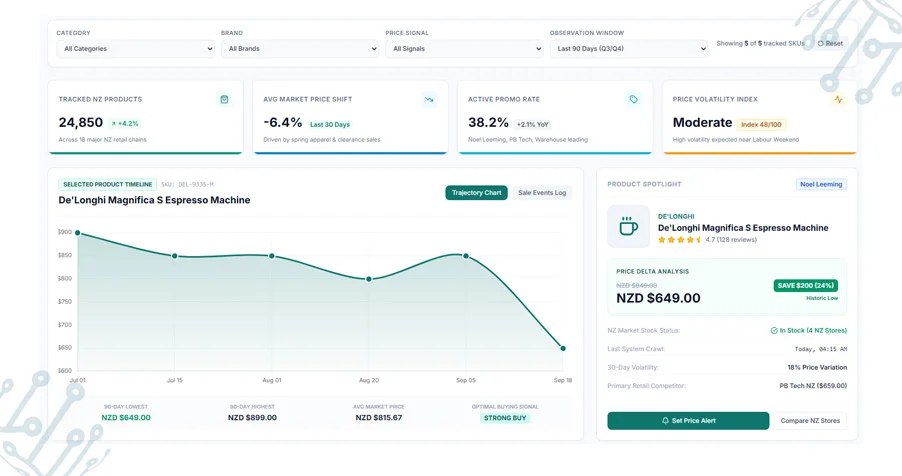
Current product prices provide only a snapshot of market conditions, while historical records reveal how pricing behaves over longer periods. Historical Price Tracking for New Zealand E-Commerce Products enables analysts to compare previous and current prices and identify recurring discounts, seasonal movements, price increases, and product-level fluctuations. Such records provide context that cannot be obtained from a single observation.
Historical information becomes more useful when product details are captured alongside pricing observations. E-Commerce Datasets can contain product names, categories, brands, prices, discounts, ratings, availability, and other attributes required for deeper analysis. Bringing these elements together allows analysts to examine pricing changes alongside product characteristics rather than evaluating individual price figures separately.
Consistent historical records can help retailers identify whether a price movement represents a short promotional campaign or a longer-term adjustment. Collection frequency can be adapted according to business needs, ranging from occasional snapshots to more frequent monitoring. Timestamps and standardized product identifiers further help maintain continuity between older and newer observations, supporting reliable trend evaluation.
Useful historical indicators may include:
- Previous and current product prices
- Changes in discount levels
- Promotional periods and frequency
- Category-level price movements
- Availability changes over time
| Historical Indicator | Analytical Value |
|---|---|
| Previous Price | Measures price movement |
| Current Price | Shows latest market position |
| Discount History | Identifies promotional cycles |
| Product Category | Enables category comparisons |
| Availability History | Tracks stock patterns |
With well-organized historical information, retailers can review pricing behavior across different periods and product groups. Analysts can also identify recurring market patterns and prepare reports using consistent observations. This strengthens retail research by adding historical context to current pricing information and helping businesses interpret changes with greater clarity.
Advanced Competitive Monitoring Strengthening Data-Driven Retail Pricing Decisions
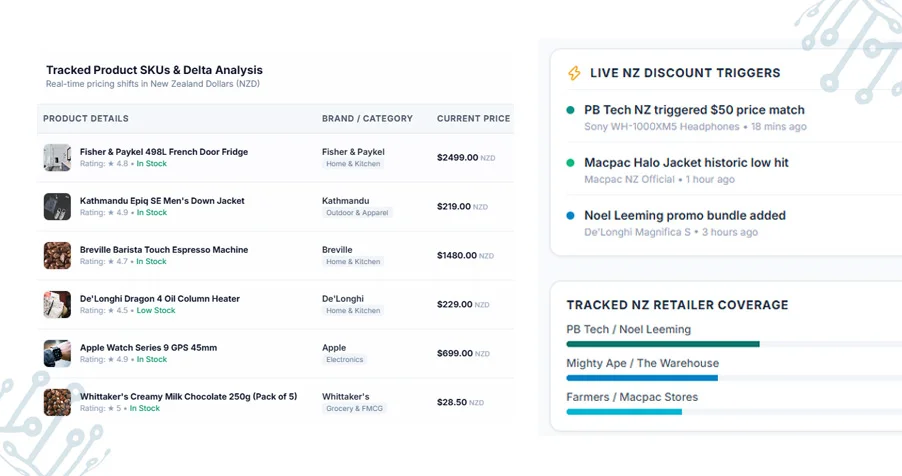
Competitive monitoring gives retailers broader visibility into pricing conditions across the online market. New Zealand Retail Price Data Scraping and Analytics can combine product-level prices with categories, brands, discounts, and availability information. Analysts can then compare market movements across selected retailers and identify pricing differences that require closer examination. Structured records also make recurring competitive reviews easier to manage.
Automation can reduce repetitive collection tasks when retailers monitor large product catalogs or multiple websites. Automated Product Data Scraping for New Zealand Online Retailers can support scheduled collection while keeping product information in standardized formats. This allows teams to spend less time gathering individual listings and more time reviewing changes, preparing reports, and evaluating pricing patterns across relevant categories.
Competitor-focused collection can provide additional context for commercial decisions. Scraping Competitor Product Prices From New Zealand E-Commerce Websites can help teams observe listed prices, promotional offers, product availability, and other visible attributes. When observations include timestamps, businesses can compare changes over specific periods and distinguish temporary promotional activity from broader market movements.
Important competitive monitoring areas can include:
- Competitor product prices
- Promotional and discount activity
- Product availability
- Brand and category positioning
- Date and time of collected records
| Competitive Data Point | Business Application |
|---|---|
| Competitor Price | Market comparison |
| Product Availability | Supply observation |
| Promotions | Campaign monitoring |
| Product Attributes | Catalog comparison |
| Collection Timestamp | Change verification |
APIs and automated workflows can further connect collected information with internal databases, dashboards, and analytical platforms. Web Scraping API Services can support structured data delivery where businesses require recurring integration with existing systems. Together, automated collection and competitive reporting create a repeatable approach to monitoring online retail conditions and supporting data-driven pricing analysis.
How ArcTechnolabs Can Help You?
We can support retailers and market analysts with Web Scraping for E-Commerce Price Monitoring in New Zealand, focusing on structured collection of product prices, discounts, availability, and competitor information. Data workflows can be tailored around selected retailers, product categories, collection frequency, and reporting requirements to create organized information for ongoing analysis.
Key capabilities include:
- Automated collection of product and pricing information
- Monitoring of competitor listings across selected websites
- Structured organization of product attributes and SKUs
- Scheduled collection for recurring price checks
- Data cleansing and normalization for analysis
- Delivery of structured records in business-ready formats
These capabilities can help teams reduce repetitive research while maintaining consistent retail datasets. New Zealand Retail Price Data Scraping and Analytics can support comparisons across categories, brands, retailers, promotional periods, and product-level pricing movements.
We can also integrate collected information into existing analytical workflows according to project requirements. With web scraping services, businesses can connect structured retail information with dashboards, databases, internal applications, or reporting platforms.
Conclusion
Retail pricing analysis becomes more meaningful when businesses can examine current listings alongside consistent historical and competitor information. Web Scraping for E-Commerce Price Monitoring in New Zealand can organize recurring observations into structured records, supporting price comparisons, promotional analysis, and broader retail research across changing online markets.
Reliable datasets also provide useful context for interpreting pricing movements across products and categories. Historical Price Tracking for New Zealand E-Commerce Products can help businesses evaluate recurring changes and build more informed reports from structured historical observations. Contact ArcTechnolabs today to discuss your retail data requirements and create a tailored price monitoring solution for your business.