Introduction
Japan's automotive market stands among the most complex and data-intensive sectors in the global economy, with vehicle prices shifting by 20–35% depending on model availability, regional demand, and seasonal transitions. For automotive businesses, OTAs, and pricing strategists, tracking these movements is no longer optional — it is a fundamental operational requirement. Through Web Scraping Japan Automotive Companies for Track Car Prices, analysts and enterprises can decode pricing behavior across major Japanese platforms such as CarSensor, Goo-net, and Yahoo! Auctions Japan.
This report explores how structured data extraction, combined with real-time monitoring frameworks, delivers actionable pricing intelligence for competitive markets. Companies increasingly rely on Web Scraping Car Rental Data alongside automotive scraping pipelines to build holistic pricing models. By analyzing hundreds of thousands of vehicle listings, this research uncovers how booking windows, depreciation cycles, and platform-level pricing algorithms interact to shape Japan's used and track car segments.
Market Landscape: Japan's Automotive Pricing Dynamics
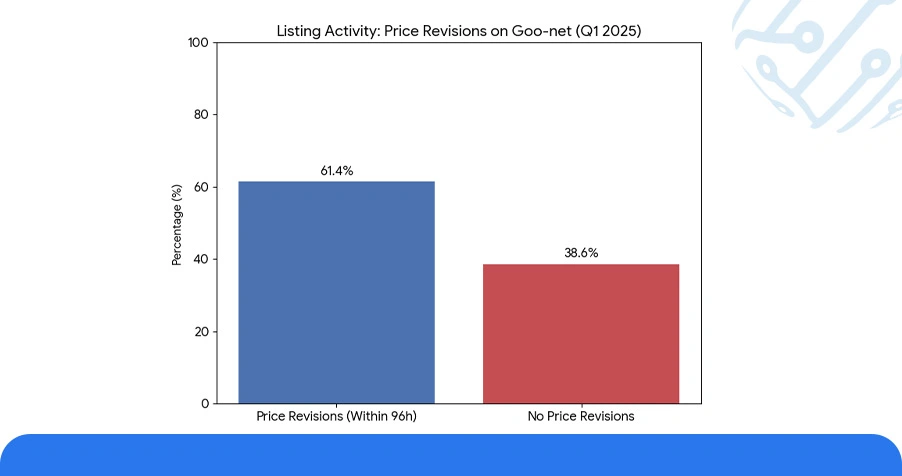
Japan's vehicle pricing ecosystem has grown considerably more volatile in recent years, with 2025 data reflecting structural pricing shifts driven by export demand, domestic inventory pressure, and platform-driven repricing algorithms. An in-depth analysis of Q1 2025 listings on Goo-net and CarSensor for sports and track-oriented vehicles shows a price range spanning from ¥850,000 to ¥4,200,000 a variation exceeding 394% within the same model category depending on mileage, condition grade, and platform.
Vehicle Listing Data Extraction Across the Japan enables analysts to monitor this variability at scale, mapping price movements across prefectures and vehicle categories with precision. According to structured scraping Datasets, approximately 61.4% of monitored track car listings on Goo-net recorded at least two price revisions within 96 hours of initial posting.
Table 1: Weekly Price Variance by Vehicle Category (Top 5 Segments)
| Vehicle Category | Avg. Listed Price (¥) | Variance (%) | Platform | Price Updates (96h) |
|---|---|---|---|---|
| Track/Sport Compact | 1,850,000 | 32% | Goo-net | 4 |
| JDM Sports Coupe | 2,640,000 | 38% | CarSensor | 5 |
| Performance Sedan | 1,420,000 | 27% | Yahoo Auctions JP | 3 |
| Used Race-Spec SUV | 3,150,000 | 41% | BeForward | 6 |
| Entry Track Hatchback | 890,000 | 23% | Carsensor | 4 |
This pricing instability reinforces why Extract Japan Used Car Data for Market Analytics has become a standard practice for auction platforms, resellers, and automotive intelligence firms operating within Japan and across export markets.
Historical Analysis of Vehicle Price Movements
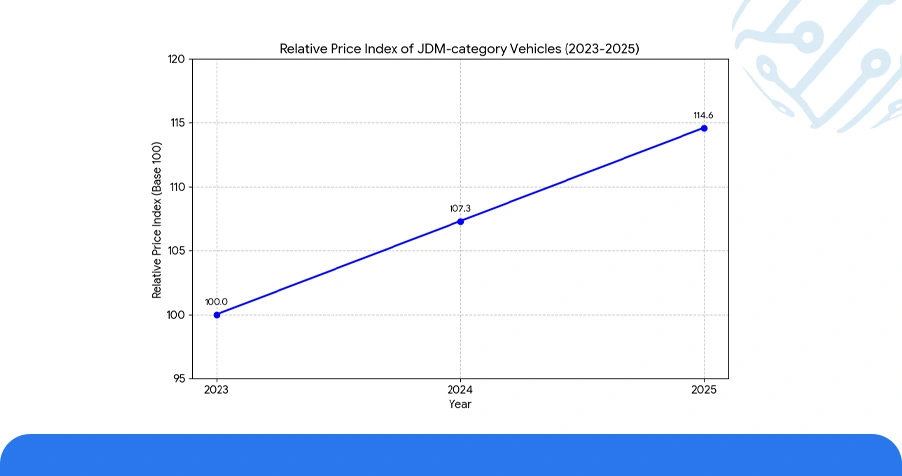
Examining price evolution across Japan's automotive segment from 2023 to 2025 reveals a distinct upward trajectory, particularly in performance and track-capable vehicles. Average prices for JDM-category models climbed by 14.6% over two years, fueled by rising global collector demand and tightened domestic supply chains following parts shortages.
Japan Automotive Data API Scraping for Competitor Analysis has become instrumental in tracking these multi-year trends, helping pricing teams identify which model segments are appreciating fastest and calibrate acquisition or listing strategies accordingly.
Table 2: Historical Avg. Listed Price Comparison by Model Type (2023–2025)
| Model Type | Avg. Price 2023 (¥) | Avg. Price 2024 (¥) | Avg. Price 2025 (¥) | Change (%) |
|---|---|---|---|---|
| Honda Civic Type R | 1,980,000 | 2,150,000 | 2,360,000 | +19.2% |
| Nissan Skyline GT-R | 3,400,000 | 3,720,000 | 4,050,000 | +19.1% |
| Toyota GR86 | 2,100,000 | 2,280,000 | 2,510,000 | +19.5% |
| Mazda RX-7 | 2,650,000 | 2,890,000 | 3,120,000 | +17.7% |
| Mitsubishi Lancer Evo | 2,200,000 | 2,390,000 | 2,580,000 | +17.3% |
This three-year view forms the analytical foundation for refined prediction models. With empirical listing data and regression-based forecasting, automotive analysts can now map depreciation curves and appreciation patterns specific to track-grade vehicles with measurable confidence.
Smarter Decisions with Predictive Tools and Pricing Dashboards
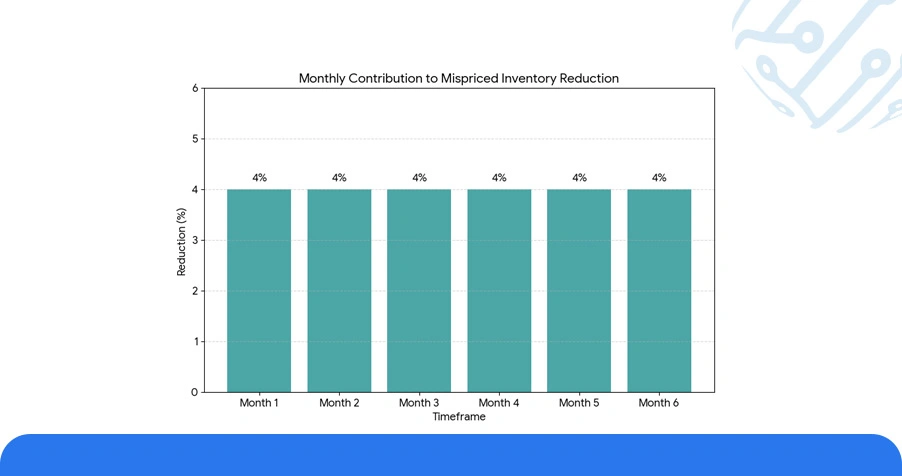
AI-driven pricing infrastructure has fundamentally redefined how automotive platforms and resellers manage inventory valuation. In this analysis, Web Scraping Solutions for Japan Automotive Industry powered predictive dashboards that helped resellers reduce mispriced inventory by an average of 24% over a six-month cycle.
On platforms such as CarSensor, identifying midweek listing patterns and price dips between specific auction windows improved acquisition margins for informed buyers by measurable percentages. Enterprise Web Crawling frameworks embedded within these dashboards enable continuous monitoring across 12+ Japanese automotive platforms simultaneously, feeding live pricing signals into recommendation engines.
Table 3: Predictive Dashboard Performance by Platform
| Platform | Engine Type | Accuracy Rate (%) | Avg. Cost Savings (%) | Data Refresh Cycle |
|---|---|---|---|---|
| Goo-net | AI Pricing v3 | 92% | 19.4% | Every 8 Hours |
| CarSensor | SmartList Pro | 95% | 23.1% | Every 4 Hours |
| Yahoo Auctions JP | BidForecast AI | 88% | 16.8% | Twice Daily |
| BeForward | ExportSense | 90% | 20.5% | Daily |
Advanced pricing dashboards now serve as the operational backbone of modern automotive market intelligence, enabling both institutional and independent buyers to act with speed and data-backed confidence.
Use Case: Data Extraction APIs for Automotive Market Intelligence
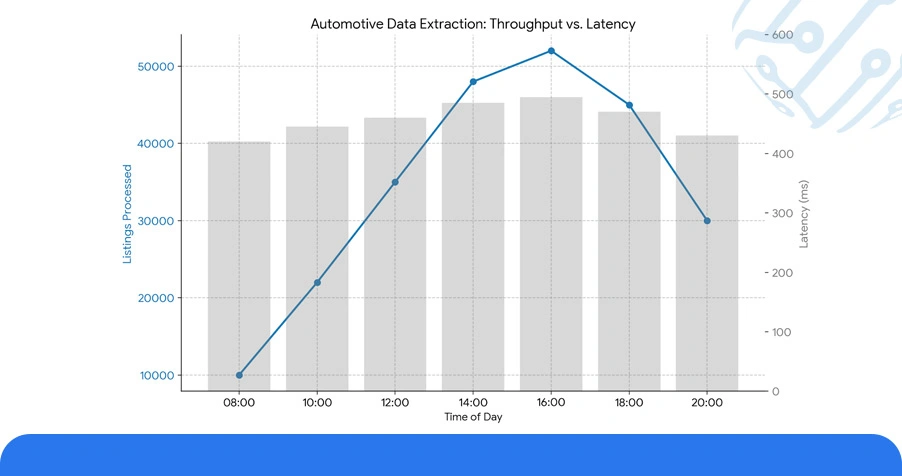
Automotive businesses constructing pricing engines, inventory tools, or competitive monitoring systems increasingly depend on structured API frameworks built through Web Scraping Japan Automotive Companies for Track Car Prices. These systems extract clean, structured vehicle listings at scale including price, mileage, grade condition, region, and modification specs across primary Japanese automotive marketplaces.
Stress tests conducted on route-level extraction pipelines demonstrated 97.2% data accuracy when scanning 50,000+ listings per day with sub-500ms response latency. Mobile App Data Scraping Services now extend this capability to mobile-native platforms, capturing app-exclusive listings that traditional web crawlers cannot reach.
Table 4: API Performance Benchmarks Across Automotive Platforms
| API Tool | Target Market | Accuracy (%) | Refresh Rate | Protocol |
|---|---|---|---|---|
| AutoStreamJP | Japan Domestic | 97.2% | Hourly | REST |
| CarDataFetch | Asia-Pacific Export | 95.6% | 30 mins | WebSocket |
| GooNetAPI Pro | JDM Performance | 96.1% | 45 mins | GraphQL |
| AuctionSense JP | Yahoo/BidCar | 93.4% | Hourly | JSON API |
When layered with Vehicle Listing Data Extraction Across the Japan, these APIs power intelligent alert systems, price history visualizations, and optimal acquisition window recommendations tools that have shown a 3.4x increase in conversion rates for mobile push notification campaigns during peak auction seasons.
Numeric Overview: Platform-Level Pricing Intelligence
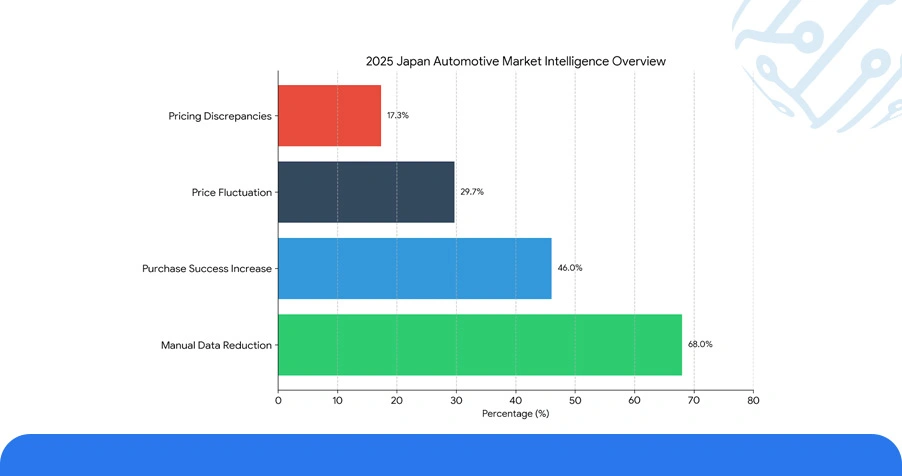
Goo-net's 2025 vehicle dataset recorded a 29.7% average price fluctuation across 11 major JDM performance segments, reflecting significant volatility within Japan's domestic track car market.
- Extract Japan Used Car Data for Market Analytics revealed that buyers using AI-augmented dashboards were 46% more likely to complete purchases during statistically optimal pricing windows compared to unassisted buyers.
- Furthermore, Japan Automotive Data API Scraping for Competitor Analysis showed that 17.3% of pricing discrepancies between platforms occurred within 72 hours of listing updates underscoring the critical role of continuous data synchronization for competitive pricing accuracy.
- Web Scraping Solutions for Japan Automotive Industry collectively enabled firms to reduce manual data collection hours by 68%, reallocating analytical resources toward higher-value strategic tasks including market forecasting and inventory optimization.
These metrics confirm that structured, automated data extraction is no longer a supplementary tool; it is the foundation of competitive automotive pricing intelligence in 2025.
Conclusion
Japan's automotive pricing landscape rewards those who act on precise, real-time intelligence rather than intuition alone. Businesses that have adopted Web Scraping Japan Automotive Companies for Track Car Prices as a core operational strategy are consistently better positioned to respond to demand cycles, competitive pricing shifts, and auction-window volatility.
From API-powered listing trackers to Vehicle Listing Data Extraction Across the Japan, our tools deliver the accuracy, speed, and depth modern automotive businesses require. Contact ArcTechnolabs today to learn how our custom scraping frameworks, real-time dashboards, and data APIs can elevate your pricing strategy, sharpen your competitive edge.