Introduction
Understanding product trends across the UK grocery landscape requires deep visibility into nutrition values, pricing changes, and category-level consistency. As consumer demand for transparency rises, brands rely heavily on structured comparison data to improve product positioning and refine packaging strategies. This is where advanced data extraction methods become essential, especially when analyzing a marketplace where thousands of SKUs are updated frequently.
Businesses today want a faster route to insights that reduces the time spent on manual checks and speeds up decision cycles across buying, marketing, and product development teams. With rising competition in the British grocery sector, maintaining accurate benchmarking becomes a core requirement. Using Web Scraping Ocado Product Data Extraction for Analysis allows businesses to streamline nutritional comparison and reduce the operational delays that disrupt strategic planning.
The ability to process attributes such as ingredients, allergen warnings, portion values, and product weight directly supports high-precision analytics. Companies aiming for fast insights also look for scalable solutions that accommodate new updates without manual effort. When integrated within a larger insight pipeline, brands can take advantage of Ocado Product Dataset for Smarter Business Decisions, improving both performance tracking and competitive intelligence.
Challenges That Complicate Digital Grocery Comparison Workflows
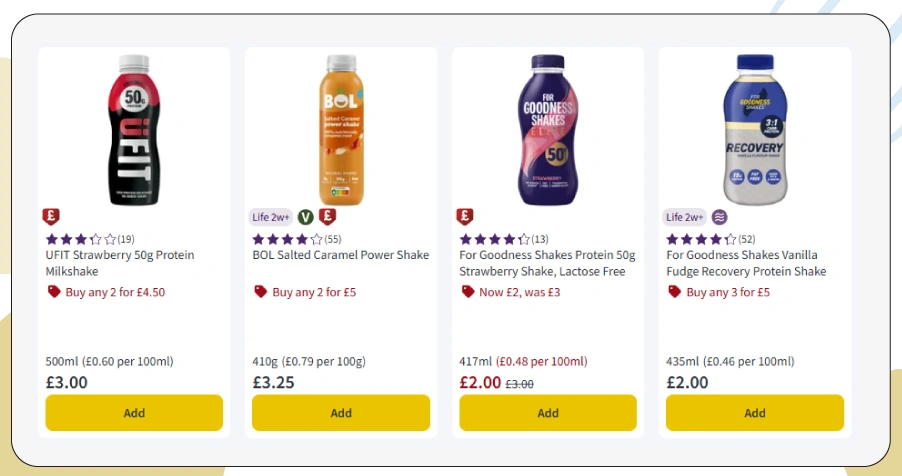
Analysts frequently face challenges with inconsistent product attributes while handling online grocery datasets, particularly when information varies across different pages and category layers. Differences in naming formats, nutrition layouts, allergen labels, or ingredient structures slow down data cleaning and validation processes. Tools like the Ocado Nutrition and Price Scraper help streamline these tasks, reducing reliance on manual checks and accelerating the creation of accurate comparison models.
Missing fields also contribute to comparison challenges. Certain categories display scattered or incomplete nutrition and pricing values, preventing analysts from performing direct attribute mapping. When vital information is unavailable, dataset completeness decreases, affecting scorecard creation and category-level evaluation.
Attribute Irregularities and Their Impact:
| Data Issue Type | Impact Severity | Resulting Delay |
|---|---|---|
| Title Variations | High | Slower data mapping |
| Missing Nutrition Fields | Medium | Manual validation required |
| Frequent Product Updates | High | Dataset version mismatches |
Organizations dealing with these issues often rely on structured solutions that streamline attribute capture and bring uniformity across datasets. This accelerates comparison tasks and ensures more reliable category insights. The use of Web Scraping Ocado Supermarket Data in structured workflows supports granular visibility and consistent attribute formatting needed for smooth benchmarking.
Impact of Disconnected Pricing and Nutrition Details on Brands
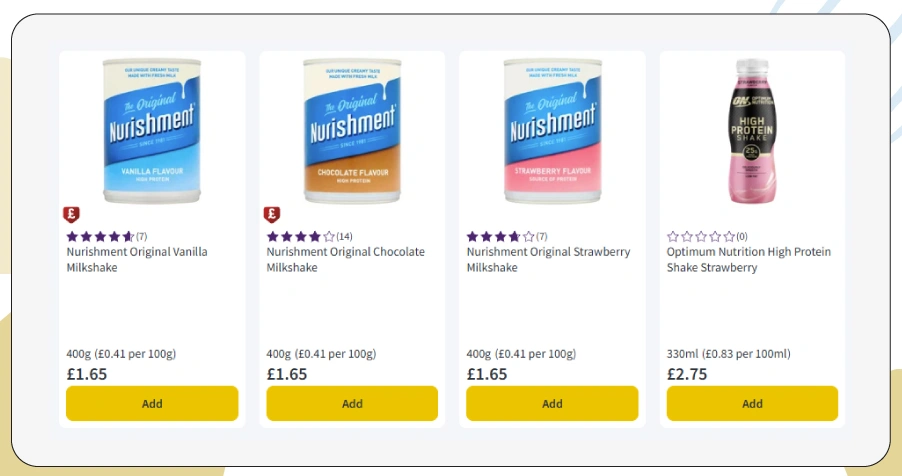
One of the major obstacles businesses face while analyzing grocery products is the lack of alignment between nutrition details and pricing values. These two attribute groups often appear in different parts of a product page, making data combination slower and reducing analytical accuracy. Analysts must verify each field manually, which increases operational load and delays category-level comparison activities.
Pricing attributes require even more careful monitoring due to frequent promotional updates, discount changes, and seasonal price fluctuations. Without timely consolidation, analysts lose critical visibility into competitive positioning. These inconsistencies make it harder to build trend analysis dashboards or price-monitoring pipelines.
Unified structures solve this challenge by aligning nutrition information with pricing metrics in a single dataset, enabling more direct comparison. Unified extraction methods paired with Grocery & Supermarket Datasets allow analysts to create deep comparative models that capture nutrition-to-price relationships effectively.
Fragmented vs. Unified Attribute Output:
| Attribute Category | Fragmented Format | Unified Format |
|---|---|---|
| Nutrition Values | Hard to merge | Immediately comparable |
| Pricing Metrics | Unstable updates | Consistent tracking |
| SKU Trends | Manual checks needed | Ready for dashboards |
With structured data flows, businesses can refine their assortment strategies and enhance category-level planning. This improved data clarity also enhances SKU-level evaluation using Ocado Item-Level Data Scraping, enabling more consistent analysis for both pricing and nutrition metrics.
Limitations of Manual Retail Audits on Analysis Efficiency
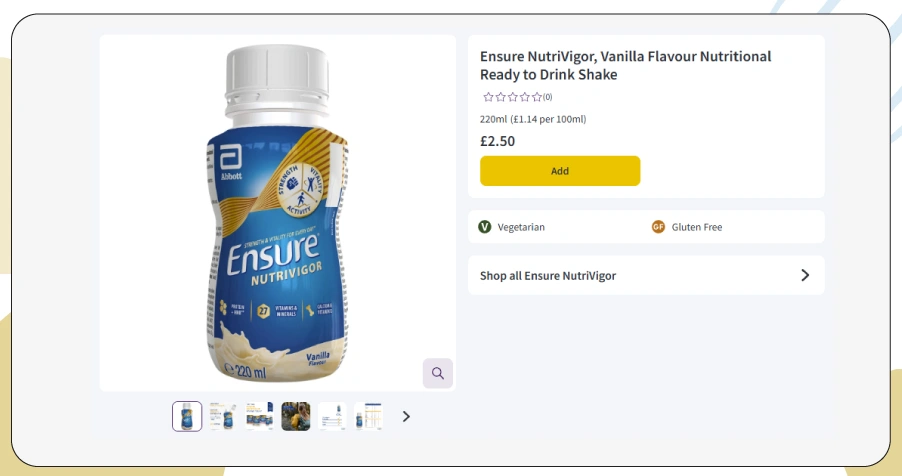
Manual category audits are time-consuming, particularly when analysts must collect product attributes individually across numerous pages. Every product demands verification of nutrition tables, price information, allergen details, and ingredient compositions. With the UK grocery market evolving rapidly through new product launches and frequent reformulations, manual audits struggle to keep up with the required update cycles. Leveraging British Online Supermarket Data Insights can streamline this process and enhance accuracy.
Another limitation arises from the lack of real-time tracking. Online platforms constantly modify product availability, announce temporary promotions, or adjust pricing strategies. Without a structured update flow, these changes remain unrecorded, affecting dashboard accuracy and trend continuity. Manual tracking cannot keep up with these frequent variations, making it unsuitable for large datasets involving multiple categories.
This restricts multi-category benchmarking and slows down strategic evaluation cycles. Automated systems improve this through structured and periodic data retrieval. By incorporating advanced extraction supported by Enterprise Web Crawling, businesses speed up refresh cycles and ensure higher accuracy.
Manual vs Automated Audit Comparison:
| Process Type | Manual Approach | Automated Approach |
|---|---|---|
| Time Consumption | Very High | Significantly Lower |
| Update Frequency | Weekly | Real-time |
| Data Accuracy | 70% | 95%+ |
This automated approach enhances competitive intelligence and improves insights powered by tools such as the Ocado Online Supermarket Data Extractor, which supports more consistent attribute collection at scale.
How ArcTechnolabs Can Help You?
Our platform ensures that mid-sized enterprises and large organizations can scale faster using structured pipelines aligned with modern extraction technologies. The inclusion of Web Scraping Ocado Product Data Extraction for Analysis contributes to more reliable datasets and improves productivity across merchandising, pricing, and category-level teams.
Our Core Capabilities:
- Automated data extraction with frequency scheduling.
- High-scale structured output for multiple categories.
- Detailed attribute mapping and enrichment.
- End-to-end validation before dataset delivery.
- Customized reporting and visualization modules.
- Real-time update integration for fast insights.
With our streamlined architecture, brands enhance competitive intelligence powered by Ocado Product Dataset Extraction for Product Trends Analysis.
Conclusion
Businesses today require accurate and fast insights to compare nutritional values, pricing structures, and product variations within the UK grocery market. The integration of Web Scraping Ocado Product Data Extraction for Analysis in strategic workflows empowers teams to accelerate comparison studies and reduce dependency on manual efforts.
With enhanced operational clarity supported by Extract Ocado Real-Time Product Analytics, brands can elevate the value of their product intelligence initiatives and respond faster to evolving market conditions. Connect with ArcTechnolabs today to build faster, smarter, and more accurate retail intelligence pipelines.