Introduction
Regional grocery retailers face unprecedented challenges in maintaining competitive pricing strategies across diverse market zones. Modern grocery chains require granular intelligence that goes beyond city-wide averages, focusing instead on postal code-specific consumer trends, competitor positioning, and purchasing power indices. Web Scraping Grocery Price intelligence has emerged as a critical capability for retailers seeking to maintain market relevance.
We collaborated with a prominent grocery retailer to implement ZIP Code Level Grocery Price Monitoring infrastructure, enabling the client to track competitor pricing, product availability, and promotional strategies across 200+ distinct postal code areas. This partnership transformed how the client approached regional pricing decisions, moving from intuition-based strategies to data-backed market intelligence.
By establishing systematic monitoring protocols, the retailer gained access to Location-Based Grocery Pricing Data that revealed significant price variations between adjacent neighborhoods. This intelligence enabled the client to optimize their pricing strategy, resulting in improved margins while maintaining competitive positioning. The implementation marked a fundamental shift in how regional pricing decisions were conceptualized and executed across their store network.
The Client
The client is a mid-sized grocery retail chain operating 85 supermarkets across suburban and urban markets in North America. With annual revenues exceeding $450 million, the organization maintained a strong regional presence but faced increasing pressure from national chains and emerging online grocery platforms. Their traditional pricing approach relied on broad regional averages that failed to account for significant demographic and competitive differences between service areas. The client recognized that ZIP Code Level Grocery Price Monitoring would be essential for defending market share.
Their operations spanned neighborhoods with vastly different income levels, ethnic compositions, and shopping preferences. Some locations competed directly with premium organic retailers, while others faced aggressive discounting from value-oriented competitors. They sought to Collect Instacart Product Availability Data alongside traditional competitor information to understand the complete competitive landscape.
The retailer's leadership team understood that success required moving beyond simple competitor price matching toward sophisticated, data-driven pricing optimization. They needed a technology partner capable of delivering consistent, accurate, and actionable market intelligence across all service territories. The goal was to implement systematic monitoring that would inform pricing decisions at the store level while maintaining brand consistency and profitability targets across the entire chain.
Key Challenges
The competitive grocery landscape presented multifaceted challenges that traditional market research methods could not adequately address. The client struggled to maintain current awareness of pricing dynamics across their diverse service areas, relying instead on periodic manual surveys that quickly became outdated.
- This information gap created significant vulnerabilities in their pricing strategy and left them reactive rather than proactive in responding to competitive moves.
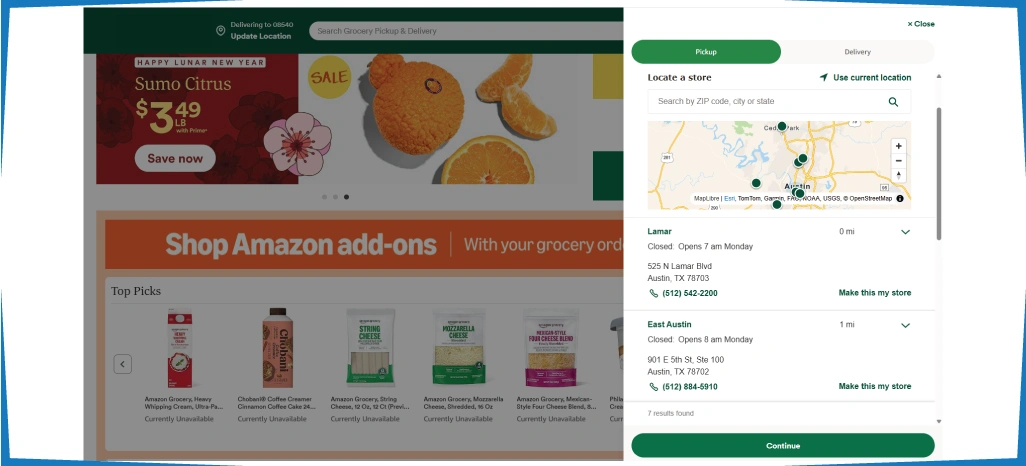
- Specifically, the retailer encountered difficulties in obtaining consistent market intelligence across 200+ postal codes served by their store network.
- Web Scraping API Services were not previously utilized, leaving gaps in understanding how online grocery platforms priced products in specific delivery zones.
- Regional managers requested more granular data to inform their local merchandising and pricing decisions.
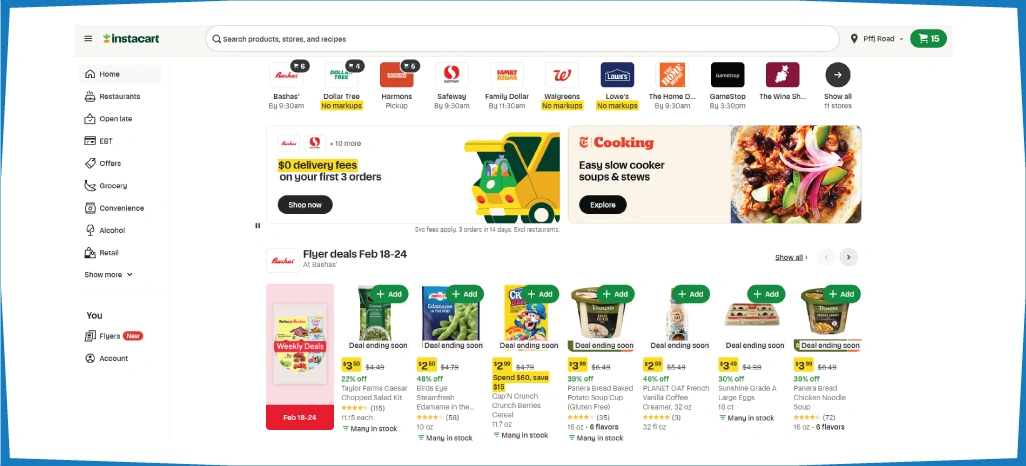
Major online grocery services, including Instacart, Amazon Fresh, and Walmart Grocery, implemented dynamic pricing strategies that varied by delivery location and time of day. The client lacked visibility into these hyperlocal pricing strategies, making it difficult to position their offerings competitively.
The client's existing business intelligence infrastructure was not designed to process large-scale competitive pricing datasets or support ZIP code-level analysis. Data from various sources arrived in inconsistent formats, requiring substantial manual processing before analysis could begin. Store-level managers needed accessible dashboards that translated raw data into actionable pricing recommendations aligned with local market conditions and strategic objectives.
Key Solution
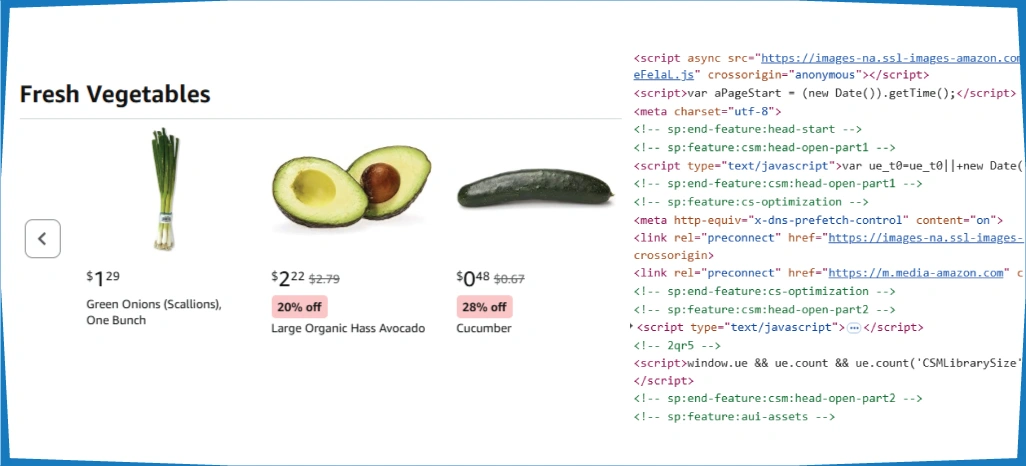
We designed and deployed a comprehensive data acquisition system specifically engineered to monitor grocery pricing across postal code boundaries. The solution utilized advanced extraction technologies to systematically capture pricing information from multiple grocery platforms, including traditional competitors and emerging online services. This multi-source approach ensured complete visibility into the competitive landscape across all client service territories.
- The system was configured to collect Instacart product availability data along with pricing information from competing platforms.
- The technical infrastructure incorporated distributed data collection nodes that operated continuously, capturing pricing updates throughout each day.
- We implemented intelligent monitoring protocols that identified meaningful price changes while filtering out temporary glitches or system errors.
- Data processing pipelines transformed raw extracted information into structured datasets organized by postal code, product category, and competitor.
- This granular approach uncovered significant pricing variations that were invisible in traditional regional analysis.
The platform tracked approximately 12,000 SKUs across 200+ postal codes, generating a comprehensive Instacart Product Data Analytics repository that revealed hyperlocal pricing patterns and product availability trends. Machine learning algorithms identified pricing patterns, flagged unusual changes, and generated alerts when competitors implemented significant promotional activities.
The system calculated competitive price indices for each location, enabling the client to understand their relative positioning within specific neighborhoods. Real-Time Grocery Price Tracking capabilities ensured that decision-makers always had access to current market intelligence.
Solution Architecture and Data Flow
The platform architecture consisted of three integrated components working in concert to deliver actionable intelligence. The data acquisition layer employed sophisticated extraction methodologies to gather pricing information from diverse sources while maintaining compliance with platform terms of service and legal requirements.
The data processing layer normalized information from multiple sources, reconciled product identifications across platforms, and calculated relevant metrics for decision support. This standardization was essential for meaningful cross-platform price comparisons. Hyperlocal Retail Analytics Provider capabilities allowed for sophisticated segmentation based on geographic and demographic factors.
| Monitoring Component | Coverage Scope | Update Frequency | Key Deliverable |
|---|---|---|---|
| Competitor Price Tracking | 12,000 SKUs across 8 major chains | Every 6 hours | ZIP-level price comparison matrices |
| Online Platform Monitoring | Instacart, Amazon Fresh, Walmart Grocery | Real-time during business hours | Dynamic pricing pattern analysis |
| Promotional Activity Tracking | Weekly ads, digital coupons, platform offers | Daily aggregation | Promotional calendar with predicted impacts |
| Product Availability Scanning | In-stock status for high-velocity items | Every 4 hours | Out-of-stock alerts and opportunity identification |
Before implementing the solution, the client relied on weekly competitive shopping visits covering approximately 15% of their SKU assortment across major competitors. This limited approach provided outdated information that often arrived too late to inform tactical pricing decisions. Store managers frequently learned about competitive price changes from customer complaints rather than proactive monitoring.
Following deployment, the automated system provided comprehensive coverage across all tracked products and locations with updates occurring multiple times daily. ZIP Code Level Grocery Price Monitoring became a core capability supporting strategic and tactical decision-making. Post-implementation analysis revealed that the system identified an average of 47 significant competitive pricing events daily across the client's service territory.
Advantages of Implementing ArcTechnolabs
-
Precision Geographic Segmentation
Our platform delivers neighborhood-specific competitive intelligence through ZIP Code Level Grocery Price Monitoring, enabling retailers to implement differentiated pricing strategies that reflect local market conditions and competitive dynamics accurately.
-
Comprehensive Platform Coverage
We capture pricing information from traditional retailers and online grocery services, providing complete competitive visibility through systematic Instacart Product Data Analytics that reveals cross-channel pricing patterns and opportunities.
-
Immediate Market Response
Our infrastructure enables rapid identification of competitive pricing changes through Real-Time Grocery Price Tracking, allowing retailers to respond proactively to market shifts before they impact sales performance significantly.
-
Actionable Intelligence Delivery
We transform raw data into strategic insights as a Hyperlocal Retail Analytics Provider, delivering user-friendly dashboards that support decision-making at store, regional, and executive levels with appropriate detail.
-
Strategic Product Intelligence
Our monitoring captures availability patterns alongside pricing through systematic efforts to Collect Instacart Product Availability Data, enabling retailers to identify out-of-stock opportunities and optimize assortment based on competitive gaps.
Client Testimonial
Implementing ZIP Code Level Grocery Price Monitoring with ArcTechnolabs fundamentally changed how we approach regional pricing strategy. The granular intelligence we now receive enables our store managers to make confident pricing decisions backed by comprehensive market data. We've seen measurable improvements in both competitive positioning and margin performance.
– Vice President of Pricing Strategy, Regional Grocery Chain
Conclusion
Traditional research methods cannot deliver the speed, accuracy, and coverage needed for effective pricing strategy in today's complex retail environment. ZIP Code Level Grocery Price Monitoring has become an essential capability for retailers seeking to balance competitive pressure with profitability objectives across varied markets.
Our platform integrates Location-Based Grocery Pricing Data from multiple sources, delivering comprehensive visibility into neighborhood-level pricing dynamics and competitive activity. We enable retailers to move from reactive price matching to proactive strategy development supported by systematic market monitoring.
Ready to transform your pricing strategy with granular competitive intelligence? Contact ArcTechnolabs today to discuss how our hyperlocal monitoring solutions can enhance your market positioning and profitability.