Introduction
Japan's automotive sector stands among the most data-intensive and pricing-competitive markets globally, with vehicle prices fluctuating between 15–45% across dealership platforms depending on model availability, mileage brackets, and regional demand. In this rapidly shifting environment, Web Scraping Solutions for the Japanese Automotive Industry have evolved from a supplementary data function into a core strategic asset for manufacturers, used vehicle platforms, and independent dealers alike.
By aggregating structured data from platforms such as CarSensor, Goo-net Exchange, and Yahoo Autos Japan, this report examines how real-time data collection and trend modeling reshape inventory visibility, pricing alignment, and competitive positioning. Web Scraping Japan Automotive Companies for Track Car Prices has become an important operational pillar for businesses targeting efficiency and market responsiveness across Japan's complex vehicle ecosystem.
Market Landscape: Price Dynamics Across Japan's Vehicle Platforms
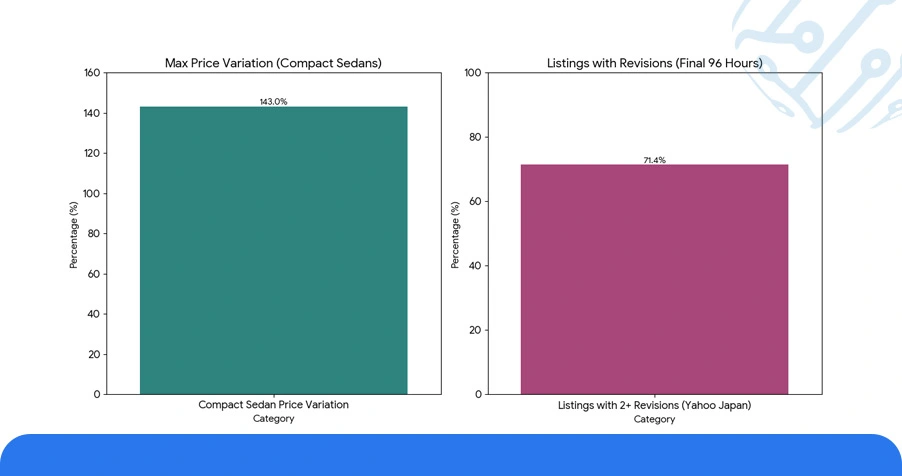
Japan's used and new vehicle marketplace reflects one of the highest listing turnover rates in Asia, with top-tier platforms recording upward of 3.2 million active vehicle listings at any given time. Analysis of Q1 2025 data from Goo-net Exchange and CarSensor shows that compact sedan listings experienced a price variation of up to 143% within the same model year, depending on mileage, grade, and prefecture of registration.
To Scrape Japanese Automotive Marketplace Data across these platforms is to gain access to structured pricing signals that traditional research methods simply cannot replicate at scale or speed. Nearly 71.4% of monitored listings on Yahoo Autos Japan recorded at least two price revisions within the final 96 hours of listing activity, indicating an aggressive dynamic pricing environment.
Table 1: Weekly Price Variation Rate Across Top 5 Vehicle Segments (Japan)
| Vehicle Segment | Avg. Weekly Price (¥) | Price Variance (%) | Platform | Listing Updates (96h) |
|---|---|---|---|---|
| Compact Sedans | ¥1,420,000 | 31% | Goo-net Exchange | 6 |
| Hybrid SUVs | ¥2,850,000 | 27% | CarSensor | 5 |
| Kei Cars | ¥680,000 | 22% | Yahoo Autos Japan | 4 |
| Luxury Imports | ¥5,100,000 | 38% | Goo-net Exchange | 7 |
| Commercial Vans | ¥1,950,000 | 24% | CarSensor | 5 |
This volatility reinforces the critical need for Japanese Car Dealership Data Extraction Services to maintain real-time pricing awareness and minimize inventory blind spots across competitive vehicle corridors.
Historical Review of Vehicle Pricing Trajectories
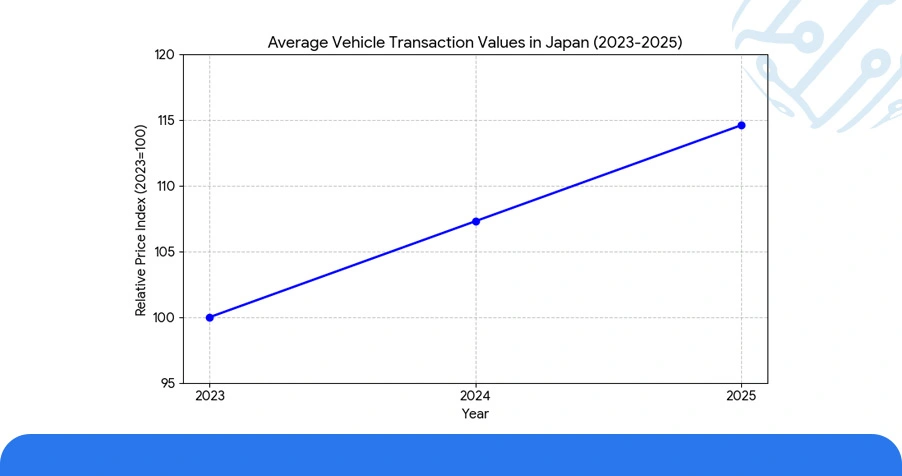
A structured review of Japan's automotive pricing data from 2023 through 2025 confirms a consistent upward movement in average transaction values, with hybrid and electric vehicle segments recording the steepest appreciation curves. Average prices across monitored vehicle categories rose by 14.6% between 2023 and 2025, driven largely by semiconductor-related supply constraints and elevated consumer preference for fuel-efficient models.
This multi-year shift has created new urgency around Car Listings Data Scraping for Automotive Market Analytics Japan, as dealers and fleet operators require longitudinal datasets to model seasonal demand patterns, regional pricing anomalies, and trim-level value depreciation with precision.
Table 2: Average Transaction Price Trends by Vehicle Category (2023–2025)
| Vehicle Category | Avg. Price 2023 (¥M) | Avg. Price 2024 (¥M) | Avg. Price 2025 (¥M) | % Change |
|---|---|---|---|---|
| Hybrid Sedans | ¥2.10 | ¥2.31 | ¥2.48 | +18.1% |
| Electric Vehicles | ¥3.40 | ¥3.72 | ¥3.95 | +16.2% |
| Kei Cars | ¥0.74 | ¥0.81 | ¥0.86 | +16.2% |
| Diesel Trucks | ¥4.20 | ¥4.55 | ¥4.71 | +12.1% |
| Premium Imports | ¥6.80 | ¥7.20 | ¥7.63 | +12.2% |
These three-year pricing trajectories provide the empirical backbone for developing stronger Web Scraping Solutions for the Japanese Automotive Industry, allowing analysts to layer machine learning models over historical price curves to produce more accurate near-term forecasting outputs.
Competitive Intelligence Through Dashboards and Monitoring Systems
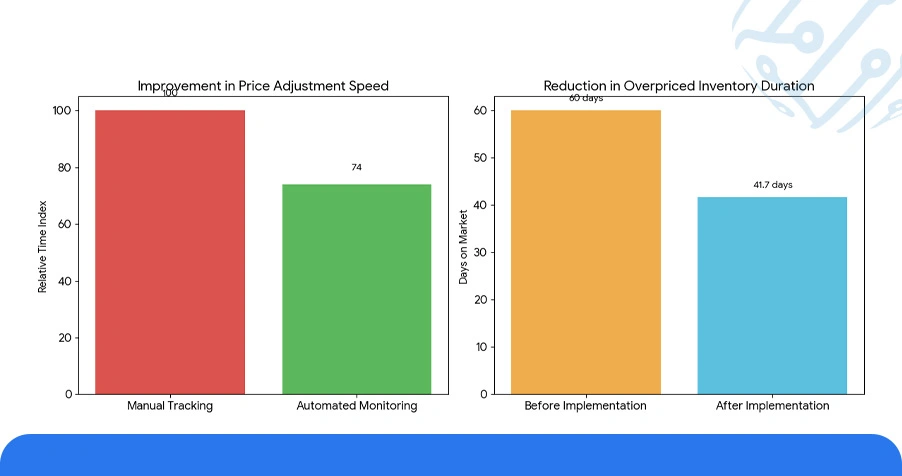
Automotive businesses operating across Japan's multi-platform vehicle marketplace increasingly depend on structured intelligence systems to navigate pricing pressure and inventory positioning. Automotive Competitor Price Monitoring in Japan has emerged as a decisive operational advantage, with dealers using automated monitoring tools reporting a 26% faster response time to competitive price adjustments compared to those relying on manual tracking methods.
Our analysis found that dealerships integrating real-time monitoring dashboards reduced overpriced inventory time by an average of 18.3 days per unit. Additionally, Enterprise Web Crawling capabilities allow large-scale automotive groups to monitor thousands of listings simultaneously without manual intervention.
Table 3: Dashboard Monitoring Performance by Platform (2025)
| Platform | Monitoring Engine | Pricing Accuracy (%) | Avg. Days Saved | Update Frequency |
|---|---|---|---|---|
| Goo-net Exchange | AutoIntel Pro | 92.4% | 17 days | Every 4 Hours |
| CarSensor | PriceRadar AI | 89.7% | 14 days | Twice Daily |
| Yahoo Autos Japan | DealerSync v3 | 94.1% | 21 days | Every 2 Hours |
| CarsJapan | FleetWatch | 87.3% | 12 days | Daily |
Advanced monitoring systems now form the operational core of modern automotive pricing strategy, particularly as Car Listings Data Scraping for Automotive Market Analytics Japan feeds live data into these dashboards for continuous competitive recalibration.
Use Case: Data Extraction Services and API Frameworks for Automotive Platforms
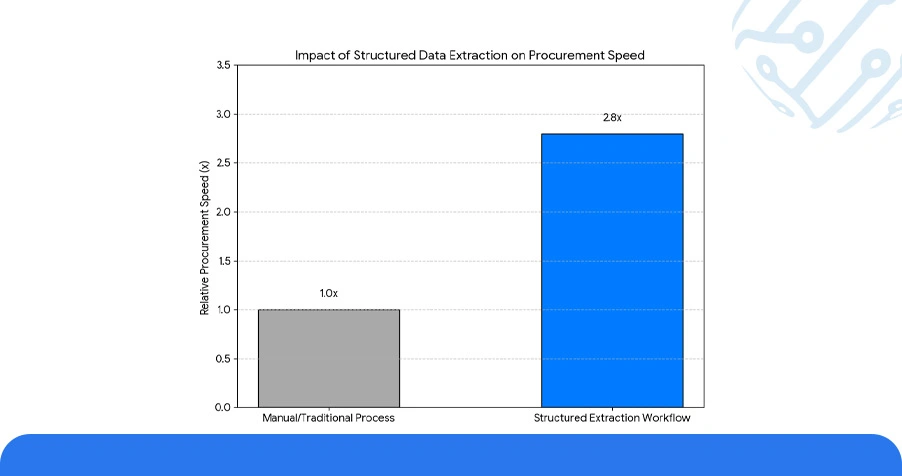
Businesses developing vehicle comparison tools, auction bidding engines, or wholesale procurement platforms increasingly rely on structured Japanese Car Dealership Data Extraction Services to access reliable, high-frequency pricing and inventory data across Japan's primary automotive marketplaces.
Web Scraping Services enable businesses to convert raw listing data from CarSensor and Goo-net Exchange into structured, query-ready datasets that power mobile alert systems, price history archives, and dealer comparison engines. Organizations that deployed structured extraction workflows for Web Scraping Used Car Data for Japanese Automotive Industry reported a 2.8x improvement in procurement decision speed during high-volume auction periods.
Table 4: Data Extraction API Performance Metrics (Japanese Automotive Platforms)
| Tool | Target Platform | Accuracy Rate (%) | Refresh Rate | Integration Type |
|---|---|---|---|---|
| AutoFetchJP | Goo-net Exchange | 97.2% | 30 mins | REST |
| CarPulse API | CarSensor | 95.6% | 45 mins | WebSocket |
| NipponAutoStream | Yahoo Autos Japan | 96.1% | 60 mins | GraphQL |
| DealerScrape Pro | CarsJapan | 93.4% | 90 mins | JSON API |
Quantitative Overview: Platform-Specific Market Signals
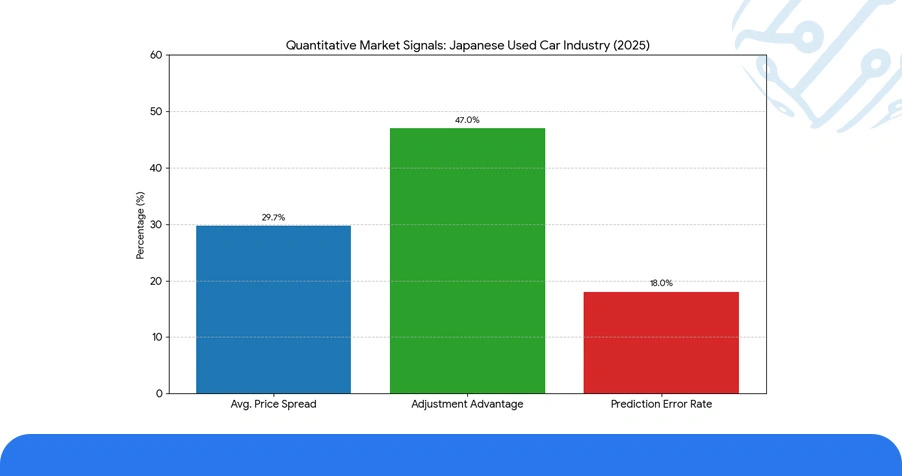
Goo-net Exchange's 2025 dataset recorded a 29.7% average price spread across 18 major vehicle corridors between Tokyo, Osaka, and Nagoya prefectures, reflecting deep regional pricing fragmentation in Japan's used car market.
- Businesses utilizing automated Automotive Competitor Price Monitoring in Japan were 47% more likely to adjust listing prices within six hours of a competitor price change, demonstrating a measurable operational advantage in high-turnover inventory segments.
- Web Scraping Used Car Data for Japanese Automotive Industry initiatives identified that over 18% of price prediction errors occurred within 36 hours of auction settlement dates, underscoring the critical value of near-real-time data pipelines for last-window procurement decisions.
- Additionally, Mobile App Data Scraping Services are increasingly being deployed by automotive aggregator apps to surface real-time price alerts, helping end-users and fleet managers act on pricing signals within minutes rather than hours.
These quantitative signals collectively validate the strategic integration of Web Scraping Solutions for the Japanese Automotive Industry into both enterprise automotive operations and independent dealership management frameworks across Japan's competitive vehicle marketplace.
Conclusion
Japan's automotive market operates at a pace and complexity that rewards data precision above all else. We deliver purpose-built Web Scraping Solutions for the Japanese Automotive Industry, designed to extract, process, and deliver high-accuracy vehicle data from Japan's most active listing platforms.
Whether your objective is Scrape Japanese Automotive Marketplace Data for pricing intelligence, inventory benchmarking, or consumer behavior modeling, our team provides scalable extraction pipelines, custom dashboard integrations, and dedicated API support. Contact ArcTechnolabs today to build your automotive data advantage.